
READING TIME: 5 minutes
SUMMARY: Maine became a state on 15 March 1820 at a time that the tensions between slavers and the abolitionists reached a apex. Mainers were so angry at the slavers for holding their statehood hostage until they could add another slave state, they formed the Republican Party and won the presidency in 1860. They were fighting against the same people as we are. The slavers were authoritarian oligarchs just like Trump and the Republican Party are today. The situation then is compared to ours now, and lessons for how we move forward are drawn.
KEY WORDS: Heather Cox Richardson, Maine, Oligarchs, Authoritarianism, Slavers, the South, Slave States, Free States, Abolition, Missouri Compromise, Radical Solutions
COMMENT: It is clear that our Constitutional crisis is reaching its inflection point and that radical solutions will need to be used if our democracy is to survive. What do you think those solutions might be?
I start everyday listening to Heather Cox Richardson’s podcast of her Letters from an American substack. Given that there’s probably a lot of overlap between the two or three readers that I have and the millions that she has, you probably read her pretty often, too. On 15 March, her title was “Happy Birthday, Maine!” which I almost gave a skip because, you know, more important things than Maine statehood. But, I didn’t.
Speaking of Venn diagrams, after listening to her read her letter, I realized that there was significant commonality between 15 March 1820 and now. Let’s go through the events surrounding Maine’s statehood and their similarity to our current times. Let me know how similar you think our times are in the comments.
Maine Statehood
Applying for Statehood
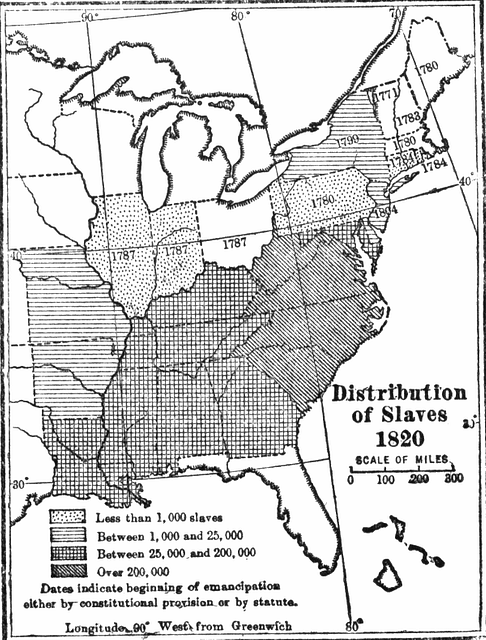
A little known fact was that Maine was once part of the State of Massachusetts. I hadn’t learned that in my high school American history class. It was only as an adult just a few decades ago that I read about it. I still find it difficult to believe. Massachusetts had a colony from 1650 until 1820
When the District of Maine reached a sufficient population, it applied for statehood in 1819. It didn’t take a year for them to be officially admitted. Maine’s statehood was blocked by the members of Congress representing the Southern slaveholding states.
The burgeoning population of the free states gave them control of the House due to proportionate representation, which we no longer have, by the way. However, the Senate was tied at twenty-two senators for each side. If Maine were admitted, then the free states would have twenty-four senators.. The slavers would no longer be able to protect slavery from the abolitionists, so they refused to allow Maine to be admitted.
The Missouri Compromise
The Missouri Compromise of 1820 was achieved through bitter and rancorous negotiations. It allowed both Missouri and Maine to be admitted simultaneously. Missouri as a home to slavers, Maine, free. Thus the balance in the Senate was maintained. It also prohibited the use of slavery in the Louisiana Purchase above the thirty-sixth parallel.
Compared to Today
The open maneuvering for advantage in Congress is similar to today’s efforts at gerrymandering and blocking statehood for Washington DC and Puerto Rico. The slavers made no effort to hide their intentions of blocking the admission of Maine, just as the free states didn’t hide their anxiety over Missouri’s admission. It is very similar to the Orange Caricature calling up Gov Greg “Bud” Abbott of Texas to ask for five more House seats.
The major difference with today is the disdain with which the Doddering Fool and the Republicans treat our Constitution, institutions, democratic norms, and laws. Like the slavers before them, Trump et al. did try to destroy the union, not just for themselves like the Confederate traitors did, but for everyone. They wanted to take the entire nation for themselves to run as they saw fit without hindrance by Constitution, law, or elections.
The Righteous Anger of Mainers

Shortly after entering the Union, the Eerie Canal was opened, which allowed for the people in Maine to travel west more easily. As we know from our study of the geography of culture, they brought their culture with them. In this case, that means the deep and abiding anger they had for the slavers who first tried to block their statehood and then tied it to the fate of the slaveholding Missouri.
Kansas, Bloody Kansas
Those good folk of Maine moved to Illinois where they joined forces with Abraham Lincoln. Their abolitionist fervor drove them to find like minded folks in Congress and begin plotting ways to stop the spread of slavery further west. In 1854, the Kansas Nebraska Act passed, overturning the Missouri Compromise and allowing states admitted to the Union to vote on the slavery issue. Bleeding Kansas was the result. The fight over the vote of whether Kansas would hold human beings in bondage was so fierce that it turned to bloodshed and open fighting between the factions, anticipating the Civil War.
The Republican Party is Formed
They realized that the only way to truly stop the slave-owning oligarchs of the South was to form a new political party that was devoted to the cause. They promoted Abraham Lincoln who established it as “the party of ordinary Americans standing together against the oligarchs of slavery.”
Maine was so deeply committed to the abolitionist cause, that the state went Republican in 1856. When Lincoln ran for president four years later, it was Maine that provided him with the momentum he needed to win. Maine voted first in September. Lincoln won there and ultimately took office in March 1861.
Similarities with Today

Today, we see the Democratic Party agonizing about how our current oligarchs will try to steal the 2026 elections, much like we saw abolitionists organize to stop the spread of slavery. Nowadays, though, the efforts are being played out at both the state and national levels. As Senate Democrats block the SAVE Act and hold hearings, Democratic state AGs and secretaries of state are game planning the moves the authoritarians will make to undermine the election and how to counter them.
The greatest similarity of all though, is that we are still dealing with the same group of people. Culture is in part geographical and it travels with people. The Confederacy diaspora spread their authoritarian racist ways to counties and cities throughout the west. And, people who move to the South are corrupted by the institutional racism that has taken root there.
They didn’t just spread their white nationalist, racist, slave holding ideas, they spread their preference for government and society, too. To own another human being doesn’t just mean that you have to see yourself and race as superior and hate the other race, you have to see yourself as entitled to rule. Slave ownership meant wealth. Wealth brought social and political power. Of course, the slavers and their descendants see themselves as the rightful rulers of the country unconstrained by laws. Of course, they see that the wealthy should have all of the political and social power. Oligarchy comes very naturally to those who would own human beings and oppress others.
Solutions for Our Time
Just as the nascent Republicans of the 1850’s slowly came to the conclusion that only a new political party would prevent the spread of slavery, we will need a similar radical reworking of our politics, too. And, just as Lincoln and the Republicans resolved to fight the slavers to preserve the country, we will have to have similar resolve.
We cannot continue with politics as usual. While we cannot anticipate or predict everything that Trump and the Republicans will do to establish a true pseudo-democratic, single-party, minority-rule authoritarian regime like they have in Russia, we must resist them every step of the way.
The crisis is coming to a head as the election approaches. Things will get worse before they get better, and there is no guarantee of success. At least we have the brave people of Maine to inspire us and guide us in our boldness to resist the oligarchs.
Image Attribution
This image was found on PICRYL and has a Creative Commons license.

 The Psy of Life