
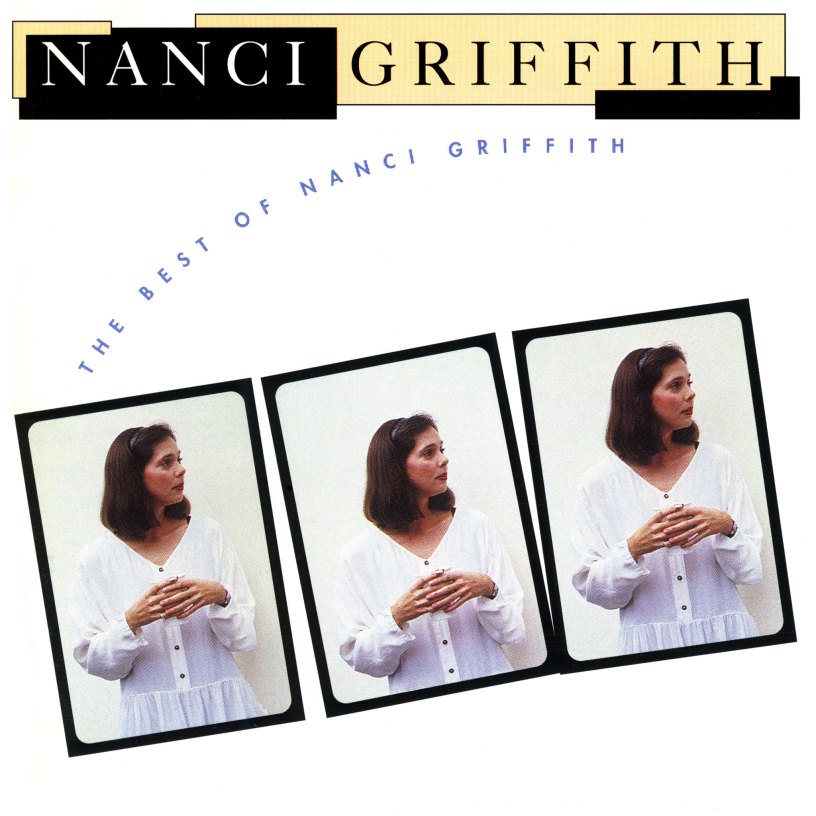
Back in my misspent youth, which isn’t to be confused with my misspent adulthood, or my soon-to-be misspent retirement, I was known to go out to the occasional honkytonk and dive to listen to live music as we did before #COVID19 stalked the land. One of my favorite performers was Nanci Griffith.
I don’t usually react to celebrity deaths. I like certain celebrities. Not many. Truthbetold, I hate certain others. I won’t see a Adam Sandler movie, for example. Just can’t stand the man. But Nanci Griffith was an exception because I LOVED her. Not in the creepy stalker way, but her voice whether it was in song or in storytelling spoke to me. It lifted my spirit. It filled me with hope. It opened my heart. It freed my mind. It told me that all things were possible. It was magic.
Honestly, I hadn’t listened to Nanci Griffith in years. I hadn’t even thought about her until about a month ago when she came to mind for some reason and I looked her up thinking, I wonder what Nanci Griffith is up to. I found out that she retired from performing recently. Now she has passed. She was only 68.
Grief has been kicking my ass recently. I mean, it has become a constant companion and it flows just beneath the surface for me now. Any little thing can cause it to break through and wrap me in its bittersweet embrace.
Ever since #COVID19 started, I’ve been flashing back to the bad old days of AIDS in the late 80’s and early 90’s. Those were the years that I used to go see Nanci Griffith perform. From a Distance will always bring me to tears. Back in those days I was fresh out of how-to-be-a-social worker school. The economy was crap. And, I got a temp job working at the local health department working in their newly created HIV unit doing test counselling. I mean it was brand spanking new. Why they hired me, I’ll never know. Really. The guy who hired me died of AIDS two years later.
I LOVED the job. I interviewed people about their risk for HIV, which meant doing a sex and drug history. It taught me so much. I learned how to talk to people about delicate matters. I quickly learned the language they were comfortable with and would adopt that. I learned how to subtly help them relax and build the rapport that you need to get a solid sex history out of someone.
I started a gay bar testing program. I convinced the health department to sponsor it. I recruited and trained volunteers to staff it. I scheduled everyone’s visits. I supervised the volunteers. I kept up with our numbers: how many people tested and how many actually got their results.
I went to the bars myself on one of the evenings to do the counselling. The first evening, I went to the toilet and the guy at the urinal next to me slapped my ass and asked me if I needed a ride home. One of the first guys I interviewed, told me I wasn’t gay. I wasn’t. Not that it matters. But, I was a little uncomfortable. I guess it showed.
By the end, though, I could have headache with anyone. I was straight and married, so I turned down the gay men and the fag hags both equally enthusiastically.
I could give the results, too. I put together the HIV positive information packet because it was anonymous testing. Once they walked out that door, there was no getting them back for that thing you forgot to tell them. They never came back with questions, though, either. It was hard giving someone positive results, processing that news with them, and then watching them leave.
There was the day when I had to give out nine positive results. It was numbing. I remember every positive result I gave out, except for that day. It all blurred together sometime in the middle of it. That day helped me realize that I wanted to do more, so I took a job as a case manager at the AIDS services non-profit that were starting to pop up.
My specialty was getting people their Medicaid approval. It wasn’t an automatic disability back then. It was the Reagan administration and they wouldn’t even say the word AIDS. There were frequent denials, so I did what any good social worker does: I got to know that workers who processed the claims. I could only talk to them on the phone — I think they were in Albuquerque; I don’t know anymore — and I knew they were busy, but we got to where we recognized each other’s voices and learned each other’s names. My main thing was how to make it easier on them, especially after the poor fellow who was dying of AIDS had antagonized them somehow. I could get whatever test, document, signature, testimonial, whatever it was they needed, if they would just tell me. It became worth their while to find the chart and flip through it and tell me exactly what was needed. I think a lot of social workers probably did that. I know that some of my co-workers, didn’t though.
I could sweet talk the churches, too. They provided a lot of medical equipment to be used at home, meals-on-wheels, that sort of thing. Some of them required you to be a church member, though. It always required a bit of finesse given the relationship between the church and gay men. Not all of our clients were happy about accepting their help, either. They required some sweet talking, too.
Sweet talk. I guess you really do catch more flies with honey than you do vinegar.
Getting those guys services that they deserved was the least I could do. It was the most I could do, too, as it turned out. There was no preventing the inevitable. Other than Magic Johnson, there was no one from that era that survived AIDS.
I gave people their positive results, did their intake when they developed AIDS, and went to their funerals when they died of it. Over and over and over again. It was endless.
That really is the issue for me. You couldn’t stop it. No matter how hard you worked. No matter how close you got to the clients, their families, friends, and partners, the doctors, nurses, service providers. No matter how sweet your talk, death always came for them in the end.
It’s taken me twenty-seven years to realize that I saw it as my job to cheat death. To save their lives. I couldn’t stop it from happening. I couldn’t stop the diseases, symptoms, death, or grief. In the end, there was nothing I could do other than make sure they got services and had a place to process their grief.
I think I will take this grief and guilt to my grave. I don’t think I can ever process it sufficiently to be completely rid of it.
I listened to an interview with an ICU nurse in Mississippi the other day. She was talking about the difference between the #COVID19 surge of the winter of 2020 and this one in the summer of 2021. She said that back in the winter when you talked to families about end-of-life plans, it was hard, but… the patients were usually older and everyone had already been thinking about it. We get older. The older you get, the more likely you are to die. Everyone who gets older thinks about dying. Everyone thinks about the passing of their parents. It’s just a fact of life.
But now, the patients are young and you’re doing end-of-life with their parents or spouses… just like with AIDS back then. I could hear it in her voice. The horror of not being able to stop the inevitable, and I just lost it.
I fell to my knees sobbing.
Image Attribution
“The Best Of Nanci Griffith” by Brett Jordan is licensed under CC BY 2.0

 The Psy of Life
Thanks so much for this touching blog. My husband Michael was a pastor at the MCC church in San Francisco during the AIDS crises. He never spoke about it without crying. He passed away two years ago, and I miss him fiercely.
LikeLiked by 1 person
Howdy Charles!
Thank you for writing. It is deeply appreciated. I’m sorry to hear of your husband’s passing.
My experience during the crisis is one of the foundational events of my life. It is directly responsible for making me who I am today. I only hope and pray that I can live up to the legacy of having been touched by so many lives that were ended way too soon.
I think if I cried every time I spoke of the experience, maybe I wouldn’t have had such an overwhelming response to the passing of Nanci Griffith, but we all process our emotions in different ways.
Huzzah!
Jack
LikeLike
Very sorry to read of your extended grief Jack and your love/fondness for Griffith. I wasn’t familiar with her music, but I’m sure my Mom knows of her. She and my younger sister both really enjoy Folk-Country music, especially here in Texas or any artist from Texas, particularly from Seguin—that’s my mother’s extended family’s stomping grounds.
Nonetheless, grieve as you wish for her and her gifted voice as you see fit. I hope soon you find relief from all the other struggles surrounding us once again… and again for very avoidable reasons! You’re right, now the unnecessary premature deaths are by those far too young. Those personal stories I’ve caught of the loss of loved ones is so tragic and compounded by the fact that by early- to mid-April of this year (in the U.S.) it was easily avoidable. 😔
Please be safe, find time for joy and laughter as well—so we can all maintain our sanity 😉 —and continue to be healthy. Thank you too for all your kindness and humanitarian contributions. You’re a good cookie Sir, even during times of crumbling… it’s okay. ❤️ 😉
LikeLiked by 1 person
Thank you Professor. Your words of understanding and kindness are most welcome and a balm for my raw psyche. It was a perfect storm. I hadn’t realized two things: First, how closely I had associated Nanci Griffith with that period of time, which included my work with People with AIDS. I was going to her shows and buying her albums from the early ’80’s until the mid-’90’s when I left the States and music purchasing changed beyond the ways that I could be bothered to figure out. And second, how much grief I still hold for all of those men who died then. I thought I had processed most of it at the time and since then. Now, I doubt that I ever will fully be able to. That’s okay. Grief is an expression of love. You don’t grieve people and things you don’t care about.
Today, I got up. Made coffee. Hugged La Petite Fille. Told Ma Belle Femme that I loved her — she’s still in quarantine, after all. Appreciated the view of the Mekong River. Life is for the living.
Huzzah!
Jack
LikeLike
Reblogged this on cabbagesandkings524 and commented:
Calico Jack – remembering and grieving a special voice
LikeLiked by 1 person
I didn’t know Nancy Griffith’s work, but I have those few such artists who hold that kind of place in my life. A few years ago when Joni Mitchell was so desperately ill I knew that grief and a real fear of loosing her from the world. And among authors, the passing of Ursula Le Guin hit me that way.
That period of AIDS being denied and before the drugs to allow people to live with it was such hell for so many. Some times, even when death will refuse to be cheated is is still important to try and to ease the process however possible, to be there.
LikeLiked by 1 person
Howdy Bob!
I wouldn’t trade my time working with people with AIDS or older adults for any thing. It made me who I am. In a strange way, I’m happy to be grieving those men. Your grief is in proportion to your love. I’m glad I was able to make a difference in their lives in some way.
It was kind of a perfect storm, though. I was listening to a lot of Nanci Griffith during that time of my life, and she passed today. #COVID19 had already activated that grief for me, so her death deepened that nostalgia for me. It caught me somewhat by surprise, though.
Huzzah!
Jack
LikeLiked by 2 people
I’m sure that every sort of work we do, paid or not, changes us, for better or worse. In the early 70s I worked a few years for the Illinois Dept. of Public Assistance (welfare) in Chicago. That taught me and changed me a lot, and I’ll never forget some of the people I met that way who I would not have known otherwise. We really are stories, our identities are made up of the narrative of our life. That what is so disturbing and sad about dementia, that loss of the story, of self.
LikeLiked by 1 person
There are a number of theories that use the narrative approach, which makes such great sense for understanding ourselves and each other. There’s a personality psychologist, Dan McAdams, Three Level Framework of Personality in which Level III is that personal narrative of your life revealing what is important to you and your purpose here. There’s the sociologist, Arlie Hochschild, and her theory of the deep story; the story that our feelings tell us about how are lives were, are, and will be.
We’re doing new teacher orientation right now. We just had a small dinner party at a restaurant so we could all swap stories in order to get to know each other a bit better. Without our stories, who are we? That’s what makes Alzheimer’s and dementia so terrifying and hard to watch… and I’ll note, another unstoppable force.
Huzzah!
Jack
LikeLiked by 1 person
The examples abound – What do people at AA and NA meetings do? They tell their stories. In Thought Reform [Thought Reform and the Psychology of Totalism
by Robert Jay Lifton] the primary method is the telling and retelling of one’s story (with criticism) until it is ideologically correct. and so on — Take away the stories and all that’s left is a body on life support.
LikeLiked by 1 person
Howdy Bob!
We evolved to be storytellers. We learn best through stories. It is the way we are hardwired to organize information through a narrative. Of course, good storytelling requires a strong theory of mind because you have to have some idea of what the other person knows and doesn’t know and what order would make sense.
Huzzah!
Jack
LikeLiked by 1 person
Quite so.
LikeLiked by 1 person