
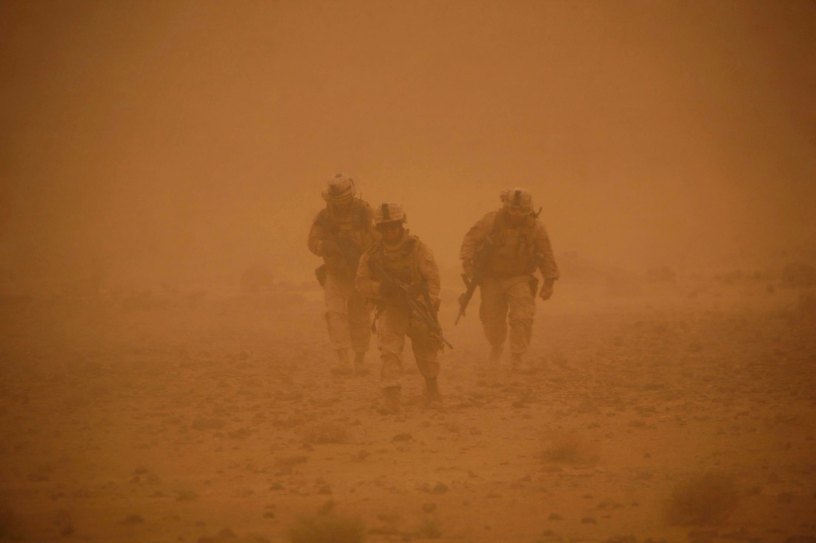
We all know that the US is no longer fighting a war in Afghanistan and that we have left a couple hundred American passport holders and thousands of Afghans who helped us over our twenty years there behind. Ye Olde Blogge ain’t interested in litigating whether Biden was right or wrong for getting out (he was right) or whether he did a good job or bad job of getting out (he did the best he could with what he had). We are interested in evaluating why the fuck we spent a trillion dollars, took twenty years, and sacrificed thousands of lives and got very little or nothing for it.
Okay, we got a few things. No terrorist attacks were launched against the US from Afghan soil during that time. A generation of Afghan girls got an education. Millions of Afghans lived better lives during those twenty years. Yes, we did damage, but we also did some good things.
But, in the end, Afghanistan fell rapidly to the Taliban. Why? Why did the US “lose” and the Taliban “win?” The short answer is that the Taliban understood the culture they were operating in. They spent a year negotiating with Afghan Army units, officers, and soldiers about giving up. They went village-by-village, town-by-town, and city-by-city. They struck deals with the locals. When the time came, those deals held.
As my Twitter friend, Hussein Ibish, pointed out, “This is the way all Afghan wars end. All Afghan wars.”
Essentially, Ibish is referring to a system of shifting alliances between groups defined by location, ethnicity, and language. When an alliance with a new group offers more advantages than the old alliance did, you make the change. From what I understand, it isn’t unusual for a factions in Afghanistan to literally go from fighting with allies against another faction one day, to fighting against their old allies alongside their old enemy, the next. Why didn’t we know this?
Assimilation and Acculturation
To answer these questions, we have to look to two sociological concepts, assimilation and acculturation. They are used to describe the things that can happen when two cultures come into contact.
In social psychology terms, two cultures came together in the Afghan War, the American and Afghan cultures. What happens when two cultures collide and begin interacting? Each culture influences the other to some degree. The two main terms that are used to describe the process that occur when two cultures intermingle are assimilation and acculturation.
Acculturation
Acculturation refers to the process by which a member of a cultural minority — an immigrant, perhaps — begins to assume parts of the culture of the majority. Often these changes include surface changes: ways of dress, informal interactions, language, and other outwardly recognizable behaviors. The deep culture, the beliefs, values, and assumptions, take much longer to change.
Acculturation can also refer to the sharing of cultural traits between two cultures in which the cultures change each other. You can see the role that a power dynamic might play here with the more powerful culture, more dominate culture being less likely to adopt traits of a weaker or subservient culture.
Assimilation
The changes of deep culture are described as assimilation. The more the values, beliefs, and assumptions of one culture are assumed by another, the greater the assimilation of individuals into the other culture. For immigrants, this is a generational process with some groups never achieving full assimilation, always holding on to some portion of their original culture.
A more vernacular meaning of assimilation refers the process of taking information in. Not learning. More absorption. More osmosis.
The US and Afghanistan
How does this apply to the US in Afghanistan.?
We went into Afghanistan ostensibly to destroy al Qaeda, in general — remember them? — and kill Osama bin Laden — remember him? — in particular. Once we did that, we stuck around for some unknown and ungodly reason and tried to create a liberal centralized law-abiding system in a conservative decentralized custom-following country. What the fuck were we thinking was going to happen? We’d wave some magic US exceptionalism wand and the Afghans would magically see the error of their ways and adopt our magnificent two-party democratic republican system? Really?
We never assimilated in the sense that we didn’t take in information about Afghanistan. We knew the people we were dealing with, our Afghan allies and partners, were corrupt and just taking our millions and billions of dollars hand over fist and socking it away into one helluva 401K plan somewhere. We knew that any and all deliverables like a building built or an army unit recruited and trained were shoddy and practically worthless.
Instead of assimilating or acculturating — adopting some of the surface culture — even a little bit to Afghan culture we found Afghans who would acculturate and assimilate to us. We found translators and other helpers who would adopt our surface culture and even some of our deeper cultural values. That’s great. Those were wonderful people who will pay dearly for not being allowed to escape Afghanistan by the Miller and Trump years ago, but that is another blog post on another blog, altogether.
Our mistake was seeing those people and thinking they were the norm. Thinking that it meant we were making progress. We generalized from a small sample size to an entire population. It was a cardinal error. A rookie mistake.
To win a war in a foreign country, you’ve got to win it on their cultural terms. You have to achieve the goals that their culture recognizes as meaning you’ve won unless, of course, you’re willing to just grind them into dust and commit literal genocide and leaving hulking PTSD’ed wrecks behind. I know, that’s what the conservatives mean when they slobber over turning the sand into glass and bombing them back into the Stone Age. Unless you’re willing to commit that level of crime against humanity, and even then, you might not really win, you have to win in a way that the other side recognizes as winning.
Guess what, in the shifting alliance system of decentralized power centers that is Afghanistan, you can’t ever win. You may garner a bunch of allies, but eventually, they’ll change sides and you’re right back where you started from.
If we had bothered to learn anything about Afghanistan, we might could’ve realized this and saved ourselves a few billion dollars, a few thousand lives, and a decade or so. Do you think we’ve learned this lesson now? Probably not. We made the same mistake in Viet Nam and Iraq. Would’ve made it in Syria and Iran had we ever started wars there.
So, hope for the future, right?
If applying social psychology to current events is your cup of tea, then why not let me know by doing one or more of the following?
- Comment: Show us some love… or some hate, but show us something! Leave a comment telling us about your reaction to the ending of the Afghanistan War. I’d love to hear about it.
- Like: Nothing easier than liking a post. The button is just inches away. Just a short scroll and you’re there.
- Rate: Almost as easy as liking the post is giving it a five-star rating. Right up there at the top under the title.
- Share: A close second to be as easy as liking and rating is sharing the post on social media because I give you most of the links you’ll need just after the post.
- Join: You can guarantee that you’ll never miss one of our insightful, snarky, sarcasticky, and profaney posts by joining our email list. Just drop your email in the blank below.

 The Psy of Life
We must remember that Afghani President fled office quickly and underpaid and not paid Afghani troops rapidly disappeared from where they were engaged. Compare it to medieval times when an army was involved in a siege against a fortress and the king was killed. His soldiers could not flee fast enough. No leader-no pay.
LikeLiked by 1 person
Howdy Jerry!
We must remember that Ghani and every other high level office holder played us for patsies. He knew he could never deliver on his promises. He always had one eye on the exit. We knew he and his government and his military were unreliable, but after twenty years of trying to develop a government and army, what were our military commanders going to say other than the Afghan military is a capable fighting force to counter the Taliban and the Ghani government is capable governing body?
They knew it was all lies. They were just hoping not to get caught out in them. They were hoping to rotate out of the duty and let the next person take the fall.
Huzzah!
Jack
LikeLiked by 1 person
Reblogged this on cabbagesandkings524 and commented:
Calico Jack – Ignorance is no way to win
LikeLiked by 1 person
One of the errors in dealing with a culture like Afghanistan that we made (as we have in all those other places too) was in rotating commanders and whole units at all levels, and even when some, or many, of them went back for more than one tour, they wound up in a different part of the country dealing with different individuals. As horrible as being stuck in a place and situation like that for years at a time may be, the solution does not allow acculturation time and the establishment of long term relationships within the cultural framework, the ones that it runs on. In a place like an Afghan village, the ally of the village elder is not the US of A, it is the local company commander or even platoon leader, a personal relationship surrounded by a lot of ceremony and formality. When that individual rotates out and is replaced, the process starts over from scratch.
LikeLiked by 1 person
It is a basic cultural difference between us. We see organizations, laws, rules and see consistency in them. They see consistency in an individual. Talking to one US Army major to us is like talking to another. They are the same for any practical purpose of representing the country and our commitments. To Afghans, it’s just not the same, I assume.
But also, the people fighting the war never become connected to the people they are fighting “for” and recognize the essential differences between individuals so they have a prayer of distinguishing friend from foe. It is not just the soldiers on the ground, it is the major decision makers and strategists. They don’t take the local culture and history into consideration when formulating their plans.
There was a line in “Homeland” that stuck with me, “We’ve been fighting in Afghanistan for fourteen years. Each year we develop a plan for the war, so we’ve not been fighting one war for fourteen years, we’ve been fighting fourteen one year wars.” Change the commanders in country and you change the plan and how it is executed.
Huzzah!
Jack
LikeLiked by 2 people
The plan and the execution change, but not the assumptions, biases, and preconceptions underlying the plans. It is kind of a “same pig, different lipstick” situation.
LikeLiked by 2 people
I’m assuming much of the plan remains the same because of the similarity of experience and training of the officers making it.
Jack
PS I assume y’all dodged most of Ida?
LikeLiked by 2 people
Ida was much more gentle here than other places – no new flooding (Fred did cause some bad flooding a few counties north of here). It looks like all that warm moist Gulf air hit colder when it got to around NY and just dumped. I know that pattern well from snow & ice storms in the Midwest.
True – same training = same behavior no matter how the plan is described to the civilians (especially those sitting in seats in a certain building on a certain hill in DC).
LikeLiked by 2 people
Howdy Bob!
I’m glad y’all dodged the Ida bullet or the Ida bullet dodged y’all. We’ve all got some extreme weather coming at some point in our future, though.
One culture that the military has assimilated is that of Capitol Hill. They’ve figured out the levers to pull and buttons to push.
Huzzah!
Jack
LikeLiked by 2 people
When your institution is completely dependent on another institution for its funding and very existence, the learning curve tends to be fast.
LikeLiked by 2 people
I wonder why no one seems to recall that 9/11 attacks were done by SAUDIs? great post by the way.
LikeLiked by 1 person
Thank you, Suze. Coming from you that is high praise. Much appreciated.
We forget that the 9/11 attacks were done by the Saudis because thinking is hard. People just don’t like doing it. It’s one of those cognitive tendencies that condemn certain of us to be hoodwinked by the authoritarian delusion.
Huzzah!
Jack
LikeLiked by 1 person