
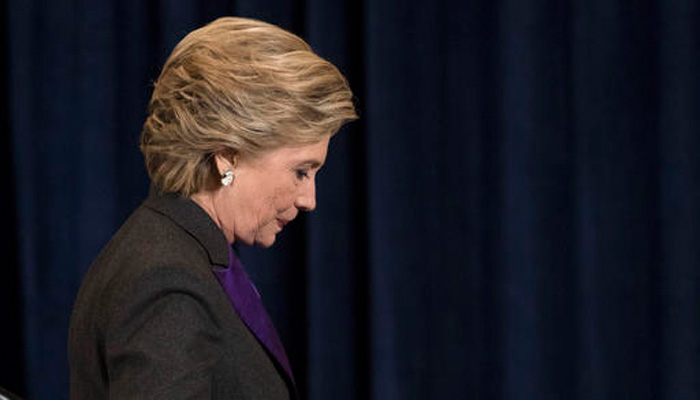
This recent story on NPR on the ways that grief and grieving changes the brain really caught my eye not only because of my intense relationship with death and dying and grief and grieving — thanks AIDS crisis! — and my interest in brain plasticity, but also because it adds a layer of explanatory richness and insight into what is happening right now in our country. Of course, I immediately related the content to our political situation and MAGA Nation’s reaction to Trump losing the 2020 election. Spoiler: it contrasts sharply with how the left reacted to Clinton’s defeat in 2016.
The article is an interview Berly McCoy interviews University of Arizona professor of clinical psychologist and grief researcher, Mary-Frances O’Connor about the changes that occur in the brain as we grieve losses. We’ll focus on two aspects of her research: (1) the emotions of grief and grieving and (2) the effects of prolonged grief or what we used to call complicated grief. We’ll start with a quick overview of what we mean by grief and grieving.
Grief and Grieving

GRIEF is the emotional state that is experienced immediately after a significant loss, usually of a close loved one, pet, or possession. It can also occur after the loss of other things like jobs or beliefs.
GRIEVING, on the other hand, is the process of adapting to the loss that triggered grief.
Grief is shock and disbelief. It hits you like the proverbial ton of bricks. Grieving takes time. It helps us shift our world view from one where our loved one is with us to one where they are not. According to O’Connor, our brain literally encodes the “we” of the relationship when we think of our loved ones. Your family unit will encode in your brain as a distinct entity just like it encodes me and you. So, when one of the members of we passes out of your life, your brain has to rewire itself to account for the absence.
We know from other studies that emotional pain is as real and severe as physical pain, so during that process of rewiring, we experience the absence over and over again adjusting memories and reactions to experiences as we go.
Our grief will end, grieving will not. The pain of it all will diminish, but you can miss someone for the rest of your life.
MAGA Nation
Much like Clinton’s loss in 2016, MAGA Nation were grief-stricken when Biden was declared the winner of the election. It was a normal understandable reaction. And, just like many Democrats needed some time to process Clinton’s loss, Trump’s supporters would need time to adjust their assumptions about the nation’s government without Trump in it. So far, MAGA Nation’s reaction is normal.
Emotions and Grief

Grief seems to turn the emotional volume up to a head-banging eleven. Our emotions are somewhat out of control and can cause us to overreact without warning. Suddenly, every calling plan commercial becomes a weep fest, every driver that cuts us off threatens road rage. Every invitation is answered with numbness and disinterest.
In the past, we had assigned emotional stages to grief: denial, anger, bargaining, depression, and acceptance. We tended to take them more literally than they were meant. Not everyone goes through everyone of them. Not everyone goes through them in that order. It’s more of a pupu platter situation where you get to choose and pick your favorites.
As go through grieving, as we adapt to our new reality, the emotional intensity diminishes. It varies from person to person, situation to situation, but for most of us the intensity dies down; we return to equilibrium with only occasional forays into the emotions of grief; and, eventually, we are back to our new normal life.
MAGA Nation
Throughout the past year, the emotions in MAGA Nation have been intense. They are extremely angry and volatile. Any little thing sets them off. They punch Walmart greeters for asking the wear a mask. They verbally assault school children and teachers for mitigating #COVID19. They assaulted the nation’s capitol during the 6 January Insurrection. They make threatening phone calls against election workers, healthcare workers, and eductionalists.
Prolonged Grief Disorder

finding a grief counselor
If you’ve found your grief being reactivated, please consider taking advantage of these services to find a grief counselor near you:
- The Center for Prolonged Grief at Columbia University has a page that will help you find a CGT trained therapist near you.
- Psychology Today has a grief counselor locator page, as well.
For more immediate help, try one of these resources:
- Just Answer’s Mental Health Hotline has two possibilities:
- The National Alliance on Mental Illness helpline
If you need help in the US, UK, India, or UK, this post has some helpful links:

Occasionally, these emotions get stuck. When they do, we begin to talk about prolonged grief disorder.
PROLONGED GRIEF DISORDER is the pervasive yearning for our loved one who has passed. It commonly occurs after a sudden expected passing like that caused by suicide, homicide, accident, or natural disaster or that of a child or spouse. It occurs in about ten percent of the grieving population. Naturally, the people with the disorder turn to ways of coping: drugs, alcohol, and substance abuse, suicidal ideation, gesture, and acts, but also sleep disturbance and diminished immune functioning.
The symptoms of the disorder are very similar to those of grief only they persist over a longer period of time and begin interfering with the daily functioning of life. It’s similar to PTSD in the sense that the person is stuck in that emotional moment of grief.
There is a tendency to enter into relive the decisions that led up to the death. Imagining different possibilities and different outcomes. This kind of ruminating about the “what if’s” helps keep the person stuck as if they could actually arrive at a different result than the person dying.
MAGA Nation and Prolonged Grief Disorder
It made sense that MAGA Nation would react to Trump’s loss with something resembling prolonged grief disorder. They had been set up for it:
- TRUMP’S LOSS WAS UNEXPECTED. Trump had softened up the base by proclaiming in the years leading up to the election that the only way he could lose would be due to malfeasance. So, when he lost, his base could and wouldn’t accept it. It made the loss more traumatic and held out hope for a different outcome.
- THEY LOST SOMETHING PRECIOUS. For MAGA Nation there was an unhealthy dysfunctional enabling relationship with Trump. He voiced their grievances and acted out in ways that they could only previously dream of. He gave them permission to be as racist and misogynist as they wanted to be. He confirmed their interpretation of the world — Their failures weren’t their fault, it really was because the liberals cheated in the election and were putting undeserving PoC in line ahead of them to achieve the American dream.
- THEY HAD INVESTED IN DELUSION. One of the most important parts of cognitive dissonance is committing to the delusion, investing so much that you can’t really turn back. #COVID19 was the perfect foil for this investment. After refusing to mask and vax and causing so much unnecessary death and suffering, who could possibly recant? After insurrecting on 6 January and openly supporting anti-democractic means of winning the 2022 elections, who could recant? To go against Trump and MAGA would mean to admit that you were culpable in the 800,000+ #COVID19 deaths, the suffering of millions, and destruction of the world’s oldest most successful democracy.
- THEY ARE RUMINATING ON THE POSSIBILITIES. Trump and his allies have kept just a sliver of hope alive that the 2020 elections can be legally overturned. First it was the court cases, now it is the forensic audits, and later it will be the anti-democratic nullification of votes in the 2022 election.
All of it adds up to keeping MAGA Nation stuck in the early stages of grief and grieving. They are incapable of moving on past the initial loss and accepting the outcome of the 2020 election. In that sense it is part and parcel with Hitler’s Propaganda Playbook, the induction of mass psychosis, and the use of waves of terror to maintain control over the base and keep them in a state of inflamed passions where (a) they’ll literally believe anything no matter how outlandish and (b) they’re willing to commit acts of violence such as the 6 January Insurrection.
Consider sharing this post with family, friends, acquaintances, or complete strangers!
Use the social media buttons below, copy and paste the URL into your favorite platform (not FB because they hates us), or sign them up for our email list!
Or you could like or rate the post or leave a comment!
Image Attribution
“Grief” by KimManleyOrt is licensed under CC BY-NC-SA 2.0

 The Psy of Life
Reblogged this on cabbagesandkings524 and commented:
Calico Jack – When grief goes toxic
LikeLiked by 1 person
I think of a fictional example of an extreme of prolonged grieving, the story of Dracula. In Bram Stoker’s tale, the Count’s wife has died. He is grieving, his world is shattered, he cannot imagine going on without her, and decides to use magic to bring her back to life. Something goes wrong. The magic spell does not restore the love of his life, but backfires on him as the curse of vampirehood. His grieving is extended for centuries. He hopes to be saved, released, by a woman who, not enthralled by his magic (He must resist his bloody appetite in her case.), knows him exactly as he is and still loves him, his lost love reborn.
LikeLiked by 1 person
Howdy Bob!
I hesitate to make the comparison to MAGA Nation and Trump’s loss. It reminds me of looking for a cure of the mass psychosis that has taken hold of MAGA Nation. If so, just like the witch hysteria analogy, it means that we’re in for a lot more madness before it starts to get better.
Huzzah!
Jack
LikeLiked by 1 person
There may be some slight cause for hope in this item about a performer stepping out of character, or the wizard being trapped by his own spell:
https://www.salon.com/2021/12/24/losing-far-right-support-after-vaccine-endorsement/
LikeLiked by 1 person
Howdy Bob!
It reminds me of the tale of the woman who brings a snake into her house and is surprised when it bites her or the frog and scorpion crossing the river or any of those multitude of stories that warn against thinking that a dangerous “animal” will change based on its environment. When someone tells you who they are, you should believe them.
Will the mob go on rampaging after it has no leader? Will its last act be crucifying its leader? Will someone — DeSantis? — ascend to the fill the vacuum? Maybe ’22 will be the year that MAGA Nation will disperse. It’s hard to predict, but there is only so long that you can sustain the emotional distress that MAGA is experiencing.
Huzzah!
Jack
LikeLiked by 1 person
Trump’s urging them to get vaccinated has clearly plunged them into an intense cognitive dissonance. For some, it could open the door to more doubt about what he and his enablers have been telling them. For others, it will drive them deeper into the rabbit hole.
The image of the crucifixion of the leader reminds me of Phil Ochs’ song on the subject: https://www.youtube.com/watch?v=OIwbeEGXj5E
LikeLiked by 1 person
Howdy Bob!
You’ve seen several MAGA influencers and celebrities criticize him over it. Alex Jones and Candace Owens have both attacked him for it. Maybe they smell blood in the water. I don’t know. Probably it will be more like the 6 January Insurrection, and after initial push back against him, they will come round to supporting him again.
It could cause some people, especially those at the periphery to wonder how sincere his beliefs and accurate his statements are. The effort of trying to reconcile the two contradictory stances that Trump has taken — anti-vax and pro-vax — could cause the cognitive dissonance bubble to burst.
We only need a few percentage points of MAGA to stay home during the elections to improve our chances. Creating confusion and discord in their ranks will help do that. No one better at doing either than Trump. So, maybe Biden is playing eleven-dimensional chess here.
Huzzah!
Jack
LikeLiked by 1 person
Some of the anti-vax crew are likely to be saying (If they haven’t already) that he is now under the control of the chip that goes in with it. Biden may have leaned the lesson from Putin, that standing aside and letting Trump be Trump, perhaps with an occasional quiet nudge, is the best way to deal with him.
LikeLiked by 1 person
Howdy Bob!
The spin of MAGA influencers will be amusing to watch… kinda like the folks in Dallas being certain that they’ve been poisoned with anthrax rather than getting #COVID19.
Hopefully, Biden is finding some way to navigate through the minefield that is MAGA Nation and Trump’s eternal desire to serve his selfish interests. Probably though — Occam’s Razor, amirite? — he is just being a decent human being and gave credit where credit is due. Trump being Trump just shot himself in the foot when presented with the opportunity.
Huzzah!
Jack
LikeLiked by 1 person
The MAGAs are definitely spinning. Now we have a spokesman for Trump saying he is “cooperating” with the Jan 6th committee. Maybe he will try to pull a Reagan and claim diminished capacity and throw everybody else under the bus. I wonder whether the committee members think he is cooperating while also trying to get SCOTUS to block turning over evidence.
LikeLiked by 1 person
Howdy Bob!
The funny thing is that the “issues” that drove Youngkin to victory in Virginia are the same as what got Trump his votes in 2016 and 2020, racial animus. Trump worked the race baiting angle in both his elections and milked it for all it was worth. He’s the one that changed. He’s still flogging his loss in 2020. The base is still rabid for dog whistling antics.
I don’t think what Trump and his lawyers call cooperation and what the 6 January Insurrection Commission call cooperation are quite the same thing. I imagine Trump is trying to influence the courts by using the press, which isn’t supposed to work, but has in the past.
Huzzzh!
Jon
LikeLiked by 1 person
The claim made by a spokesman rather than Trump himself sets up the opportunity to play the victim when the subpoena comes from the committee and courts rule against him.
LikeLiked by 1 person
Now, I hear that he’s having meltdowns at Merde a Lardo because the 6 January Insurrection Commission is considering recommending criminal charges against him. Hope so. The more stress and strain he’s under, the better.
In some ways the best outcome of all of this is for him to die of a heart attack or stroke. It removes him from the stage, so his “influence” is gone. It takes prosecution off of the table, but investigation by the committee remains. It takes away the donation focal point and base rallier. It means others would rush to fill the vacuum creating a power struggle that usually doesn’t end well for all invovled.
Huzzah!
Jack
LikeLiked by 1 person
If he dies, the conspiracy people will be sure he was murdered, or that he is not really dead. They could even get to fighting about that. Still, he is, so far as we can see now, a unique phenomenon with no sufficiently similar heir apparent.
LikeLiked by 1 person
Howdy Bob!
When Trump dies, it’s going to spawn a new series of conspiracy theories. I guess the well-prepared conspiracy theorist, like the media outlets who have obituaries on most living celebrities (I saw that on the Mary Tyler Moore Show once, so I know it’s true), have already prepared something. He may turn into a rallying cry and martyr for the cause, but without someone who can exploit his death as ruthlessly as he exploited the racism of our deep culture, it won’t matter much. It will likely be a more divisive than unifying event just like Trump is now.
Huzzah!
Jack
LikeLike
It might be stretching the metaphor a bit far, but in thinking about the Dracula story and MAGA Nation, and mass psychosis, I thought of another character in the story, Renfield, the insect eating servant, and the people who eat up every wiggling bug Trump and QAnon can serve up.
LikeLiked by 1 person
Given the cray-cray that is coming out of MAGA world right now, I don’t think you can take it too far. The only thing they didn’t just swallow whole was Trump’s recommendation to get vaccinated.
If a wedge is going to be driven between Trump and his base, someone needs to engineer another MAGA faux pas for Trump to blunder into.
Huzzah!
Jack
LikeLiked by 1 person
I think the vaccine and booster faux pas shows how far out of actual touch he is with the base and the belief systems he’s led them into. Now, if somebody could get him to say just once that he legitimately lost the election … but I don’t know if his mouth could form those words.
LikeLiked by 1 person
I think out of touch is the right deduction here. He’s drifting and flailing right now, isn’t he? He’s got a multitude of problems and a ton of cash and only his reflexive reactions to navigate through it all. Probably not the best combination for a man who reliably and frequently shoots himself in the foot.
Jack
LikeLiked by 1 person
He’s only ever concerned about the response toward him, not the effect he is having. It is way too late for him to try to take credit for the vaccines, but he must try because the analysis of his handling of the pandemic is so utterly horrible, pretty much qualifying as Dereliction Of Duty and Criminal Negligence.
LikeLiked by 1 person
Howdy Bob!
His handling of the pandemic was utterly horrible and utterly deliberate. As I understand it, there is documentation that they decided to ignore certain aspects of the pandemic, inhibit the CDC, and in other ways hamper our response. No real reason is given, but deliberate attempts to interfere with the normal functions of the government were made.
Huzzah!
Jack
LikeLiked by 1 person
“deliberate attempts to interfere with the normal functions of the government were made.” That is the key to almost everything Trump did and didn’t do as President. He saw himself as owning the government which was supposed to at according to his every want and whim. Much of his action with regard to the virus was part of his battle with the “Deep State”. Unfortunately, that included trying to sideline and not believe the real experts like Anthony Fauci.
LikeLiked by 1 person
Howdy Bob!
And that is the foundation for any Crimes Against Humanity action that might be taken against him at the International Court. It is the foundation for any prosecution that might result from the 6 January Insurrection. It’s going to be interesting to see how this plays out. I can’t believe that Merrick Garland is as inactive as most of liberal Twitter seems to think he is. Hopefully, they are quietly and slowly building their cases and working with the congressional commission.
Huzzah!
Jack
LikeLiked by 1 person
Garland is careful, doesn’t reveal his hand until he’s got winnable charges ready to file, and has as complete a map of conspiratorial connections as possible. He cut his prosecutorial teeth on organized crime, both in the NY Mob and white collar realms. It is a safe bet that his crew have access to everything the House committee is gathering.
LikeLiked by 1 person
Howdy Bob!
I can’t believe the man who headed the Timothy McVay’s prosecution and was spuriously denied a Supreme Court seat wouldn’t be able to rise to this occasion and do the right thing. However, if they have active investigations into various people concerning the 6 January Insurrection, they’ve done a remarkable job of keeping it out of the media.
I think that the House committee is too savvy not to realize that they if the GQP takes the House in 2022, as is likely, they will lose their commission, so they need to wrap it up before then. I think most of them realize the gravity of the situation and will work with DoJ not to screw things up by immunizing witnesses unnecessarily and leaking evidence to the press.
Huzzah!
Jack
LikeLiked by 1 person
The committee reportedly plans to have an “interim report” by July. There is also talk of public hearings. They know well, some have said it, that their time may be limited. They’ve taken testimony from some 300 people and very little of that has leaked, even the names of many. They kept the grandstanders and hostile leakers out.
With the charges that have been brought for Jan 6, they seem to be trying to clear away the small fry quickly, flipping any they can for evidence, and it is likely that Garland has some of his best and most experienced prosecutors building the big name cases quietly, perhaps waiting to see what happens when the House committee calls out the conspirators within the legislature.
LikeLiked by 1 person
Howdy Bob!
The Republicans can stop the committee in 2023 if they take the House. They can’t stop DoJ. Maybe it is better that the House committee do its investigation, release its report, and lay the groundwork justifying the DoJ’s investigation and eventual prosecution to remove as much of the stink of politically motivated as they can from it.
Huzzah!
LikeLiked by 1 person
What comments do come out of the committee seem to imply exactly that. They are talking about weeks and weeks of public hearings. Those would likely be happening starting while the primary campaigns and elections are going on, difficult for candidates in both parties to ignore.
LikeLiked by 1 person
Howdy Bob!
With Adam Schiff and Liz Cheney and others of their caliber on the committee, I’d be surprised if a lot of this wasn’t explicitly thought out and discussed. Adam Schiff brings that passion for fairness and justice and understanding of how the legal system works. Liz Cheney brings raw political will to power. And, she’s pissed. Hell, they’re all pissed and all of ’em gunning for the mo’fo’s. And, they all know that they’ve got exactly one shot at getting it right, one shot, so they’ve got to get the biggest bang out of it they can.
Huzzah!
Jack
LikeLiked by 1 person
You can almost hear them singing:
“I am not throwing away my shot. I am not throwing away my shot” – Lin-Manuel Miranda
LikeLiked by 1 person
They must feel the pressure of their assume responsibility.
LikeLiked by 1 person
Every statement in every interview of any of them says they do.
LikeLiked by 1 person