
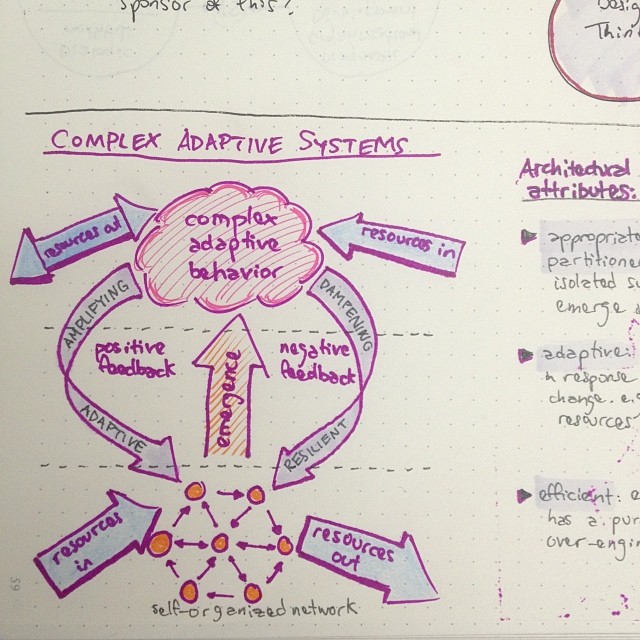

This past week has seen a veritable treasure trove of interesting and very necessary psychological findings wending their way to the reading stack of Ye Olde Blogge. It’s almost like we’ve passed Job-like through the trials and tribulations that we have been cursed with, stayed true to our calling, and now are reaping the bountiful cornucopia of blessed reward. At least, I like to think so.
Anywho. Among the other gems that we’ve found during out plentiful reading time is this piece on synthesizing several studies that analyzed American democracy as a complex adaptive system using mathematical modeling. The article summarizes several important points: (a) The studies provide mathematically rigorous support for one of Ye Olde Blogge’s pet theories on what has gone wrong in American politics. (b) The article makes a bold and distressing assessment of where we are RIGHT NOW. And (c) they makes some recommendations for what we can do to improve our situation.

“Complex Adaptive Systems (CAS) is a framework for studying, explaining, and understanding systems of agents that collectively combine to form emergent, global level properties.” Hunh? Let’s unpack it like we’re spending a week at a Paris BnB, shall we?
- Systems of agents are individual members of the system. They can be anything from ants in a colony to water droplets in rain storms to neurons in a brain to people in a city. Their commonality is that taken together they form a system. The behaviors of these individuals evolve and change as time passes and the environment changes.
- Collectively combining indicates that the individual members interact influencing each other’s behavior. These interactions form a kind of feedback that further influences the behavior of the individuals in the system and provides the basis for the third property.
- Emergent global level properties are the result of the interactions of the various individuals in the system and produce a systemic behavior that is greater than the sum of its parts. The system takes on a behavior that not only reflects the behaviors of the individual, but also, integrates those individual behaviors transforming them into an action.
Our world consists of many complex adaptive systems. Studies of these systems reveal that they have some common patterns in the way they act. These have been formed into fundamental principles. Interestingly, and importantly, one of these principles is that we are influenced by two cognitive biases when contemplating CAS: (a) We assume a hierarchical structure where none exists. The systems behave in ways that suggest they have a top-level decision maker telling the individuals what to do. This is the basis of conspiratorial thinking. And (b) we assume that the individuals have complex characteristics and motivations when they often are quite simple. Keeping both of these in mind will help us understand and utilize the insights into our democracy and the peril we are in as we work our way through the summary.
The Principle of Diversity

One of the principles that has come out of CAS studies that diversity promotes thriving systems and uniformity promotes decline and decay. It is similar to the findings that come out of groupthink. Once you lose contact with evidence and opinions that challenge the status quo, you start believing that your own BS doesn’t stink.
We already know this, but it is nice to have actual science confirm what we suspected.
The MAGA bubble — don’t both sidesism this — formed on social media has nurtured and supported the cognitive dissonance necessary to support the Big Lie, #COVID19 denialism, anti-immigration view, the 6 January Insurrection, and any number of a myriad of other detrimental beliefs masquerading as facts.
The mechanism by which this happens is interesting. Once a group begins to coalesce around a system of beliefs, they begin to eliminate anyone promoting contrary views — classic groupthink. People leave or are expelled from the group. These groups then begin to read only political news with fewer non-political news items promoted.
These trends lead to a lack of diversity in the sources of information and the members stop looking outside the group for information. When groups have diverse sources and tolerate a diversity of opinions, then the “views” of the group are moderated.
The Principle of Non-Linearity
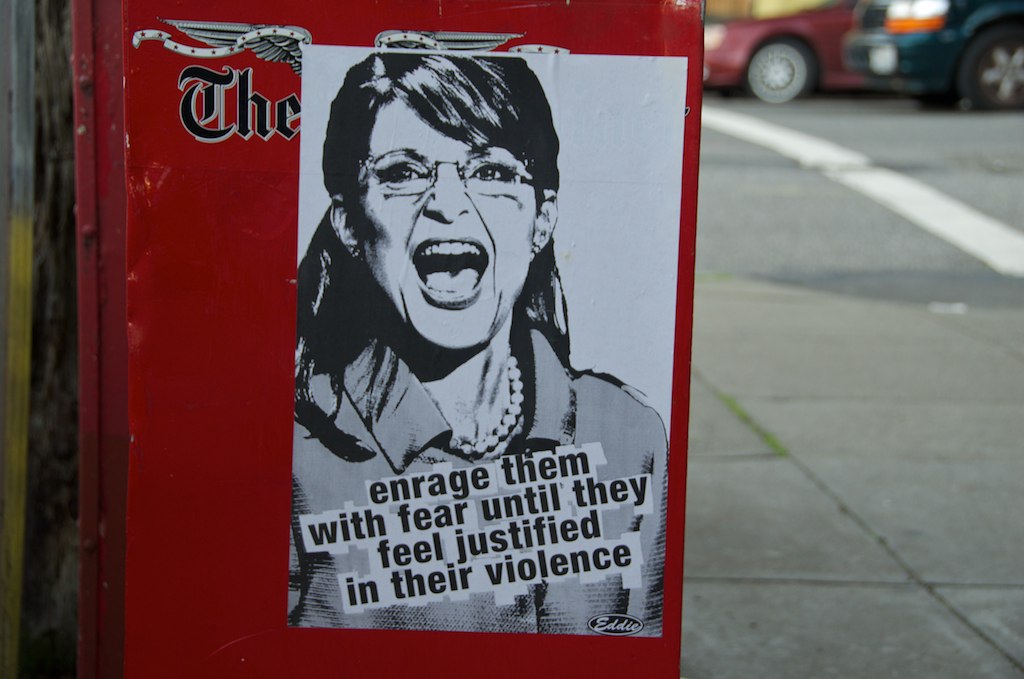
When CAS starts to lose its diversity, then the more “radical” their beliefs and behavior become. As time goes on, the trend accelerates. It’s a self-reinforcing cycle, the more extreme the points-of-view become, the more extreme they become. It’s like the brakes have come off and no idea, belief, or theory is too crazy to be accepted. The group progresses more and more rapidly down the road of extremist beliefs.
When we think of MAGA Nation, this becomes very concerning. We’ve seen MAGA go from red-faced, bulging veined, bug-eyed, spittle-inflected inarticulate screaming to making violent death threats and overt acts of physical intimidation to openly attacking the government, police officers, and killing people.
We’ve said that MAGA is radicalizing, here we have a mathematical model that supports it. They are radicalizing. Real coordinated organized violence awaits us during the 2022 elections.
The Principle of the Tipping Point
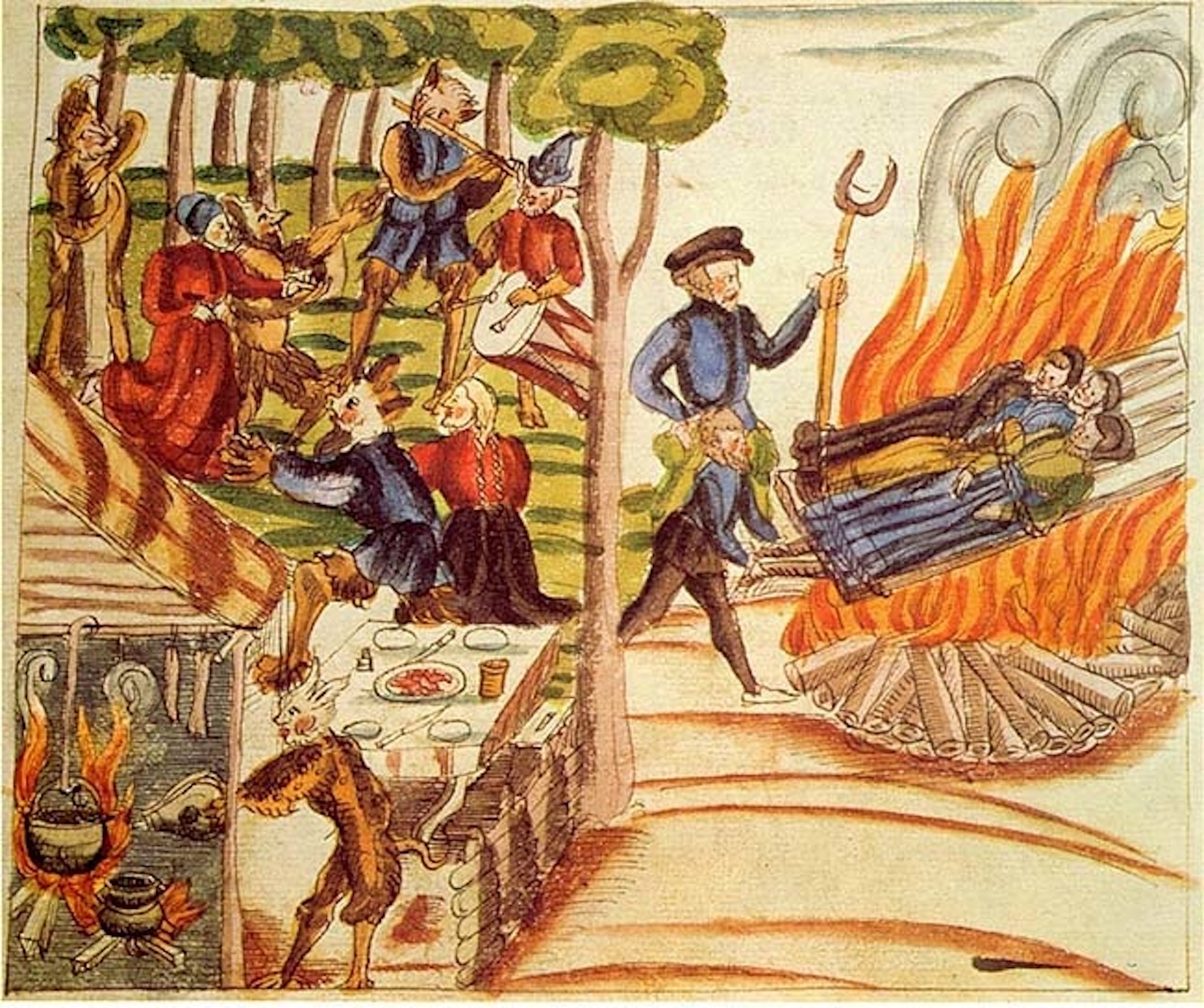
There is a point of no return in these systems. Once they get so radical and so dysfunctional, there is no saving the system. There is no way to stop the juggernaut that has been wound up and released upon the world. Remember the Witch Hysteria of the late Medieval Period? Two hundred odd years of murdering falsely accused people of crimes they had no way of committing. Murdering people in the most heinous ways possible. Murdering your neighbors and close family members. Remember that? It took hundreds of years for it pass, and it got crazier and crazier as it moved along.
These models suggest the the GQP has already passed the tipping point. No real surprise there, amirite?
Worse, though, is that the models suggest that the Democratic Party is approaching the tipping point.
Solutions
The Personal Level
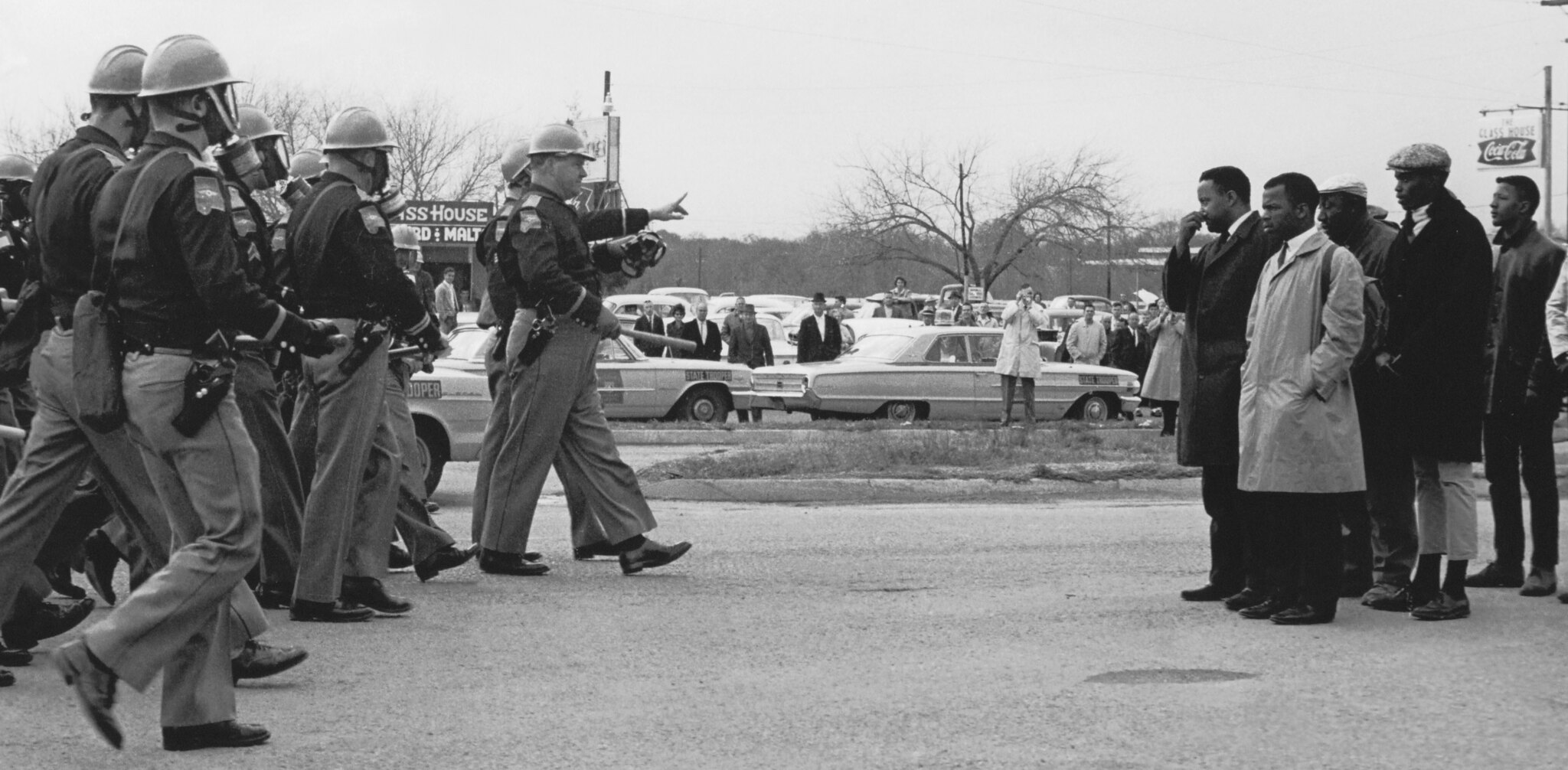
Don’t cut yourself off from a variety of news sources and opinions. There’s all kinds of stuff flying around about #COVID19 and the omicron variant. Listen to it and decide, but not just on emotional decision making. Learn the “facts” as best as can be determined by science. Understand that as more information is discovered, the “facts” may change.
Don’t allow yourself to be baited or trolled or gaslit, though. Listen and verify.
The Societal Level
As a society, we must do several things:
- Bring back the Fairness Doctrine. We need to be exposed to other points of view.
- Pass the John R. Lewis Voting Rights Advancement Act. We must end partisan gerrymandering so that a minority of voters cannot elect the majority of representatives, everyone has an equal opportunity to vote, every vote is counted.
- Pass the Disclose Act to get dark money out of our politics. Chief Justice John Roberts is so very clearly mistaken. Money does corrupt.
- Regulate social media like it is a public good or utility. Social media is so ubiquitous and so influential that this has to be a no brainer. We need to end the algorithms that social media platforms use to funnel people to one opinion and one opinion only. The Fairness Doctrine needs to be extended to social media.
What is clear with or without these mathematical models of our democracy is that we are at a tipping point. If we don’t pull away from that edge, we will live through a very dark period of our history. The fight for democracy won’t be over, but we will not be living in a democracy and it will be a very steep uphill fight to get it back.
Democracy as a Complex Adaptive System
Steven Novella 7 December 2o21
What do economics, biological evolution, and democracy have in common? They are all complex adaptive systems. This realization reflects one of the core strengths of a diverse intellectual background – there are meaningful commonalities underlying different systems and areas of knowledge. In fact, science and academia themselves are complex adaptive systems that benefit from diversity of knowledge and perspective. All such systems benefit from diversity, and suffer when that diversity is narrowed, possibly even fatally.
A recent collection of studies focuses on American democracy as a complex adaptive system, and explores the mathematical underpinnings of how democracies behave and change over time in response to specific variables. Some of the insights are not surprising, but the research adds mathematical rigor to these phenomena. For example, you will likely not be surprised to learn that social media echochambers (what they call “epistemic bubbles”) lead to increased polarization of political views. But how, exactly, does this happen?
What various researchers found is that when we obtain our political news from a network of like-minded people several things happen. First, the group tends to narrow over time in terms of political diversity. This happens because those who are considered “not pure enough” are ejected from the network, or leave because they feel less welcome. Further, people within the network tend to get access to less and less political news total, and the news they are exposed to is increasingly polarized. This doesn’t happen when such networks do not routinely share political news to begin with.
Continue reading at NeurologicaBlog: Democracy as a Complex Adaptive System

If you’ve enjoyed this post about the fate of our democracy, why not share it with family, friends, acquaintances, and complete strangers?
Use the social media buttons listed below or copy and paste the URL into your favorite platform or email it.
Otherwise, make a comment. Are we at a tipping point? Is our democracy recoverable?
In any event, like and rate the post using the buttons above and below!
And subscribe to our email list so you never miss a post!
Image Attribution
“Today I read up on complex adaptive systems.” by juropel is licensed under CC BY-NC 2.0

 The Psy of Life
Reblogged this on cabbagesandkings524 and commented:
Calico Jack reports on and shares an important study.
LikeLiked by 1 person
This study is a great find. I’m reminded of a description of how a colony of termites, each following very simple rules in response to specific stimuli build a complex mound with ventilation system and other adaptive features. Then there is the phenomenon of consciousness arising out of vast numbers of individual neurons doing very simple actions, producing the illusion of the ghost in the machine.
LikeLiked by 1 person
Howdy Bob!
As we’ve discussed many times before, it gives the illusion of a controlling force, but individuals with similar goals and similar means will make similar decisions giving an illusion of conspiracy. That’s why we must fight the urge to overattribute motivation and knowledge to the individual actors involved.
CAS is the model that explains groupthink. There is an interesting synergy — is that the right word? — here between CAS, groupthink, cognitive dissonance, and gaslighting.
Huzzah!
Jack
LikeLiked by 1 person
And one of the items from the article that you highlighted is the tendency to presume a hierarchical structure where none (at least on the presumed scale) exists as a root of conspiracy theories. In thinking about politics, this is one of the most essential insights to keep front of mind.
LikeLiked by 1 person
Howdy Bob!
That’s been much on my mind as of late. There is some leadership in the form of the various Koch Bro funded groups and the seeding of the Tea Party and now MAGA with organizers and professionals, but I think a lot of it is just people under the same influence being fed the same BS. Get them together and they radicalize themselves because groups are always more extreme than individuals. They are now churning and spiraling like the organizing effects of a storm turning into a hurricane.
Huzzah!
Jack
LikeLiked by 1 person
That seems accurate. Those who think they can conjure and control such a storm almost always wind up trying to ride the wind instead.
LikeLiked by 1 person
It’s been a lesson taught throughout history at many times and many places: the mob destroys all in its path including those who started it.
LikeLiked by 1 person
And those who would start it always think they will be the exception to the rule.
LikeLiked by 1 person
Proving once again that we are emotional self-absorbed decision makers.
LikeLiked by 1 person
To the great frustration of the mass educational dream of historians
LikeLiked by 1 person
Howdy Bob!
One of the most valuable experiences I had was in boot camp. I realized that they were trying to get us to make “correct” automatic decisions under stress and not give into the emotions of the situation. Years later as I was on a flimsy little 21 foot outboard Coast Guard boat being tossed about in a storm trying to capture a floating dock with people clinging to it, I was pretty grateful for those lessons. Sometimes, I wonder if we shouldn’t be reorganizing our curriculum for just those kinds of things.
Having seen the reaction of the Parkland shooting survivors thought to organize and push for gun laws tells me that something is being done right in the curriculum of the middle class and upper middle class schools.
Huzzah!
Jack
LikeLiked by 1 person
Those trained in responses are often the difference between success and failure, even life and death – the moments when if you have to figure out what to do, you or somebody else are screwed, when you have got to get it right the first time.
Those kids certainly learned how to organize, and how to find a way not to retreat from trauma into helplessness.
LikeLiked by 1 person
It reminded me of the high flying students in the schools I’ve taught in. They organize and solve problems. They changed a number of state laws but missed on the national. They’ll be graduating university in the next couple of years, we’ll see what they do then.
Huzzah!
Jack
LikeLiked by 1 person
Indeed, we will.
LikeLike
Some of the are sure to be heard from again.
LikeLiked by 1 person
I only see David Hogg posting on Twitter, but, again, they are in university and struggling with their PTSD. Hopefully, the suicides among them have passed and that is no longer a threat.
Huzzah!
Jack
LikeLiked by 1 person
Hopefully so. It would be interesting to know their majors in college.
LikeLiked by 1 person
Howdy Bob!
I’m working on a post scheduled for Friday publication reviewing the results of the Chicago Project on Security and Threats survey of insurrectionists. They don’t report on their majors but they do report on the amount of education: 47% with some university or better and 45% high school. Only 4% were students and 7% unemployed, so the rest were gainfully employed with 28% white collar workers.
The common denominator was adherence to the Great Replacement Theory.
Huzzah!
Jack
LikeLiked by 1 person
The GRT is another example of attributing to a natural event or pattern (demographic change) a plan and control of the process with hostile intent.
LikeLiked by 1 person
Howdy Bob!
I keep forgetting to include that point in the posts. But it is important to remember that when we see patterns, we see a controlling hand in creating them. I guess it is also an extension of proportionality bias in that big changes need to have big causes and not just some happen chance or amalgamation of disparate social and economic forces.
Huzzah!
Jack
LikeLiked by 1 person
Exactly. Those biases come into play in many cases of gradual incremental change as well, from evolution (the argument from design) to climate change.
LikeLiked by 1 person