

Autism is a disorder about prediction in general and predicting social outcomes in particular. Without your knowing it, you predict the outcome of every social interaction you have. You have a sense of how the other people interacting with you will react. Those predictions guide your next behavior. Occasionally, you have doubt, uncertainty, choices, but usually you have a confidence in what your instinct is telling you to do.
Autistic people don’t have that. Don’t get me wrong, auties have an automatic pilot when it comes to social interactions. It’s just that you’re wrong much of the time. The autie is not behaving in a way that others predict, which leaves people a little or a lot annoyed depending on where they land on the ambiguity tolerance scale.
It is the accuracy or inaccuracy of those predictions and the behavior the prediction guides which causes social anxiety in auties. Eventually, you figure out that people are reacting negatively that somehow you’ve said or done something wrong, but that something wrong seems arbitrary and unjust to you. You just don’t get that social perception.
Learning Social Interaction
Social interaction is learned. The proper behavior in a specific situation is learned through observation and interaction. How close do you stand to someone when you’re talking? It varies by culture, but most people in those cultures work it out and follow the same rule. How loudly do you talk? How much eye contact do you make? When do you make eye contact? How do you know when it is your turn to talk? All of these little rules guide your behavior without your being consciously aware of them.
How does all of that work then? How do we learn these social rules and what happens when we accurately and inaccurately predict social situations?
A lot of this type of learning takes place in the liking-wanting system of the brain, sometimes called the reward circuit, even though it is a less accurate description of what is happening. Either way, though, it is a dopamine-based system. We write about the liking-wanting system a lot because it is so integral to our behavior.

You know you’ve activated the liking-wanting system when you want to do just one more of something, like read one more blog post by your favorite blogger even though you know you’ve spent too much time on Ye Olde Blogge already, but you just can’t help yourself.
It’s there to keep you doing things that are good for you. That you like. That are helpful. Like accurately predicting the outcome of a social interaction. You predict accurately, you say the right thing, you make the right gesture, you get tacit approval from the person you’re interacting with, and dopamine is released into the liking-wanting system making it more likely that you’ll do the same or similar things the next time this situation occurs.
For auties, though, we get a flood of stress related chemicals released into our nervous systems when social situations come up. Everyone does to some degree, but in autism, it is a deluge. You are drowning in them. And, what does stress do? It makes it impossible to think! Your associative system is now offline. Consequently, even if you’ve been in a similar situation before, you don’t unconsciously access that memory like most people do, so it cannot guide you.
Even if something good comes out of the social interaction, auties have fewer opportunities to reinforce them because of the stress. The wanting and liking systems help you encode the events that triggered them in your memory so you are now hardwired to stimulate dopamine should something come even close to replicating them again. Auties don’t do that. Stress prevents it from happening.
Instead, they encode a warning to avoid the situation that triggered the high level of anxious distress. Everyone does. It’s your brain’s way of keeping you safe.
The Underactive Parasympathetic Nervous System

This suggests two things to me. First, that auties are predisposed to activating their sympathetic nervous system. That’s the system that controls flight or fight. It actually is engaged all the time. In neurotypical people, the parasympathetic nervous system keeps it in check. The parasympathetic system in auties is “weaker,” less likely to engage or manage the sympathetic system, especially around social situations.
In PDA, the sympathetic system favors the flight mode of panicked coping. Freezing like a deer in headlights. Chemically, their motor cortex has disengaged from their bodies. Their brains are no longer really thinking rationally. Everything is held in suspended animation until the danger passes only the danger is the little cutie you’ve had your eye on saying hi. Or, the barista being short with you because you’ve fumbled your order on a busy day at the coffee shop. Or, finding that you’ve got a fifty and ten ones to pay an eight dollar tab with and the prospect of giving the cashierest either seems like it will inconvenience them and they’ll be mad at you. The fifty will mean they have to produce too much change, the eight ones will mean you’ll take too long counting them out.
Looking at it while sitting at your kitchen table perusing your favorite blog makes it seem ridiculous, but as it happens, it results in freezing up. The inability to speak or move and feeling deep shame and embarrassment and self loathing.
For the auties their is always an audience inside their head knowing every little thing that is happening and the reasons why and the audience is composed entirely of Statlers and Waldorfs. Everyone in there is a critic without mercy.
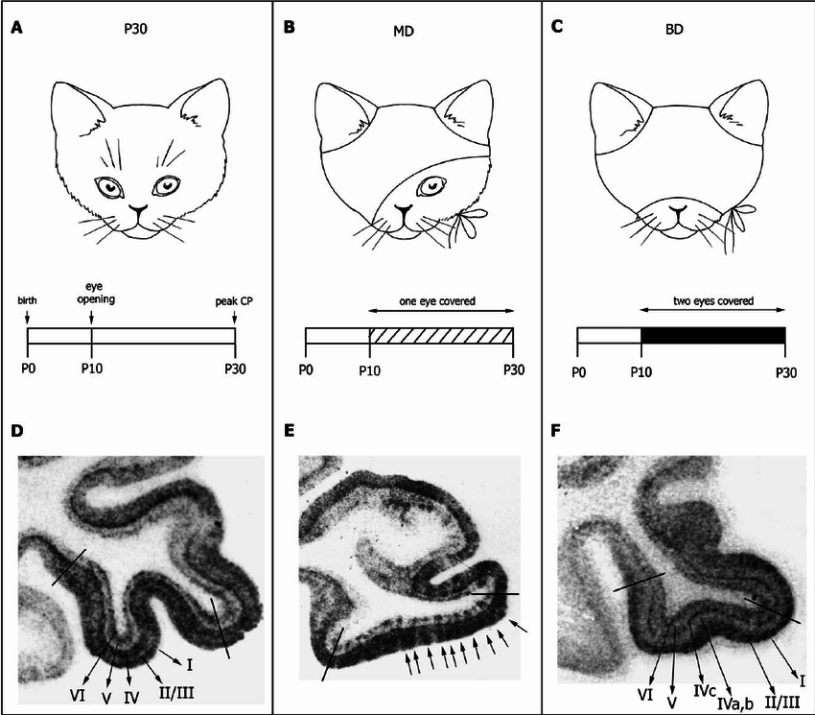
Because of the underactive parasympathetic nervous system, the sympathetic nervous system runs wild and dominates the day-to-day moment-to-moment life of the autie from eight o’clock day one. The liking and wanting system is underdeveloped through under use. It becomes difficult if not impossible for the autie to learn social cues and social norms, stunting the development of normal social perceptions much like Hubel and Wiesel’s kittens couldn’t develop their visual cortices after he had sewn their eyes shut and were blind when he opened them again.
The only relief from the stress and anxiety comes from delving into a rich inner world and avoiding the confusing hurtful outer one. Only, the confusing hurtful outer one keeps intruding and demanding attention and action. It makes for a difficult life until you can find some way to make peace with it.

Please share this post with…
…anyone you know or even remotely suspect might be interested in autism.
Like or rate this post just to let me know that you’ve been here!
Leave a comment concerning autism or early childhood development or on any other topic that might be current for you.
Follow Ye Olde Blogge or become the fiftieth subscriber!
Image Attribution
From Spotted Toad and probably used in violation copyright, so if someone wants it removed, all they need do is ask.

 The Psy of Life
Once upon a time, my very accomplished niece was diagnosed as autistic (though they revised that to being on the spectrum as she matured.) Anyway, I learned so much from her that really helped me later when I entered the school system as a para. I am as thankful that you wrote this (and I caught it.) I’m back at school but as a lunch lady these days (better hours!) Still, while I have soft spots for every student I’ve interacted with (each is “one of my favorites”,) I have softer spots for the ones on the spectrum who I could literally see had to work harder than others just to get through a full day of school and after-school. One boy made his own tape, because he’d used all the tape the project allowed and I couldn’t give him more. To me, that was genius! I ran across him in middle school earlier this year; he’s a leader in his class, and seems to be doing quite well. He’s still himself, but more careful about governing himself in general, I’ve noticed. Anyway, again, thank you!
LikeLiked by 1 person
Howdy Ali!
What a coincidence! Each student is my FAVORITE, too!
I am shocked at how much it took out of La Petite Fille to make it through the school day. The sensory sensitivities alone took most of her energy to cope with. People just don’t realize how much work it is to cope with a non-autistic world.
A lot of the problems with success that autistic people have is not due to the autism, although, it does put obstacles in our way, but it is due to the co-morbid conditions like executive dysfunction, anxiety, and depression. I’m glad to hear that the lad is doing well. He’s very inventive and clever. Adapting is the name of the game with autism.
Huzzah!
Jack
LikeLiked by 1 person
Reblogged this on cabbagesandkings524 and commented:
Calico Jack – Autism and social interaction
LikeLiked by 1 person
About that unconscious prediction system for social interaction, Gregory Bateson had this to say (also applies to habit formation, and really function that can be safely left to the auto-pilot):
“No organism can afford to be conscious of matters with which it could deal at unconscious levels. Broadly, we can afford to sink those sorts of knowledge which continue to be true regardless of changes in the environment, but we must maintain in an accessible place all those controls of behavior which must be modified for every instance. The economics of the system, in fact, pushes organisms toward sinking into the unconscious those generalities of relationship which remain permanently true and toward keeping within the conscious the pragmatic of particular instances.”
So, if the autie has not been able to generalize some class of predictive rules to the level of unconscious heuristics, they are stuck having to try to reinvent the wheel for every social interaction, or, at least search memory for a sufficiently similar situation which turned out well for them so they can do as they did then.
LikeLiked by 2 people
Howdy Bob!
One of the treatments for autism is get the child to begin to use cognitive solutions for social problems, which quickly leads to cognitive overload. It’s not that it can’t be done, but it requires so much more work. It is exhausting. With time and practice, some things do become more routine. But, it is probably one reason that autistic people aren’t seeking out new social situations. Between the sensory issues and cognitive overload issues, they can just be overwhelming.
Huzzah!
Jack
LikeLiked by 2 people
That fits with my experience when THC shut down that unconscious system. Making the social decisions without the unconscious system is hard. I could either be social (especially with people I didn’t know well) or be high, not both.
LikeLiked by 1 person
Howdy Bob!
I hadn’t thought of the effects of THC like that before, but to some degree it is true. It unsyncs so much of what the brain is doing that you have a hard time matching perceptions to thoughts to actions leading to the trope, did I just say that or just think it? I remember wondering how to respond to the way other people were behaving and it just being easier to not do anything.
Sometimes I wonder how people go live smoking everyday. I guess you’d achieve some kind of state dependent learning and be more functional, but still it must make getting anything done much harder.
Huzzah!
Jack
LikeLiked by 1 person
I think there is a lot of variability, as with any psychoactive. I’ve known people (clients) who presented at baseline almost identically with schizophrenia who swore that pot helped (and they did appear to do better) and others who were around the bend and headed for inpatient after a couple of tokes.
Then, there’s this: https://neurosciencenews.com/recreational-marijuana-prescription-drugs-20394/
LikeLiked by 1 person
Howdy Bob!
The variable potency of THC in the different varieties of marijuana nowadays makes predicting individual reactions difficult. And, when you’re messing with the neurochemical workings of the central nervous system, anything can happen. We don’t all react the same.
Huzzah!
Jack
LikeLiked by 1 person
Quite so
LikeLiked by 1 person