

Congratulations, America! It looks like we’re past the #COVID19 pandemic and have returned to normal. Not only have we had two spectacular mass shootings — the Atlanta Spa Shooting and the Boulder King Sooper Shooting — but, we’ve had seven mass shootings in seven days. Now, that sounds like the pre-pandemic America that I know and love. Please shoot me up with some bleach and shine a flashlight up my ass if this is what we’ve endured the last year of death, disease, uncertainty, social isolation, and masks to return to.
It is notable, though, that we are not hearing widespread calls to hearts and prayers and that it is too soon to politicize these events. So, progress?
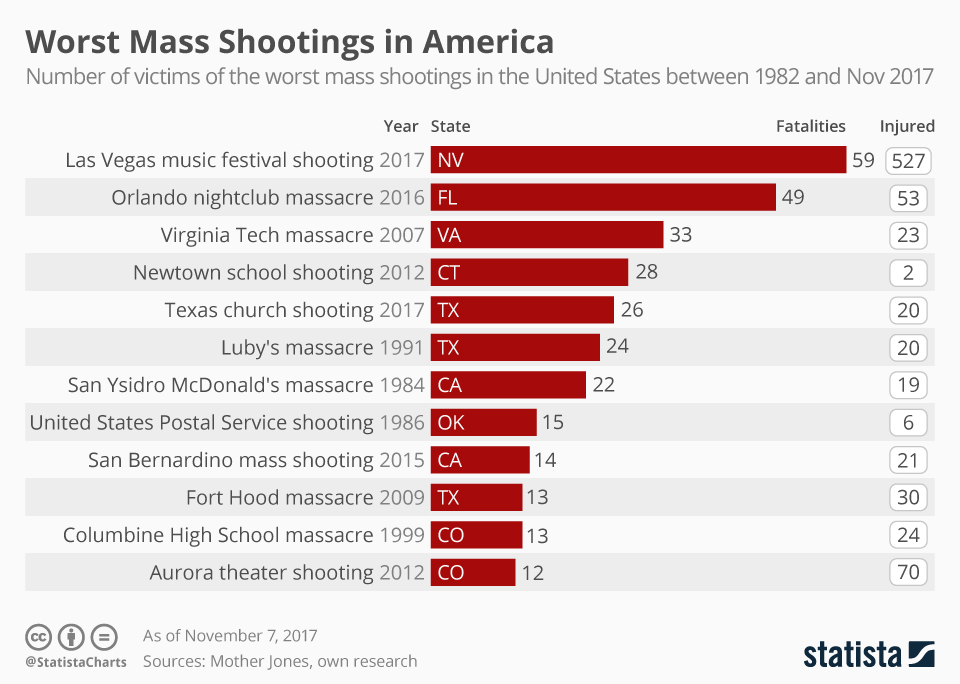
The Democrats have passed two gun safety bills in the House. Both address holes in the background check requirements for gun purchases. One requires private gun sales to have background checks before being concluded. The other extends the time limit for conducting those checks so that no one gets a gun without the check like the shooter of Charleston Mother Emanuel CME Church. Maybe it will get through the Democratic controlled Senate this time? How ’bout it Joe Manchin? Maybe. More on that in another blog post.
The Shooter’s Mental Health Issues
As information about the King Sooper Boulder shooter trickles out, this statement by the shooters brother really struck me: “He always suspected someone was behind him, someone was chasing him,” his brother is quoted in a CNN article. He added, “We kept a close eye on him when he was in high school. He would say, ‘Someone is chasing me, someone is investigating me.’ And we’re like, ‘Come on man. There’s nothing,’ ” he concludes.
For me, this statement jumped out as a huge red flag suggesting that there may be some kind of paranoid delusion occurring in the mind of the shooter and wondering why the family and friends who were aware of these thoughts didn’t treat them like the symptoms of a mental health disorder that they are. First, let’s start with the idea of paranoid delusions and then move on to how we deal with mental health issues.
Delusions
Delusions are a symptom of a mental health disorder in which people cannot distinguish between reality and what is imagined. The deluded person has an unshakable belief in the reality of what they’ve imagined to be true. They treat their manifestly false beliefs as if they are part of daily reality. A good example is believing that an election was rigged through some type of program or app used by a voting machine company when it wasn’t. While it is conceivable that such a thing could happen and even might happen in the future or did happen but with another company, there is no evidence to support the belief with regard to the company the deluded person has targeted. Isn’t that right Powell, Giuliani, and Lindell. As far as I can tell, many people are spouting these falsehoods, but at one time in their fevered babblings on the pundit shows, these folks actually believed it… well, at least, until the lawsuits were filed and then it became better to claim that no reasonable person would believe such a patently false statement so no one should be held responsible for not only promoting those claims but using them as a basis for court cases.
Unfortunately for the ten dead and dozens of shoppers and hundreds of family members and friends of those affected by the Boulder King Sooper shooting, the delusions of the shooter are not so easily dismissed or ineffective.
Paranoia
Paranoia is the development of “a persistent, well-systematized, and logically constructed set of persecutory delusions, such as being conspired against, poisoned, or maligned.” Hunh? A person who is paranoid to use the vernacular sense of the word, experiences high levels of anxiety or fear about being persecuted, threatened, or conspired against. You know, the person who takes the old joke, We all got together last night to discuss why you’re so paranoid, seriously.

Paranoid Delusions
Simple paranoia shifts into paranoid delusion when the person cannot be dissuaded from their irrational beliefs by evidence to the contrary or any other appeal. They no longer can manage their irrationality. It shifts to a true mental health disorder when it begins to interfere with their ability to function on a daily basis, either to take care of themselves or interact with others.
Persecutory delusions are another way of describing the same condition. The person feels like another person, group of people, or organization is planning on or actually harming them.
While most people with mental health disorders are not a danger to others including those with paranoid delusions, it is easy to see that this could easily cause someone to defend themselves from being persecuted. If you believe that the mail person is causing you to have suicidal or homicidal thoughts, then the next time the post is delivered, you just might could “defend” yourself against them. For example, a case study of a delusional older adult shows the extent to which someone with delusions may act on them. This woman believed that the neighbors were breaking into her house and making pornagraphy with her dog. She would set traps for them like smearing the front stoop with butter so they’d slip and fall kinda like Bugs Bunny, Elmer Fudd, or Wile E Coyote might do in a similar situation. She never harmed anyone though, as you might well imagine.
More Signs of Delusions
You can see how when the shooter started to voice fears that he was being followed, chased, and investigated, it sounded pretty much like paranoid delusion. Unfortunately, there were other paranoid delusions as well. He claimed on a FB page that his old high school had hacked his phone. On 18 March 2019, almost one year ago, he wrote, “Just curious what are the laws about phone privacy because I believe my old school (a west) was hacking my phone.” Unfortunately, people only asked him why he thought that might be happening not recognizing it for the paranoid delusion and symptom of a much larger problem than it was.

In other posts, he was begging to be left to lead a normal life and professed a belief that the school was hacking his phone because of racism and false rumors spread about him. Still more evidence of mental distress.
If his family and friends had had any kind of understanding of mental illness, they would’ve been reaching for him and trying to help him cope with his delusions. They would’ve been urging him to see a professional and seek treatment.
Signs of Imminent Danger
Worse, there was one glaring sign of imminent danger: he was seen “playing” with a gun two days before the attack. He told his sister-in-law that there was a bullet stuck in it and he was trying to get it out. This was from a man who had expressed paranoid delusions and never had carried a gun before in his life. How guilty must she and his brother be feeling now that they didn’t react to such a clear warning sign?
Helping Someone with Paranoid Delusions
The question is, how do you help someone who is delusional? The shooter’s family and friends knew something was wrong, which is probably also true of the Atlanta spa shooter, too. They were probably as worried as they were uncertain of how to help. Here are some recommendations:
- Don’t dispute the delusions. As tempted as you are to argue with the person because they are so clearly wrong, don’t because delusions tend to be malleable, and the person will simply use your objections in their delusions.
- Don’t reinforce the delusions. Many are tempted to go along with the delusion, especially if objecting hasn’t worked. Don’t do this either. Playing along with them will validate those beliefs and strengthen their resolve.
- Follow the emotion. While the thoughts are erroneous, the emotions driving them are not. The person is afraid, anxious, and worried. You should acknowledge these emotions — and whatever other ones they present — and redirect them to other explanations. Try something along the lines of, That would be scary, but I see it a little differently, and follow up with an alternative explanation for why the helicopter is flying so low overhead or the van is parked across the street or whatever it is the person is fixated on.
- Get help. Help the person get professional help. There is only so much family members and friends can do. The delusional person will need talk therapy and medication to help them through. The delusions will probably never go away completely, but their disruptive effects will be manageable.
Getting Help for Mental Health Issues
In general, if you or someone you know is experiencing a mental health problem, you should seek help. Here are a few resources in the US to get you started. For resources outside of the US see the excellent blog post, Happy World Mental Health Day, where there are listings for the UK, India, and Canada. If you have contact information for other countries, please list them in the comments.
There are lots of publicly available resources. Here are some for various situations

- If you are in a situation where there is a threat to yourself or others, call 911.
- If you are suicidal, call the National Suicide Prevention Hotline 1-800-273-TALK (8255); en Español 1-888-628-9454; and hearing impaired TTY 1-800-799-4887. They can also hook you up with the nearest crisis center that can provide crisis counseling and mental health referrals.
- The Crisis Text Line provides help by TEXT, text “HELLO” to 741741 for help finding a crisis counselor.
- Veterans Crisis Line provides help to our veterans by calling 1-800-273-TALK (8255) and pressing 1 or text to 83825.
- Disaster Distress Helpline is available by calling 1-800-985-5990 or texting “TalkWithUs” to 66746. They provide immediate crisis counseling. It is free, multilingual, confidential, and available 24-7.

If this post was interesting, entertaining, or helpful for you, please sign up for our email list
Image Attribution
“Delusional beast” by Matt From London is licensed under CC BY 2.0

 The Psy of Life
The Atlanta and Boulder killers both were in the grip of delusions which have an established track record of causing mass killings, namely Christianity and Islam respectively. Any additional delusions they suffered from were icing on the cake.
LikeLiked by 1 person
Howdy Infidel!
I have seen no clear evidence that the Atlanta shooter was delusional at the time of the shooting. We can get all snarky about religion because fun, but actual delusional thinking? No. The Boulder shooter was experiencing paranoid delusions and red flag laws could have stopped him. If his family and friends been better informed concerning mental health issues, they might have intervened a year before and prevented the entire catastrophe.
Huzzah!
Jack
LikeLiked by 1 person
Reblogged this on cabbagesandkings524 and commented:
Calico Jack – Paranoia, Delusions, and Bullets
LikeLiked by 1 person
Another feature of paranoia and delusions is that the person will very often resist seeking or accepting treatment due to denial of the unreality of the beliefs and fear that any treatment provider would be part of the plot. I don’t know what the law is in Colorado on involuntary assessment and treatment, but in the state where i worked (CA & AZ) it is a high bar of “Danger to Self” (suicide or very severe self-harm with Thought, doable Plan, Intent, and Means), “Danger to Others” (generally interpreted as specific threats to individuals, groups, or institutions, again with Thought, Plan, Intent, and Means), and “Gravely Disabled” or “Unable to Care for Self, or Accept Care” (Inability to manage or accept adequate Food, Shelter, or Clothing, and in some cases Medical Care for a life threatening condition), all of that caused by “A Treatable Mental Illness” (not a developmental disability or neuro-degenrative medical condition such as Dementia, or a medical condition causing Delirium such as intoxication, withdrawal, very high or low Blood Sugar, dehydration or hyper-hydration, or fever.) In the case of the Boulder shooter, yes, someone with known and persistent delusions and paranoid thinking having a gun is a Red Flag (Does CO have a Red Flag Law?), but absent an expressed threat, involuntary intervention could be difficult or impossible to implement, especially for a family unfamiliar with the mental health system and resources in their area. There is also, for many, the cultural factor of family shame in having a member who is mentally ill.
At a different level, when I consider the numbers of people in this country who are subscribing to various conspiracy theories, I have to conclude that we are in a pandemic of Paranoia and Delusion, and quite a few of those people are armed and potentially dangerous.
LikeLiked by 1 person
Howdy Bob!
Colorado doesn’t have a red flag law. A national red flag law would be nice so that we could all be protected equally.
We have to consider improving our awareness of and attitudes towards mental illness as part of our plan to reduce the number of gun-related deaths every year. Not just mass shootings, but also suicides. Recognizing the signs and symptoms of someone distressed, especially with easy access to guns, has now risen to a high level of importance, but I fear it will get lost in the hullabaloo of gun rights arguments, which are only used to distract us from the GQP’s looting of the country.
Huzzah!
Jack
LikeLiked by 1 person
Even with all the mass shootings, suicide by gun claims more lives by far than all those combined. When I was working Crisis calls, I came very close to hearing a loud noise at least twice, once, because the called was too drunk to realize he was trying to load a .38 clip into a .45 gun. One study found that among people with no history of mental illness who attempted suicide, the mean elapsed time from first conscious thought to action was 10 minutes, and less (7) for children and teens. Then there are the domestic violence shootings, and “rejected lover” shootings, which often are murder-suicide events. All in all, guns area public health problem rivaling COVID and Opioid Overdose.
LikeLiked by 1 person
Howdy Bob!
Guns are the most lethal weapon there is. While it is difficult to quantify, gunshots are far more lethal than stabbings and bludgeonings and drowning. In terms of suicide, guns-related suicides result in death nearly 100% of the time. A bullet to the brain tends to do that to you.
In terms of gun deaths, two-thirds year in and year out are due to guns. I know we’ve discussed this before, but most of those gun suicides are among rural white men. And, of course, the gun of choice is a handgun. If legislators wanted to reduce gun deaths, they would address suicide and mental health.
One of the questions that we have to ask is what pushes the mass shooter who initially begins with the murder of family and then moves to random public victims somewhat like the Sandy Hook shooter or the Texas church shooter. Most people are content with their own death and perhaps with family, so what pushes people over the line to commit mass murder of strangers?
Guns are another issue in which the GQP position makes no sense. Why fight regulation so hard when it is so clear that we can regulate guns without infringing on gun rights excessively, and if the GQP did it, they could take the issue away from the progressives. So, why fight it? NRA money has dried up and unlikely to return. Habit? Or is it just another issue to keep the public divided and fighting, their base riled up, and sow chaos in our society by the frequent bouts of deadly violence we endure?
Huzzah!
Jack
LikeLiked by 1 person
The GOP seems committed to an absolutest view of “gun rights”. Some of that is due to the view of White Christians (male) as an embattled minority who need them, whatever the cost.
As for the family shooter who becomes a mass shooter, often the mass shooting is a suicide mission. Otherwise, killing a lot of people is an act of power, one they may have fantasized for a long time, and having killed one, might as well go for the headlines and show what a total bad ass they are.
LikeLiked by 1 person
Howdy Bob!
That neither the Boulder or Atlanta shooter was a suicide mission is one of the things that makes them “interesting.” The mass shooting ending in suicide happens so often that it has almost become cliche. Mass shootings in general are almost cliche now. Unfortunately. In fact, the Boulder shooter stripped to his jockey shorts to ensure that the police didn’t kill him.
The armed right has been fantasizing about defending themselves from the masses of rioting vengeful PoC and oppressive leftest governments for so long and so intently that they must be incredibly disappointed that neither Obama or Biden has shown up to confiscate their guns and that their neighborhoods haven’t been razed by the riotous mob of PoC.
Huzzah!
Jack
LikeLiked by 1 person
The Atlanta shooter was on a mission to expunge a personal threat to his sinful soul, not to be a hero or martyr to a larger cause. He also belonged to a religious community that very strongly condemns suicide. He was trying to avoid Hell, not seal his fate by committing suicide.
The Boulder shooter was apparently acting somehow, according to his delusions, in self defense, not self destruction. Since he will obviously be having a psychiatric evaluation (Insanity Defense), the connection between his delusions and the grocery store may become clear.
The armed right will continue to buy more guns every time a gun control bill is presented at the state or federal level. They may be disappointed so far, but will continue to expect the worst. Some will try to make it happen, as do the mass shooters (and at least one bomber named Tim) who think their action will bring on the race war.
LikeLiked by 1 person
It sounds like his family are as delusional as he is. What 21-year-old “plays” with guns? I mean really? & any intelligent person can tell if your family member has mental problems. You don’t just say, “oh, that’s how he is or she’s always been bat-shit crazy”. YOU GET THEM HELP. I don’t know about CO but here in NY, we actually have laws for that. Of course, we have gun laws too.
LikeLiked by 1 person
Howdy Silver!
My guess is his family are in denial about how mentally ill and dangerous he is. It is a frightening thing to confront the a dangerous paranoid delusion, especially when he’s already armed. It is much easier to deny the reality. If we had open discussions of how to deal with folks who have mental health illnesses, maybe they would’ve realized that they had options back at the beginning of 2019 and gotten him help. It points out the need to have a national red flag law so that we are all protected equally.
Huzzah!
Jack
LikeLike