

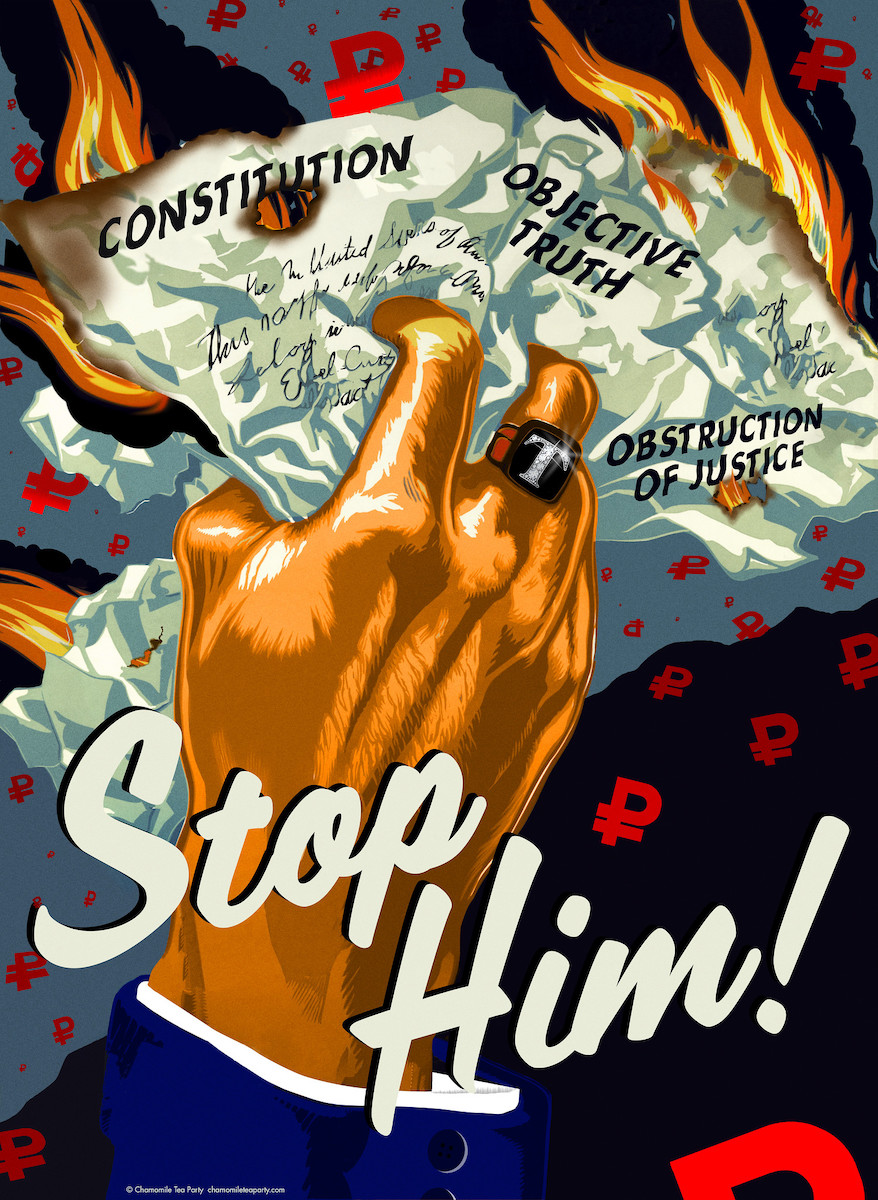
SUMMARY: In the media, we are hearing many reporters and pundits saying that the government will have a difficult time proving whether Trump knew he was lying or not. And, that the case against Trump depends on this determination. This idea is patently false, but it has become so prevalent that it seems like common sense now. Why would so many make such a fundamental error? The framing effect helps us understand the phenomena without resorting to sinister motivations or conspiracy theories.
KEY WORDS: Framing effect, availability heuristic, indictment, election, fraud, reporters, pundits, the law

It would seem that many reporters and pundits are struggling to reconcile the charges Trump is facing in his election crime wave indictment with the requirements that courts have for prosecutors to “prove” their case beyond a reasonable doubt and the role that the defendant’s intentions play in whether a crime was committed and whether they are found guilty or not. Admittedly, it is not a straightforward relationship and there are lots of places where confusions can creep in, but it took me a couple of hours one afternoon last week to sort it all out, and I’m a part-time blogger and full-time citizen. It seems like it isn’t asking too much of people who make their living reporting or commenting on the news to have done the same.
Reporting in the Media: Did He or Didn’t He Know He Was Lying?

What explains the kind of reporting and commentary that we’re seeing? Let’s look at an example. In At heart of Jan. 6 case: Trump’s state of mind published 2 August inThe Christian Science Monitor, we learn the following:
- In the most serious indictment yet against former President Donald Trump, jurors will have to decide whether he believed the election was stolen, or whether he intentionally lied about it.
- Mr. Trump’s defense against these federal charges will likely rely at least in part on the insistence that he continued to believe these claims, notwithstanding others’ objections, and that his actions were thus not corrupt at heart.
- It’s not the first criminal indictment against a former occupant of the Oval Office. (They go on to note that all the other criminal indictments against a former occupant of the Oval Office were also against Trump. Go figure.)
- The new case also presents more challenges than the Manhattan or Florida ones, Mr. Rosenberg adds, in part due to the fact that prosecutors will have to prove Mr. Trump acted intentionally. (Emphasis added)
- However, this is the prosecution’s story of the case, of course. Mr. Trump’s lawyers may be able to frame these instances differently, pointing to others who had insisted to Mr. Trump that the cited instances of fraud really existed – and that the former president, eager to stay in office, grabbed at their views. (So, it was all okay? As long as they are sincerely held beliefs?)
- “A lot of this case depends upon the jury reaching a clear conclusion about what Trump was thinking and what he believed at particular times,” Mr. Geraghty writes. (That is Mr. Geraghty of the National Fucking Review, FFS.
- Thus the Jan. 6 case may be far from a slam-dunk prosecution.)
After reading this article, numerous others, and listening to various pundits pontificating on the boobtube, you’d think that if Trump says, I really really really believed that the election was stolen, then he can’t have conspired to (a) disrupt an official proceeding of the government, (b) defraud the government, or (c) deny millions of Americans their right to vote.
As many have pointed out, that is poopycock.
The Legal Media Sphere Explains the Knowingly Part
As the esteemed legal scholar and author, Teri Kanefield wrote in a recent blog post, Trump’s motive for committing the crime doesn’t matter because a good motive does not get a person off the hook for committing a crime. Call it the Les Miserables effect. We all sympathized with Jean, who stole a loaf of bread to feed his sister’s starving family and was jailed for 19 nineteen years like he filled out a provisional ballot when ineligible to vote. Unlike Crystal Mason’s sentence, Jean’s seems unfair.
Trump’s public insistence that the election was stolen from him may cause some to feel that it could be justification for his actions. After all, it was a perceived injustice, and he was only doing what any red-blooded American would do to rectify it. Let’s call it the rogue cop who can see the truth when no one else can and HAS to break all the rules to achieve justice or the John McClane effect.
Kanefield goes on to explain, If I think I have been the victim of a crime or there has been injustice, I have the right to pursue legal means. I can call the police. I can file a lawsuit. I cannot take it upon myself to be a vigilante. There is no stand your ground law allowing you to organize a coup if you feel like your election has been stolen from you.
You should really read her post, or my previous post on why the free speech defense is gaslighting. Both explain that the prosecution must prove that he intended to (you know, knowingly) (a) obstruct the official proceeding, (b) defraud the government, and (c) prevent people from exercising their rights. He could do all of these regardless of whether (a) the election were stolen or (b) he believed it was stolen.
While MAGA and Fox News talking heads can be “forgiven” for not communicating the nuances of the jurisprudence at work here, I cannot countenance the mainstream media being incapable of communicating such distinctions. Yet, it is everywhere, even The Christian Science Monitor, even though the only real support they could find for the “convince the jury that Trump knew he had lost” argument came from The National Fucking Review.
Is there a psychological explanation for why professional reporters and pundits cannot or do not what a part-time blogger and full-time citizen does by accessing easily found blogs, Substacks, and podcasts? Well, yes, yes there is.
The explanation lies in the framing effect and how we construct our view of reality and the difference between the way yours and my mind works and Trump’s narcissistic brain works.
The Framing Effect Explains the Confusion Among Reporters and Pundits
THE FRAMING EFFECT is the behavioral economics bias in which people come to different conclusions depending on the way or order information is presented (conlatio, “Cognitive Bias“). The world consists of a lot of information and if you add in all the information you know already and all the information that is possible to know, then you start to get overwhelmed. To help with that, we use frames or parameters to limit the information that we’ll use to interpret a situation.
Typically, those parameters follow the availability heuristic, which is the tendency to overestimate the likelihood of events with greater “availability” in memory or that are more easily and quickly accessed. Often, those memories either occurred more recently or were emotionally charged (Own the Puck, “The Impact of Cognitive Biases on our Evaluation of Play“)
Let’s consider an example of how we assemble knowledge and how it can lead us astray.
Vomit Banana
When you read the words vomit and banana, you probably thought the banana caused the vomit. If you didn’t, let us know in the comments. There is no reason to think that the banana and vomit have any relationship at all other than they are words that I copied from a study on how we use past knowledge to interpret our present environment.
When reporters hear Donald Trump, his sickophant lawyers, and his gaslighting supporters say that this is a free speech issue, they try to make sense of it by accessing what they know about free speech and the indictment:
- FREE SPEECH: The government can’t tell you what to say, not to say, or prosecute you for saying sumpthin.
- THE INDICTMENT: Jack Smith wrote over and over that Trump knowingly lied about the election being stolen.
- CONCLUSION: Ergo, presto, sum cum laud, the case must turn on whether Trump believed the election was stolen and the government is prosecuting him for making “fraudulent” claims. See? Fraudulent? Hunh? That’s a legal word.
That is how it happens. To resist the framing effect, it takes conscious effort to consider other information than what comes easily to mind. You know, like I and so many others did, we went out and read the blogs and Substacks of trusted legal sources and listened to the podcasts of lawyers and investigator. They told us what we needed to know.
If you thought this explanation helpful or entertaining, pay it forward by doing one of these things:
- SHARE the post on your favorite social media platform, re-blog it to your favorite blog, or tell a friend.
- LIKE or RATE the post using the buttons at the top and bottom of the article. It’ll let me know you were here.
- COMMENT on the post and let me know why you think so many reporters and pundits are getting this wrong. I’d love to talk about it.
- FOLLOW the blog or join our email list so you never miss a post!
Image Attribution
“Stop Him!” by outtacontext is licensed under CC BY-NC-ND 2.0.

 The Psy of Life
I try to imagine how History would have changed if responsible media people in Germany would have posed the same questions at or about the time that Chancellor Hitler was on the ascendancy to his eventual supremacy. Of course the newly-elected Chancellor had his own media …the Goebbels media …(My idea is that we already have our own right wing version of the Goebbels media right here on our own soil serving much the same purpose for our allegedly ascending miscreant) ….the inescapable truth is that no matter who argues what in this mess, the outcome is already predetermined because of the object’s fully-functional shadow government, covering his every base at every juncture and he is definitely going to occupy the Oval office again in the 2024 pseudo-elections. I do not know or understand why supposedly intelligent and perceptive people waste their time on this subject when everybody knows, way down deep in their gut instincts, that the wiggling worm is going to rule again …but this time the rule will be more darkly authoritarian than ever.
LikeLiked by 1 person
When I came to “VOMIT BANANA”, my response was more of a “Huh?” or “What does that have to do with any of this?”. Although, there was a fleeting imagined visual image that I’ll resist describing. It also reminded me of the banana I just had at breakfast and the dark spot at one end that I did not eat.
Framing is a major activity in our process of placing information in a context. We can’t not do it. It’s fundamental to perception and interpretation. As Gregory Bateson observed, “Without context words and actions have no meaning at all.”. So, if you can control the context and the frame, you control the meaning. In propaganda, that is the task. It is also the task in that field of battle, the courtroom and the minds of a jury.
And, I’ll just throw in for reference this item: https://www.psypost.org/2023/08/critical-thinking-education-trumps-banning-and-censorship-in-battle-against-disinformation-study-suggests-167711
LikeLiked by 1 person
Howdy Bob!
Your reaction to VOMIT-BANANA probably is pretty typical, but it does support the contention that you try to build a causative narrative as represented by the steps evident in your reaction: (1)Huh? (2) What does that have to do with any of this? And, finally (3) an image of someone vomiting a banana. Your memory of not eating the bruise on the banana also links to vomiting just because we fear eating a bad part of the fruit would make us sick. I would wager few people imagine a banana vomiting, for example. Perhaps you did. I don’t know. Still, you find some link between the two words. It is always an interesting experiment because responses are so universal.
One way the GOP controls the context and the frame of an election is by using racist dog whistles and fear mongering. The problem with critical thinking is that thinking is hard and we resist doing it, except for us masochists who enjoy inflicting the pain and discomfort of thinking on ourselves.
Huzzah!
Jack
LikeLiked by 1 person
Yes, we do. I did decide that it would have been easier to arrive at the banana vomiting if the order of the words were reversed. Then, I could imagine a violently hurling Chiquita Banana from those old commercials.
The thing about the article on teaching critical thinking is rather like that old joke about how to get to Carnegie Hall — practice, practice, practice.
LikeLiked by 1 person
We the People can discuss the merits/deficiencies of legal terms and indictments all we want, but it is all meaningless — unless we are a member of the jury in said case. And the chances of that happening are extremely low (impossible in my case as I am not America). All it will take is one MAGAt on the jury who refuses to believe Trump is guilty of anything. That juror could bring the whole circus to its knees.
Personally I hope there are no MAGAts on the jury, but with them being more than 30% of the American population, the odds of that are slim.
Meanwhile, everyone gets to give their opinion, but that’s all it is — an opinion!
LikeLiked by 1 person
Howdy Rawgod!
Actually, MAGA is roughly 20% of the population (340 million Americans, 73.6 million votes for Trump in 2020). Juries are always tricky and all bets are off when it goes to the jury, so we’ll see.
However, everything isn’t just opinion. There are the guidelines that DoJ issues for its attorneys to follow when deciding to bring charges and their are the rules for what makes a crime. Those are factual. When they talk about criminal intent, they mean intending on doing the thing that was against the law regardless of whether you thought it was justified or whether it was legal or not. Those things are facts, not opinions.
Whether or not the jury votes to convict based on those facts is another story, and one reason Trump et al. are crowing as loudly and frequently about free speech as they can. They are trying to frame the argument like they did with the Mueller report and the 2016 election.
Huzzah!
Jack
LikeLike
I would go with your 20% figure about MAGAts in America, except Americans don’t all vote, therefore there are a lot of MAGAts who also don’t vote. I think, if every American of voting age voted, however, Republicans would never hold federal power ever again. They are corrupt beyond words. And they count on a big chunk of Americans not voting!
Just my thought…
LikeLiked by 1 person
Howdy Raw!
You’re right about that. And, even though jury pools are drawn from registered voters, admittedly, in some jurisdictions they use other sources like driver’s licenses, not everyone who registers votes. Still, the more committed MAGA will have voted, and Trump’s superpower was to bring the low-information seldom or never voting citizen to the polls.
The commitment to vote is important when determining the degree of MAGAization of the country. There is a high-correlation with protests and election outcomes. The side that has the larger, more frequent, and more energetic protests in the run-up to the election, usually has the better turnout in the election and tends to win. The reasoning is that if you go to a protest, you are demonstrating commitment, which will then be used in other avenues of life, like voting.
The same is probably true for MAGA affiliation. While you may be sympathetic to MAGA ideas and virtues, if you’re not willing to vote in an election for Trump, how likely are you to stubbornly ignore evidence and the social pressure of other jurors to vote for conviction?
Those ten percent who have MAGA sympathies are easily seduced into voting Republican by the racist dog whistles the GOP uses, but it is possible that they can be peeled away from the “movement.” They are fringe.
Huzzah!
Jack
LikeLike
“It seems like it isn’t asking too much of people who make their living reporting or commenting on the news to have done the same.”
Precisely. Thank you.
LikeLiked by 1 person
The things that are put into articles and commentary have just astonished me. Some of the interviewers on Sunday did okay, I thought. They pushed back on the lawyers. I would love to see Ari Melber or another real attorney interview them, though.
Huzzah!
Jack
LikeLiked by 1 person