

What can I do? I am only one person. What can I do to end racism, especially systemic racism?
Good question that no one has asked me since I posted Editorial: Whiny White Supremacists and Their Need for a Country, Culture, Celebration of THEM! But, I’ve got an answer, anywho, but this time without so much snarky, sarcasticky, profaney goodness because sometimes that shit just mucks up your message.
Because I am autistic and trained in mental health and widely read in psychology and its applications to every day life, I rely a lot on introspection and personal experience, especially in how we raise our consciousnesses concerning racism and changing our behaviors. So, expect the rest of this to be personal — about me and asking it of you as well. Feel free to respond in the comments or to email me. I’m happy to work through what ever comes up for you. I will not be trolled, though.

You are not alone. There are several places to go look for ideas. Let me list some links:
- Jane Elliot of the famous Blue Eyes-Brown Eyes study has a lot of terrific work on confronting white people in their privilege. She’s pretty amazing to watch in action.
- Tim Wise the well known author, speaker, and anti-racist. I found his FAQ to be particularly helpful.
- The People’s Institute for Survival and Beyond is a group devoted to undoing racism.
- Salon has an interesting article in which they solicit advice from eleven people on what white people can do, 11 Things White People can do to be Real Anti-Racist Allies.

Cultivate introspection and self-awareness around the issues of race. Be a good observer of yourself and your inner reactions, especially those that you attempt to suppress. One of my first experiences was realizing how uncomfortable I could be around black people, especially when I was in a black neighborhood. Some of it was “justified.” I remember the boy shouting at me, Bring the bicycle over here white boy. The boy who spit on me as I rode up behind a trolley. The man-child who hauled out a flip knife and was flipping it open and closed as a friend and I cleared up after a rally in a park asking about what a couple of white people were doing in a black neighborhood after dark. There was a degree of threat some more real than others in each of those situations.
But, I also recognized the discomfort I felt in my early mental health career when I had to work with black people, especially young black people, especially young black men. I began to question myself because I knew it was wrong. It was a struggle to confront the fear that I felt just from being in the presence of a young black man and the more “ghetto” or “hip hop” or “rap” he looked, the worse it was.
Anyway, the more I worked at it, the more I realized that the problem was mine. But, the key here was the stimulus material. I had to be around black people to feel the fear and discomfort before I could start to resolve it. Maybe you do, too. I don’t know.

Realize how damaging and corrosive discrimination is to those on the receiving end of it. The first time I watched the PBS Frontline episode, A Class Divided, and saw the pain and hurt on those children’s faces, I knew that anyone who had experienced what those children had would be feeling that but worse. People of color experience discrimination everyday. Here’s a short excerpt from the show. See if you have the same reaction.
Here’s an example of her work with groups of white people on identifying racism.

As a white person, you have to ask yourself, what came up while watching those clips. And, if you’re being honest, you might identify some defensiveness or denial or not-me-ism or some such. We all have internalized racist attitudes and ideas because we came up in and live in a racist society. We can’t get rid of systemic racism without first ending those racist attitudes in ourselves, and we can’t do that if we don’t have an emotionally meaningful encounter with them. Luckily, it can be done privately and by yourself. I think, many white people fear the embarrassment and condemnation from owning up to their issues around race.
You will also start to become aware of how you’ve benefited from being white in your personal life. Every time a police officer murders an unarmed black person, there’s always a spat of jokes on Twitter, Facebook, and other social media about how a white person was stopped by police and wasn’t shot. That’s a prime example of white privilege. You got a mortgage and you weren’t redlined, white privilege. You walked through a parking lot and no one shouted nigger at you, white privilege. You see the way this works. It’s like white privilege occupies the negative space in our lives. It isn’t that we get a leg up, it is that we are not oppressed.
One of the most curious aspects of white privilege is our assumption that we should be able to appropriate anyone and everyone’s culture, and maybe in a perfect world we would. But, our world is stained by the racism that benefits us whites and oppresses non-whites. We, as a group, should forego cultural appropriation out of respect for the oppressed. We already have everything, we don’t need to be wearing dashikis or kimonos… and can we end the embarrassment of country rap? Can we all agree right now to just walk away and pretend like it never happened?
We sure as shit do not need to be using the term nigger. We should just put that motherfucker down and leave it alone. It ain’t for us and you just look ridiculous, just ask Bill Maher.
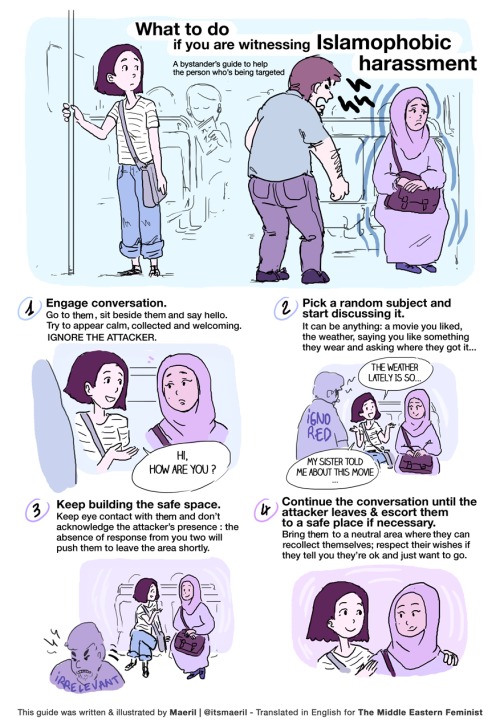

Be prepared to react in an effective and positive way when you’re in public. If you witness someone being harassed because of their skin color, ethnicity, gender, or religion, talk to them. Ignore the harasser. Talk to the person being harassed. Be positive. A reader wrote in the comments some time ago about an experience she had in a Walmart or other similar store when a man started harassing a Muslim woman wearing a hijab. All she did was start talking to the woman. She began by complementing her hijab. It was brave, non-confrontational, and effective.

Talk to other white people about racism, prejudice, implicit bias, and white privilege. One of my early formative experiences was in writing to the New York Times Ethicist reacting to a question about putting on a blackface performance for a nonagenarian’s birthday party. The reason you don’t do those things is explained by prejudiced norm theory — people inclined to bigotry are more likely to act in bigoted ways and feel understood and accepted.
Remember that minority influence tells us that a member of the in-group advocating a minority opinion is much more powerful in changing the views of the majority than a member of the minority saying the same things. Your gentle understanding in your discussion with a peer will go a much longer way to promoting change than silence, lecturing, mass emails, or just about anything else.
Notice what isn’t here: talking to people of color about what they want. They want the racism to end. Great you’ve recognized the systemic racism and oppression of minority groups that is inherent in the system; don’t expect a medal or certificate of achievement. I have had some very rewarding discussions with people of color on social media, though. I think the medium helps because it allows for some distance and some discretion of when you respond. Also, things are not likely to go twisting out of control and if they do, you can always be unfriended.
It truly is incumbent upon white people to end racism. We started it, and only we can end it.

 The Psy of Life
Hey, Jack, here’s an interview about a book that fits with your series on racism – connecting the Plantation Economy, lack of investment in infrastructure like schools and libraries, swimming pools, student debt, and, ultimately, Trumpism.
https://www.npr.org/2021/02/17/968638759/sum-of-us-examines-the-hidden-cost-of-racism-for-everyone
LikeLike
Howdy Bob!
It certainly does support my thesis that the Civil War never really ended but just morphed into other struggles. I will be using it in blog post later today or over the weekend.
It is just a sobering to realize that white communities would rather do without in order to prevent Black people from having equal access. The lengths that white communities will go to to damage Black communities just defies any and all imagination. It is just crushing.
Huzzah!
Jack
LikeLiked by 1 person
The “Stolen Election” is a precise extension of The Lost Cause, the same lost cause, the same denial of defeat, and the same scapegoats, and the deep structure nightmares of Black Vengeance portrayed, for example, in “Birth Of A Nation.” At that deep level, white people, in their cross generational PTSD of the oppressor (guilt avoidance) simply cannot believe that black people are not out to get them because they know they deserve retribution (When they hear, “Reparations”, they think, “Retribution”.) I’ve often thought that behind every unarmed black man killed by police, in the mind of the cops, there stands the ghost of Nat Turner, twice life size.
LikeLiked by 1 person
Howdy Bob!
That’s some good material right there: Stolen Election = The Lost Cause; the towering ghost of Nat Turner. Those are good insights and good turns of phrase.
False consensus effect suggests that we think our opinions are more widely shared than they are. The conclusion that Black people should be seeking revenge on white people is certainly inescapable, and white people find it impossible to believe that it is otherwise. The funny thing is that it isn’t. In fact, it is astounding that all Black people really want is for the country to live up to our promise of equality of all people.
I’ve always thought the near universal compulsion of white people to oppress Black people and other PoC is born of their fear of missing out on heaven. The zero-sum game that white people bring to equal rights in which no Black person can become more fairly treated without a white person being less fairly treated is rooted in the belief in the Elect and god showing favor to those with the most successful and richest lives. There are only a limited number of places at god’s table. If a Black person manages to occupy one of them, it means one less for white people. Better to keep Black people living in miserable poverty to reassure yourself that those limited number of seats are still available to you and you’ve still got a chance.
I also think that many white people are still influenced by the notion that being black is the mark of Cain and justifies their oppression and enslavement.
Huzzah!
Jack
LikeLiked by 1 person
All the arguments, including the supposedly Biblical ones, used to justify slavery have never completely died. That need to justify The Peculiar Institution rather than just admit to a heinous sin and crime as a society runs deep.
Many who did see the horror and wrong of slavery while it was still going on, like Thomas Jefferson and (early in his career) Abe Lincoln, firmly believed that if the slaves were freed they would have to leave the country, because if they stayed, there could never be peace between the races. I never really thought much about how they thought that would be true, from which side of the color line they foresaw the danger, vengeful blacks or resistant whites. I come to suspect that their insight was more about the attitudes of their white brethren than those of freed black people.
LikeLiked by 1 person
Howdy Bob!
Culture is passed from one generation to the next, so those Biblical justifications of slavery have been passed along with our racist culture. Luckily, media is proving to be as strong a cultural gatekeeper as parents and family are and the younger generations are far less prone to racism than we are.
I’ve always been amazed by how much psychological insight originated with introspection. Perhaps, both Jefferson and Lincoln and others looked into themselves and found their own racial attitudes. While they were able to overcome them, and eventually do the right thing, they realized it might not be so for other whites. And, then cognitive dissonance kicked in and they shifted “blame” to black resentment rather than own up to white resistance.
Huzzah!
Jack
LikeLiked by 1 person
That subject got me thinking about Jefferson in another way. Although he was crystal clear in his indictment of slavery as evil, he did not free his slaves (not even posthumously, like Washington). Aside from the idea that freed slaves would have to emigrate, what was he thinking? Had he simply freed them and did not then hire them to work for wages, of break up all or part of his property to give them land, they would have been homeless, unemployed, landless, and vulnerable (Manumission document could be destroyed by “slave catchers”). What else? arrange them safe passage to free states in the North? Some would have non-agricultural skills, but they would have to find work, probably in cities, and they were mostly illiterate as well (by law). I suspect he may have found himself between a rock and a hard place on the question.
LikeLiked by 1 person
Howdy Bob!
I recently read a novel of historical fiction (“Curiosity” by Joan Thomas) about a real-life fossil hunting lower-class British woman and her various upper-class fossil hunting partners one of which was a sugarcane planter holding slaves in Jamaica. He struggled with what to do with his slaves after the trade was outlawed and public sentiment turned against slavery. Of course, the most ready solution was to pay them a wage, but the plantation system was so inefficient that it barely made a profit using slave labor — providing food, clothing, and shelter for slaves proved as expensive as wages. Without cheap labor to exploit the plantations were not economically viable. And since owning land was the route to social status, respectability, and the vote back in the day, you certainly could not give ex-slaves title to any land. They really were caught in a trap of their own making. It is why the government needed to step in and remake the system.
There are lessons for own times there. How can we remake our system so that it reduces the exploitation of its workers? Europe has had some success in this area by requiring worker representation on the board of directors but not near enough. It is a tough nut to crack, but we know that if inequality grows too great, which it is right now, revolution and unrest follow, which we are experiencing right now.
Huzzah!
Jack
LikeLiked by 1 person
When inequality of income and wealth grows too great, trouble has followed. It was key in the fall of the Roman Republic into dictatorship and repeated civil wars. The only real cure is some form of redistribution of wealth and the prevention of excessive multi-generational accumulation of wealth. In our system, that means a steeply graduated income tax on both individuals and businesses, and a nearly confiscatory estate tax at the highest levels. All of that, with the incentive of deductions for real productive investment and philanthropy.
LikeLiked by 1 person
Howdy Bob!
Democrats seem to understand this and seem to have some determination to increase our tax rate. Unfortunately, the GOP has demagogued taxes so thoroughly that it will probably not be possible to increase the tax rate sufficiently. However, Warren’s wealth tax seems to be more acceptable to most people. One presumes because most of us do not see ourselves as being wealthy, hold pejorative views of the wealthy, and figure we won’t be subject to the taxes. We might have a chance yet.
Huzzah!
Jack
LikeLiked by 1 person
There is some reason to hope, and this is true:
“I like to pay taxes. With them, I buy civilization.” ― Oliver Wendell Holmes Jr.
LikeLiked by 1 person
Howdy Bob!
It certainly was a different era, wasn’t it? Can you image anyone other than progressive and the odd millionaire saying something like this nowadays?
Huzzah!
Jack
LikeLiked by 1 person
Well, I do remember back when I had a mom&pop business and how relieved we were the first year we actually owed income tax. Anyway, it is true that taxes are the price of civilization, and always has been. The Pyramids were built largely by farmers who couldn’t work their fields in the flood season and paid their taxes with labor on those projects (not, Hebrew slaves). So it was, so it is, and so it will ever be. Persuading people that there is something wrong with paying taxes to educate other people’s children, maintain roads, and such has been a huge mistake, and has contributed directly to the Un-civility (notice the root word) of our politics. Taxation, done well is the win-win game that makes civilization possible.
LikeLiked by 1 person
Howdy Bob!
It is such a truism of civics that it makes you wonder if there really isn’t some conspiracy at play. How can conservatives be so against something so necessary and basic as taxes and public health measures? It is proportionality bias at work, but it just seems like it is so obvious that you should support taxation and public health measures as well as gun control and choice that to oppose them seems like madness.
Huzzah!
Jack
LikeLiked by 1 person
That is partly the influence of the Libertarian wing of the party which is people who just do not want to be governed or taxed. The result has been, for example, campaigns against local bond issues to build schools, by stirring resentment at the idea of having to pay to educate other people’s (Those People’s) children, or fix other people’s pot holes, or tend to other people’s health. It is a vision based in Rugged Individuals in a dog-eat-dog, root-hog-or-die world.
“That’s libertarians for you – anarchists who want police protection from their slaves.”
Kim Stanley Robinson
LikeLiked by 1 person
Another thought: I’ve long maintained the the only real difference between a genuine Libertarian and a genuine Anarchist is wealth.
LikeLiked by 1 person
Howdy Bob!
There was a libertarian experiment in governance in a small town in New Hampshire several years ago, okay fifteen years ago. I read about it on Vox. I’ll give the link below.
Essentially, libertarians targeted this small town and moved to it. The ones that could afford to buy property did. They took over the town government and passed libertarian ordinances. Essentially, the town went to crap. No one was happy save a few diehard libertarians and eventually the entire lot of them were run out of town because bears kept eating the garbage they threw away because they ended curbside pickup.
The reading about it is somewhat comical. It would make a good movie, I think.
Huzzah!
Jack
https://www.vox.com/policy-and-politics/21534416/free-state-project-new-hampshire-libertarians-matthew-hongoltz-hetling
LikeLiked by 1 person
Yep, no taxes, no civilization, and there is no human more Libertarian than a hungry bear. I wil be sharing that article elsewhere. My local Indivisible group will appreciate it. We are in bear country.
LikeLiked by 1 person
It still cracks me up. It reminds me of the old saw of asking a child where peas come from and the answer is a can. We have so lost touch with how our world works that we think libertarianism could work. Talk about white privilege: I’ll bitch about being constrained by gov’t knowing full well the benefits you derive from it and that it will never be taken away.
Huzzah!
Jack
LikeLiked by 1 person
This country is so besotted with the myth of the Rugged Individual and the Self-Made Man, that it forgets we are social animals and always have been, who survive and thrive only through cooperation and working out systems to gather and share resources. Our hunter-gatherer ancestors and our subsistence farmer ancestors knew very well where everything came from and what level of organized activity it took to get it. The old time barn raising was pure socialism in action, not predatory capitalism.
LikeLiked by 1 person
Howdy Bob!
It’s like we’ve really embraced the anti-hero who is the renegade who plays by his own rules and is the only one who sees the truth while the system works against him and the man oppresses him. In the end, when he finally slugs the bad guy or shoots the bad guy or whatever violence he enacts on the bad guy, we all stand up and cheer because he so deserved it. Unfortunately, right now, the bad guy is our government and the renegades playing by their own rules are the MAGA Nation militia idiots thinking might makes right.
And, we’re back to Tim Snyder’s politics of eternity in which we worship a past that never existed. In this case, the time where the rugged individual ruled and made the country great.
Huzzah!
Jack
LikeLiked by 1 person
To which one can only say that rugged individual is BS because it takes a village and more to dispossess a native people and enslave another (because they couldn’t get hold of enough of the natives to enslave).
Good management does not happen when nostalgia for a fantasy past trumps (no pun intended) reality.
LikeLiked by 1 person
Howdy Bob!
One of the chief differences between today’s GOP and Reagan’s is that no one in Reagan’s time actually believed their propaganda. Today’s GOP was raised on that propaganda and believes it. With Reagan we shifted from what we did in governance and what we told people we were doing being two distinct things to enacting our propaganda as policy and law. Now, the GOP just doesn’t govern; they just incite their base. The GOP hasn’t done anything on the national stage for the past ten years or so. They’ve given massive tax cuts to the rich, approved judges, named post offices, and blocked Democratic legislation. At the state level, they’ve suppressed the vote, gerrymander House districts, restricted abortion, and loosened gun laws.
Huzzah!
Jack
LikeLiked by 1 person
That about covers it. They really do seem to believe that government can’t ever do anything right (except policing and fighting wars), and they govern so as to prove the point. The Postal Service is a case in point, deliberately sabotaged, first financially, and then functionally.
LikeLiked by 1 person
And transfer the nation’s wealth to the one percent. The GOP is exceptionally good at that.
Jack
LikeLiked by 1 person
Oh, yes, a real talent.
LikeLiked by 1 person
I would argue that is the entire purpose of Republican governance.
Jack
LikeLiked by 1 person
Yep
LikeLiked by 1 person
Jefferson didn’t really have a choice in the matter of manumission. Va state laws considered slaves property and in order to dispose of property upon death one could do one of two thing…pass the property along in situ (in other words, the slave) or sell it and give the value of the property to whomever. there were laws on the books preventing manumission. It could be done but was a years long court enterprise, with 70% of value taxes going to the state before it could be finalized.
LikeLiked by 2 people
They really didn’t want it to happen, did they? So, if he was going to free any of them he would have had to do it before he died, and thus significantly reduced both the functionality of the family business and the value of his estate.
There was one of his slaves he really could not have freed, although some current commenters wonder why he didn’t. That was Sally Hemings, his slave mistress. As a slave, she was presumed blameless in that non-marital relationship, having no choice. But as a free woman of color, she would have had it to be kept secret or be labeled as a kept woman or worse, and her children would have been bastards. She also could not be seen near him in social, business, or political situations, which she could do as a servant. I wish we knew more about the personal side of that relationship.
LikeLiked by 1 person
Howdy Suze!
Thank you for that history lesson. I had not realized how difficult it was to divest oneself of slaves. It seems worse than an addiction. The States have been dedicated to oppressing Black Americans from the very beginning and we haven’t given up on the dream.
Huzzah!
Jack
LikeLiked by 1 person
“White Privilege” Is A Racist Enterprise
Most of the time I live in my own little world, trying to understand and to build good things. But once in a while new pollutions seep in and require my attention. And so it has become with “white privilege.”
It is now common (and I can hardly believe I’m writing this, even though I know it’s true) to hear “I hate white people” in supposedly educated circles… among people with university degrees.
And so I’ll deal with this new barbarity and get it out of my way:
White privilege is a verdict. It is a conclusion, not a question and not an argument. It claims abuse on the part of the white person… on the part of all white persons.
The verdict is based wholly on skin color. Understand, please, that this is the same as any other ethnic slur, up to and including the so-called n-word. It applies directly to skin tone, condemning a billion individuals at once.
White privilege is absolutely divisive. It claims that white skin defines an individual as a recipient of stolen goods, as a thief, as an abuser, and as an unenlightened ignoramus. All white people are defined this way by the term. It is yet another in the long stream of us-them divides that foment violence. From petty crime to total war, this is the root.
White privilege is anti-mind. It displaces observation, reason and balance. It barbarically shoves a billion people into a single mold and condemns the lot of them.
White privilege is dogma. The use of white privilege dances past reason and steps quickly past the slow and thorny process of trying facts and discovering justice. Rather, its user gets instant status by upholding the dogma that white people are inherently flawed, poisoned, stupid and inferior.
White privilege is full-blown arrogance. The user of the term claims to know everything relevant about you, your history and your soul. And this stands upon group-think and self-aggrandizement. The user surrounds him or herself with a chorus of fellow dogmatists, and jointly they undertake to praise themselves by degrading others.
White privilege is envy, sublimating into hate. White privilege is ultimately the slogan of people who hold painful opinions of themselves. Wishing to be free of those feelings is understandable, but envy weaponizes the pain and freezes it in place. And what one envies, one soon enough hates.
Someone who thinks of himself or herself as a competent actor in the universe does not require the degradation of others (much less an entire race) to feel good about themselves. Rather they work, they build, and they seek to cooperate with other people of goodwill. Calling white privilege is an attempt to subdue people that its user sees as above them; to bring them down and to supplant them, ending up with their stuff. It is a crime very much like communism, and if left unchecked it will have similar results.
White privilege is a weapon. Make no mistake, calling out white privilege is an attempt to maim, to diminish and to inflict anguish. (Occasionally, I suppose, it’s an attempt to fit in, making it a lead-in to the desire to injure.).
Ultimately, calling white privilege is devolution. It is the road back to ritual slaughter and killing the other simply because he or she is other.
All Racism Is Poison
Racism is despicable wherever it appears. We are all individuals. Skin color, language, etc. are trivial differences. More than that, they are accidents.
One of the oldest civilizing truths is that justice should be blind. White privilege is precisely the opposite of that. As is any other flavor of racism.
All forms of racism are dark, degrading and devolutionary. This one included.”
~ Paul Rosenberg
LikeLike
Howdy Ed!
Ye Olde Blogge appreciates all readers and really appreciate those that are willing to leave comments. While I appreciate your reasoning, you don’t really cite any thing other than opinion. The difference between what you are writing and this post is that the position in the post is based on a psychological theory, deep culture, which has been evaluated using empirical data and both controlled and quasi- experiments. It is based on the findings of the Harvard Implicit Bias study, which is a verified method of evaluating implicit bias.
White privilege is not a slur. White privilege exists in the negative space around us. It isn’t that white people are given things, it is that they are not disadvantaged. They are not red lined for home loans. Their job applications are not rejected on the basis of having a Black-sounding name. Police do not shot them within seconds of encountering them armed or not, violent criminals or not. Our prisons are not filled with a disproportionate percentage of white people to their actual percentage of our population. If I lock myself out of my own house and break in to it, no one calls the police. And, if the police were called, they would accept my story at face value. I will not be stopped because I’m driving a car that is too expensive for me to own.
Racism is the ability for one race to harm another. It is not a belief. That is bias. It is not acting negatively towards someone because of a bias. That is prejudice. Racism is the systematic harm that is caused to a group of people because of nothing more than the color of their skin. Discussing the existence of white privilege in no way harms you or any other white person other than to cause you anger, anxiety, and discomfort. Nothing in your life is denied to you because of your white privilege other than suppression by the system that we live in. You are denied the suppression that Black people and people of color experience on a daily basis. Suppression that we can demonstrate clearly.
So, no sir, white privilege is not an expression of racism or a racial slur. It is a construct describing the opposite of systemic racism. It is the systemic advantage that is afforded white people because they are given the benefit of the doubt.
If you care to discuss deep culture, the Harvard Implicit Bias tests, or some other factual, empirical facet of racism, real or imagined, or white privilege, you are welcome to write another comment. But, if you want to expound upon your opinion ad nauseum, then you should find a different forum.
Good day, sir.
Huzzah!
Jack
LikeLike
Reblogged this on cabbagesandkings524 and commented:
Calico Jack – Getting un-, or at least significantly less, racist.
LikeLiked by 1 person
It is true that it is not up to Black people to fix White people. They can’t. We have to do the work ourselves.
LikeLiked by 1 person
Howdy Bob!
It’s similar to how we can break the habit of rural conservative Christian white voters from voting against their best interests by encouraging them to be high information voters. By getting white people to understand the subtleties of racism and systemic racism, we can reduce the number of discriminatory experiences that Black people endure and diminish the damage that it does. But, we have to have the courage and moral mettle to challenge ourselves and each other on it.
Huzzah!
Jack
LikeLiked by 1 person
One of the keys is the persistent framing of racial/ethnic, immigration, and gender relationships, especially in the economic realm, as a Zero Sum Game (“They are going to take our jobs. They are going to lower our property values.”). It is hard, very hard, to convince people that this is not true in a system that places an excessive value on competition in all forms (Politics as Sport). The myth if the Self-Made Man is alive and well in a context of a Hobbesian State Of Nature, a war of each against all.
LikeLiked by 1 person
Howdy Bob!
The other place this zero-sum game plays out is in deficit spending and the analogy of the government’s budget to a family budget. They are not the same and cannot be treated the same. The things that work for a family won’t work for a government and vice versa, but it is familiar to the voter and, therefore, convincing.
In some ways it goes back to the Elect as well. If there were a preordained number of souls that would be taken into heaven during the rapture, then there was no gaining entry no matter how “good” you were if you weren’t of their number. You really have to have a sharp boundary between the group of possible Elect and the excluded just to overcome the existential angst such a system would produce.
Huzzah!
Jack
LikeLiked by 1 person
Hmmm – Yes, if you want to control a population with that sort of model, managing and directing the resulting anxiety is tricky. Having a clearly defined “out group” to aim the anxiety at is useful.
LikeLiked by 1 person
Howdy Bob!
I always thought that the scapegoating of subgroups was done to redirect anger that would have been directed at the government for its failures to the subgroup that it is blaming for its failures. Because if you’re mismanaging the budget as badly as the GOP has done in the modern era, then you’re going to need someone or some thing to blame for it if you expect to get re-elected. So far, the GOP has been masterful at distracting and shifting blame to the Dems, but it hasn’t been until Trump that they’ve gone whole hog into blaming and dehumanizing an identifiable subgroup.
It is an evil practice that, unfortunately, too many of us fall prey to.
Huzzah!
Jack
LikeLiked by 1 person
It seems they have gone to the point of demonizing and dehumanizing every identifiable subgroup they can think of. That is the essence of the proliferation of conspiracy theories in the age of Trump in which the only in-group became adoration of Trump, the cult of personality. It is hard to imagine how hat party can twist itself enough to contain both the Liz Cheney wing and the Marjorie Greene wingnuts.
LikeLiked by 1 person
I guess if you think you’ve insulated yourself from election outcomes thoroughly enough, you don’t need any wings to the party. Driving out people who stand for more than authoritarian rule helps insulate them from elections, though. If the only people voting are the crazies and the only people they can vote for are the crazies, then the crazies win.
Jack
LikeLiked by 1 person
In which case, government by ignorance, denial of facts, and fantasy is invariably catastrophic. With this bunch, that would play out most disastrously in regard to climate change, and threaten the rest of the world. I’ve speculated that if Trump got a second term, his and his party’s denial and mismanagement in that area would lead to other countries having to impose punishing sanctions to force a change of policy.
LikeLiked by 1 person
Howdy Bob!
If Trump had gotten another four years, we would have become a pyrrhia and outcast. It would’ve destroyed the world order we had built since WWII. Europe would’ve needed to go its own way without us.
Huzzah!
Jack
LikeLike
Europe was already headed in that direction, and will be cautious of the Biden administration, fearing a return to stupidity in 2024, or even the hamstringing of Biden in 2022.
LikeLiked by 1 person
Howdy Bob!
The biggest hurt that Trump laid on us internationally is the fragility of our promises and commitments. Even if Biden does commit to trade agreements and alliances, Trump demonstrated that the next administration could just as easily abandon them. While past administrations may have been slower to act in them, they never actually abandoned or actively hurt our allies. Convincing them that our system is protected against another Trump will take some doing, especially since we haven’t done it, yet.
Huzzah!
Jack
LikeLiked by 1 person
It is not just allies. Adversaries also face the problem, such as Iran and Trump’s withdrawal from the nuclear agreement, and now Biden trying to get back in it. And, everybody needs to see if Biden can actually get his environmental agenda enacted to really be part of the Paris Climate Agreement again, and will that last. Broken trust is always hard to repair.
LikeLiked by 1 person
Howdy Bob!
There is a game theory post in there somewhere. I just need to shake loose the time to plot it out.
Huzzah!
Jack
LikeLiked by 1 person
Trump has long favored the game tactic of being unpredictable and impulsive, and inconsistent. That can work in some contexts IF there is a coherent strategy and goals behind it, which he does not have.
LikeLiked by 1 person
The only time I wrote about it back during the 2016 campaign, I assessed him as a cheating defector. He implies loyalty, but sells you out as soon as it is advantageous.
LikeLiked by 1 person
As he did to Pence on January 6th. You do his will and wish regardless of law, custom, Constitution, or rationality, or you are a target.
LikeLiked by 1 person
Howdy Bob!
Eventually everyone Trump deals with will disappoint him and be on the receiving end of his wrath. I suppose that there are members of the GOP who don’t quite grasp that simple Trumpian truism. Right now, he’s turning on the GOP. He’ll carefully divide them further unconcerned for how it damages the party’s electoral prospects. But, he’s targeting the whole damn party.
Huzzah!
Jack
LikeLiked by 1 person
They failed him, first in not winning the election, and then in not fixing it (or, for not stealing it in the first place). Even the most loyal failed. Even the mob at the Capital failed. The whole nation failed him. If he were to run again and win, he would be imagining truly epic vengeance on all.
LikeLiked by 1 person
Howdy Bob!
He would literally — almost — salt the earth after he razed the country.
Jack
LikeLiked by 1 person
The kind of salt that glows in the dark, maybe. Actually, he would enjoy watching an actual civil war in the streets.
LikeLiked by 1 person
Oh god yes. He’s always wanted to inspire murder in others. It makes him feel so powerful and important.
Jack
LikeLiked by 1 person
I was thinking about his pardons in much the same way. He did not primarily pardon such as Bannon, Flynn, and others to reward their loyalty, or to express his loyalty to them (Although they took it that way.) but as a poke in the eyes of the judges, juries, and prosecutors for thinking they could hold his minions to account, and the very idea of a Rule Of Law applying to him in any way, a pure exercise of power.
LikeLiked by 1 person
excellent advice.
LikeLiked by 1 person