

I am autistic.
To celebrate April as Autism Awareness Month, I’ve decided to come out of the autistic closet, y’all! For a good resource or clearing house on mental health issues in general and autism in specific, visit my friend Madelyn’s page, April 2017: Mental Health Awareness Month.
I’ve been aware of my differentness almost since conscious awareness. Straight out of the womb, I wouldn’t cry. No matter what the doctor did, no crying. Luckily, I was breathing without the crying. For the rest of my life, though, I have endured discomfort with nary a care and, surprisingly, cried easily. According to my mother, up until about the age of five, if another child cried, I cried; if another child vomited, I vomited. I was popular at day care and other babysitting services since they could get the crying child to stop since there was a reason for that child to cry, but it was much more difficult to get me to stop since there was no discernible reason for me to be crying. My mother was frequently called away from bowling and other such past times to come sooth her unsoothable child. I guess to compensate for all those missed hours of entertainment and socializing, my mother used to play this fun game: If you start crying, I’m going to spank you! she’d tell me. Of course, I would immediately dissolve into tears at which time she would laugh and laugh. Cruel, but fun!
Early Influences
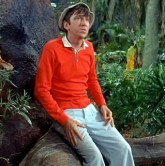 When I was in university, I took a sociology class in gender roles. One of the essays we had to write was about how we learned about gender roles — gender specific behavior and characteristics. I realized then that I learned most of my gender specific behavior from TV and movies. At the time, I attributed it to growing up without a father and searching for a gender model. Now, I realize I was searching for rules by which to live my life.
But, let’s stop to think about the images that would be available from TV and movies in the late 1960’s and the 1970;s. Gilligan’s Island. Star Trek. All in the Family. You know, those are the big three. Of course, there were others, too, but I took specific things from each of those shows. The other big influence was Shirley Temple movies, for all love. They would be shown on Saturday TV movie matinee. No wonder my relations with women — I’m apologize to my dear and long suffering wife — have been so… Awkward? Strange? Inept?
 I based my social rules around romantic relationships on freaking Shirley Temple movies! And, I identified with Shirley Temple! Sweet Baby Jesus beat me with your dirty diaper, how fucked up is that?
I identified with Gilligan. I see my day-to-day self and moment-to-moment interactions with others as if I were Gilligan. Oh, that’s going to work out well, isn’t Ms. Employer, ma’am, ain’t it, now?
Layered on top of Gilligan is Archie Bunker. What kind of perverse universe produced a hybrid Gilligan-Archie Bunker? But, yet there it is. I get the derogatory barely contained rageful humor. And, can turn it on in a moment’s notice. In a sitcom it’s funny. In real life, not so much.
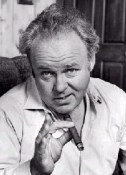 The basic rule that comes out of these three paradigms is that I fuck things up and someone else comes along and fixes it. And, somehow, I bumble my way to a solution. Only, the world don’t work that way just scripted TV shows with multiple takes and a laugh track.
So, as a teenager, I became Mr. Spock. I suppressed my emotions. I actively pursued feeling nothing. And, there on the TV, I was being told that logical emotionless existence was the way to be. It was the superior way. After all, Spock always ended up on the winning side, didn’t he? He always contributed to the solution, right? Who didn’t love Mr. Spock? It seemed a better alternative to what I had going on inside me.
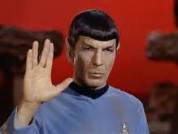 I think, but I don’t know, that most high-functioning autistics live their lives feeling like there is some big secret that the rest of the world knows, but we don’t. For me, the whole movies and TV shows thing just amplified it. It took me a long time to connect the two together, but I finally realized that movie and TV shows not only follow a plot, but also, a predictable progression that transcends individual episodes or movies. As the viewer, you can predict what will happen: Captain Kirk will never die in an episode of Star Trek no matter how dire the situation. Unfortunately, life ain’t that way. But, to me it feels as if it is… for everyone else but me.
Autism is a disorder of prediction. The autistic cannot predict social situations. We can predict the physics of the world. We can predict mechanics. But, we cannot predict the behaviors of others or even ourselves. We look for rules. In the physical world, the rules rule. In the social world, the rules are only loose guidelines that do not always work out. In other words, it is ambiguous in the best of circumstances, and I don’t deal well with ambiguity. Again, think of my long suffering wife.
Any regular reader of this blog knows that people are emotional decision makers, and autistics are no different. Those emotional decisions are often experienced as intuition. So, I follow my intuition. I do what I think I oughta be doing. I do what I think is right. And, because what I do is perceived as odd or peculiar to those around me, there is always someone who feels like they can (a) point it out, (b) make fun, (c) belittle, or (d) recoil in horror and disdain. When you are different, people instinctively feel permitted to tease or bully. And, worse, when you complain about it, you get the tired line, I was only joking. Which of course implies that you can’t perceive the joke so you’re even more different. When your emotional reactions don’t match the predictions of those around you, you’re the one who is wrong.
As an autistic, the world is constantly pointing out how you don’t fit in and how you are wrong. Your very instinct is wrong. Your assumptions are wrong. You’re like the mouse in the lab experiment where electric shocks will be applied only the experimenter has set the generator to random. There is no pattern, so there is no safe place to learn. It’s like you’re in an abusive relationship with the world.
 For some ungodly reason, autistic people are clumsy. So, imagine the misery of visiting my in-laws in far north frozen Canada for Christmas and everyone wanting you to go snowmobiling or eight-pin bowling or whatever the scaled down bowling ball and pins game is called, and them not understanding about how difficult it is to coordinate all these new positions and sequences so that you screw things up over and over and over again to the point that everyone else first is just jaw-dropping amazed — and they’ll tell you about it — second annoyed because you can’t respond to their instruction and you’re just not getting it — and they’ll tell you about it — and third, give up. It is just easier not to in those circumstances.
One of the most important human needs is to feel understood and accepted. When you’re autistic, you are fundamentally misunderstood and barely accepted at best. We talk too loudly. We talk about things that no one else is interested in. We say the wrong things. We embarrass those around us. We misinterpret what should be plainly obvious. We’re pedantic driving home a pointless unimportant point with too much enthusiasm. And it happens over and over and over every time you interact with another human being no matter how hard you try.
Luckily, most autistics have a rich inner world and highly focused interests to retreat into. I like being alone because (a) it is easier and (b) it is less exhausting. And let’s face it, the shit I’m into is INTERESTING! Man, if you only knew.
I’ve been aware of my autism diagnosis, which isn’t official, by the way, since the birth of my autistic daughter twelve years ago when she was diagnosed at the age of three. For those of us who are math challenged that is nine years ago. She has been my biggest blessing after my long suffering — I cannot emphasize that enough — wife. In many ways, my life would be miserable without them. They give me structure, meaning, and purpose that I would struggle to find without them.
The biggest difference between my daughter’s life and mine with autism is that she knows and has always known. And, she has had help in adapting to a non-autistic world. At the very least, she understands why things are happening to her. She has been taught specific coping strategies and methods. She has parents that understand and accept her. She has teachers that know how to cope with her idiosyncrasies, most of the time. It is still not easy, but at least she has the benefit of my insights and her mother’s love and care and guidance and embrace.

 The Psy of Life
Your blog will soon be added to our Actually Autistic Blogs List (anautismobserver.wordpress.com). Please personalize your blog’s description by selecting “About the list/How do you want your blog listed?” from the top menu on that site.
Thank you.
Judy (An Autism Observer)
LikeLike
Howdy Judy!
Well that is terrific news! I love the site and the lists. I’ll answer back straight away. Are you sure, though, that this snarky, sarcasticky, profaney, unapologetically liberal political-psychology blog belongs on your site? I mean, it ain’t everyone’s cup of tea…
Huzzah!
Jack
LikeLike
Our goal is to assemble the most complete possible list of Autistic blogs. We don’t judge or discriminate.
Thanks for writing your blog and for being openly Autistic.
LikeLike
while we are on this Autism bent…..is there a connection to a familial trait with autism? is there a genetic connection ?? is there any truth to some claims that certain immunization can cause autism in children? l BTW I have always felt different from the ” norm” not in the same way that others describe Autism , but I definitely look at the world with a some what different perspective. humor being one
LikeLiked by 2 people
Howdy Francese!
Those are good questions all. First, yes there is clearly a genetic component to autism. You’ll find traits along the continuum among family members ranging from not quite enough for a diagnosis to severe debilitating autism. There are also common co-morbid occurrences: dyslexia, depression, bi-polar, pathological demand avoidance, ADHD, executive functioning impairment, sensory dysintegration, and anxiety. There is clearly a circuit in the brain where many of these maladies overlap. In addition to mild autism, I have a disorder known as face blindness or prosopagnosia. In it’s most severe form, you cannot recognize any faces at all not your mother, your child, anyone. I don’t have it that severely, but for example Vin Diesel and Dwayne Johnson could be twins to me. I only recently realized that I confused them all of the time, but I had to see them in a photograph together.
It has been conclusively demonstrated that there is no relationship between vaccines and autism. The statistical argument is very convincing. The whole thing started when a very dishonest doctor published a study using a very small sample of children and concluded that there was a link between vaccines and autism. That doctor has been striped of his license to practice, but, of course, continues to milk the connection claiming that there is a conspiracy to silence the evidence. Unfortunately, there is a segment of the population that is vulnerable to the miracle health claims of “natural” substances and suspicious of science. This is why the supplement market is so large and GMO foods are being banned.
The amazing thing to me is the broad variation that occurs in nature. The human brain being the most complex thing in the known universe, the variations are tremendous.
Huzzah!
Jack
LikeLiked by 1 person
EXCELLENT response, Jack – one that I second completely. I’m glad you included so many of the comorbids, along with the info that the doctor who started the anti-vax ball rolling lost his license – FOR CAUSE!
By the way, I also have a touch of face-blindness (which is especially unfortunate since names slide right off my plate as well). Tell me what we talked about and I will know you immediately – but change much about your appearance and I won’t recognize you by sight unless I know you VERY well and have seen you often.
xx,
mgh
LikeLiked by 1 person
The face blindness thing can be fun… if you enjoy that kind of thing. I had two boys in two different sections of the same class with similar names who sat in the same seat. It took me an entire semester to realize they were different people and then the next quarter to convince myself that they weren’t twins. I thought it was very funny because it was so peculiar. If someone puts on a hat or changes their hair or sits in a different seat, it will fool me. I realized that those were the things that I used to recognize people.
It’s a good thing that I’m so easily amused.
Huzzah!
Jack
LikeLiked by 1 person
Before I knew about face-blindness or realized that it applied to me, I once asked someone moving into the house where I had an apartment where we had met (he seemed to know me, but I couldn’t place him). After saying, “You’re kidding?” more than a few times as I stupidly tried to guess, he finally let me know that we had actually spent an entire evening together – on a DATE!
Funny only in retrospect.
xx,
mgh
LikeLiked by 2 people
People are not so amused to not be recognized as I am at not recognizing them. If it were me on either side of that interaction, I would’ve been greatly amused. Then again, I live my life as if I were the wacky neighbor in a sitcom who only comes on for 20 seconds of comic relief.
Huzzah!
Jack
LikeLiked by 1 person
Funny you should say that. My mother used to say that I live mine as the wacky star that gets herself into the wildest situations but somehow manages to land on her feet each week – Lucy without Ricky!
Well, I just saw the time – past 5AM and past my puppy’s bedtime, so I am putting us both to bed before the sun rises on a new day.
xx,
mgh
LikeLiked by 1 person
Goodnight! Have a good sleep!
Jack
LikeLiked by 1 person
Once sleep descends I sleep like the DEAD! The majority of my blog buddies live across the pond or on the West Coast, US – because we tend to be active during the same hours – dark here, light there. 🙂
Only now on my first cup of coffee, checking out what happened while I was sleeping before moving into my day and getting my pup outside for a long walk (almost noon here).
xx,
mgh
LikeLiked by 1 person
Howdy Madelyn!
And, here I am almost twelve hours off from you, then! It makes for interesting scheduling… and friendships. I’ve made several online friends in the comment sections of websites, FB, and, now, blogging. I’ve really enjoyed the community here at WordPress much more than other social media. I do twitter, but I don’t enjoy it. Too frenetic. I haven’t the internet connection to allow for FB here in China. It is blocked, so I have to use a VPN which slows it down so much that the pages have trouble loading. Twitter is blocked, too, but it doesn’t have that problem. It is light enough that it will still load and allow me to interact — mostly to pimp my blog.
I envy your schedule. Back in the day when I had wholly unstructured time or loosely structured time, my preferred schedule was sleeping 3:00 AM to about noon or sometime between 9:00 AM and noon. And, I envy you your dog. I can’t wait until I’m re-united with my dog again. Right now she’s in Kenya with the family. The dog walk was always my favorite part of my day. What kind of dog is it?
Huzzah!
Jack
LikeLiked by 1 person
Happy coming out day! You know I always appreciate your posts, and I especially loved your observations here. The truth of this line breaks my heart: When you are different, people instinctively feel permitted to tease or bully. Let’s all hope that the world begins to understand differences and appreciate them over sameness. Sure, I’m a little glass half-full today, but I just finished this really great blog post, and I’m feeling optimistic!
LikeLiked by 2 people
Thank you Wendy. I really appreciate your point-of-view on most issues, so it means a lot to me. Autism seems to be in the air a lot lately. There does seem to be more awareness. People seem to talk about it more. In spite of the current admin occupying the WH and the GOP having both Houses of Congress and nearing the 34 state legislature threshold to convene a Constitutional Convention, I’m feeling fairly optimistic myself. The majority of Americans seem to be cottoning to inclusion and acceptance.
Huzzah!
Jack
LikeLiked by 1 person
From your lips to God’s ears!
xx, mgh
LikeLiked by 1 person
Thank you so much for sharing your secret. I have had many students on the autistic spectrum, each with unique talents and gifts and also some with unique learning challenges. All of them, as it turns out, were also identified as gifted. The educational system is now in the process of redefining autistic labels and calling many previous diagnosis something different. Asberger’s autism now supposedly does’t exist. (huh?) It’s like the world doesn’t want autism to exist at all because they can’t dump people into one neat pile. Each human being is uniquely different therefore this syndrome isn’t so easy to diagnose any more. AND, The experts are not really experts at all. ( I am sure Bill Gates is on the spectrum as was Steve Jobs.) I grew up always feeling different too, I cannot say what was/is up with me, other than I had trouble fitting in too. For me the answer in the 1950’s was to just put me in the corner and punish me in school. They didn’t appreciate girls who whirled and twirled in class because I heard music in my head, so I understand feeling different.) I suppose today they would call it impulse control issues or being gifted with learning disabilities. Who knows, there was’t a label to define creativity or uniqueness when I grew up. We were just labeled trouble makers. And just so you know, Autism is nothing to hide or feel ashamed about. Your brain processes things differently. So did Einstein’s. He didn’t speak until he was about 5 or 6. Most inventor’s, artists, musicians etc. were considered insane when they just were wired differently. Genius is not the norm so it is viewed as odd. Trying to find This average or norm is like “Waiting for Godot.” There is NO NORM. We test kids to death to find the norm. Yet it doesn’t exist. You are uniquely you. And thank goodness for that. I’m glad you were brave enough to share your secret on your blog. You’ll find, I’m sure that you are not so different after all.
LikeLiked by 1 person
Thank you Lesley! As an educator, you are exposed to lots and lots of kids. It is a blessing, really, since you can see the variation that occurs in human kind. I recognize the autism spectrum in many of my students and colleagues. I’m amazed at how some of them struggle through.
Huzzah!
Jack
LikeLiked by 1 person
they are NEVER joking! They are attempting to show themselves as oh so much more important, intelligent, humorous, etc than the rest of the world, and just being BULLIES! Lord, how I hate bullies of any sort, but emotional bullying is perhaps the worst as no one else can see the spilled blood of your pain.
LikeLiked by 2 people
Howdy Suze!
Thank you for your comment. The funny thing about some types of bullying is that people don’t even realize they are doing it. It is natural to denigrate those who are different. It is intuitive. When you point it out to them, of course, you’re the asshole. I think that’s why I have developed such a sense of humor and such sarcasm. It is a good defense and defusing.
Huzzah!
Jack
LikeLiked by 1 person
Happy Easter to you and your family, Jack, and congratulations on your coming out party. One less thing to have to manage, and one more wonderful gift to your daughter. I am sorry to read how difficult things have been for you – but I hope you can accept the reality that nobody really feels like they fit in, they just hide their discomfort better than you think you do. I don’t know if that makes things better or worse, but I’m fairly certain that it’s true.
DO. NOT. BUY. that “they were only joking” nonsense and you didn’t get the joke, either. There was no joke. They know there was no joke. THEY don’t even find it funny. It’s a control maneuver. Most other people don’t know how to deal with it either, especially me. That’s why they do it — because they usually get away with it.
I keep trying to teach myself to say, “OUCH!” when they do it to me or someone in my circle. When I remember to do it, it shakes them up and often the “joking” line doesn’t follow. I hate it too. But then I can’t stand bully behavior of any sort – or anything covert or passive-aggressive. Never could.
FYI: I just back-linked this article to the Autism section of my April Mental Health Awareness Calendar.
xx,
mgh
(Madelyn Griffith-Haynie – ADDandSoMuchMORE dot com)
ADD Coach Training Field founder; ADD Coaching co-founder
“It takes a village to transform a world!”
LikeLiked by 1 person
Howdy Madelyn!
Thank you for the ping-back. It is much appreciated. I’m encouraged by the seeming rising awareness of autism. Hopefully, it will lead to increased acceptance.
We all wear our masks and think everyone else’s is real. I get that. We all have our burdens to bear and most of them aren’t as heavy as we think, especially once we start getting them out in the open.
Huzzah!
Jack
LikeLiked by 1 person
I agree with you 100% – it is past time for ALL of the disorders on the attentional spectrum (how I conceive of Executive Functioning disorders of many, many types) to receive respect as the result of greatly increased awareness.
xx,
mgh
LikeLike
Howdy Madelyn!
I have become much more convinced of the importance of executive functioning in mental health. Many of the students who have been labeled as lazy simply have poor executive functioning.
Huzzah!
Jack
LikeLiked by 1 person
I have always believed that (Learning Disabilities too) – and the rest of the science crowd is finally agreeing with us – seemingly unaware that their colleagues who have been tooting that horn for 30 years and more were discounted for much of that time — couldn’t even get their findings Journal published!
xx,
mgh
LikeLiked by 1 person
I can relate to a large degree.. I had an Autistic Grandmother ( of course they didn’t know or call it that back then) and I have an autistic grand son ( aspbergers) and an autisti/aspbergers) grand daughter both are high functioning..as was my grandmother…. so yes I do ” get it” and am really get a big bang out of their different takes on the world and their perspective. I am also appreciate their efforts to make sense of a world that is like a huge puzzle to them. Being part of their lives has made me appreciate ” differences” in perspective and humor… which in their case can be pretty interesting !!
fran
LikeLiked by 3 people