

SUMMARY: This post explores how polling exploits our psychological biases, distorting our understanding of electoral dynamics. We struggle with uncertainty and probabilities, leading to cognitive gymnastics that reinforce our preferences. Key biases—confirmation bias, motivated reasoning, and cognitive dissonance—form the “Sword and Shield of Self-Righteousness,” enabling us to dismiss contradictory evidence and cling to comforting narratives. As we approach elections, this suite of biases shapes our perceptions, fueling a false sense of certainty. Ultimately, our need for clarity can blind us to reality, leaving us vulnerable to manipulation by polling data and the narratives they create.
KEY WORDS: Election 2024, Polling, Cognitive Bias, Uncertainty, Confirmation Bias, Motivated Reasoning, Cognitive Dissonance, Perception, Behavioral Economics, Probability
COMMENTS: Tell us about your reactions to the latest polling and news about early voting as we head into election day!
- Understanding Our Psychological Vulnerabilities
- The Sword and Shield of Self-Righteousness, a Suite of Cognitive Biases
- Polling and Political Reality
- Image Attribution

While polling offers a numerical snapshot of the electoral landscape, it exploits our psychological weaknesses—fueling uncertainty, distorting probabilities, and reinforcing biases. This manipulation obscures the true dynamics of the race, leading us to misinterpret the actual chances of candidates like Harris.
We’re particularly vulnerable to these pitfalls. For starters, we hate uncertainty; it makes us nervous. In our quest for predictability, we have turned to everything from magic and religion to myths and conspiracy theories. Then there’s our struggle with probabilities; a 57% chance of Harris winning doesn’t register as a 43% chance for Trump. Instead, we hear, “Harris is gonna win.” Additionally, we engage in cognitive gymnastics to justify our preferences—confirmation bias, motivated reasoning, and cognitive dissonance help us dismiss polls that oppose our favored candidates while elevating those that support them. Finally, polls create an anchoring effect, shaping our perceptions based on the narratives we prefer.
These psychological tendencies converge to make polling appear more significant than it truly is, leading us to misuse and misinterpret polling data when predicting election outcomes. While we can’t fully isolate their effects, as they combine to create one overarching polling error, we can examine each bias individually and then explore their collective impact on our perceptions.
Understanding Our Psychological Vulnerabilities
Aversion to Uncertainty

Uncertainty aversion, or ambiguity aversion, “is the tendency to favor the known over the unknown, including known risks over unknown risks.” Our aversion to uncertainty is so strong that it is a central driver to our decision-making as a species. One of the most robust findings in behavioral economics is that people hate taking risks unless it is in the face of certain loss.
By definition, taking a risk is dealing with an uncertainty. You don’t know whether the risk will pay out or not. The only thing that makes taking a risk tolerable is the alternative of a certain loss. The only thing we hate more than uncertainty is loss.
We look for any way out of the uncertainty trap, anything that will show us a more certain path to the future. Polling helps to set up the illusion of certainty because of the way we react to probabilities.
The Problem with Probabilities

Probability requires A LOT of thinking, which is hard. Long time readers know that we evolved to avoid thinking because our brains use 20% of our energy while only making up 2% of our mass.
Instead of sussing out what a 57% chance of winning actually means, we prefer to ask and answer the easier question: Who will win the election? And use the poll as the answer, the person with higher polling result.
It turns into a kind of rounding error. We round the highest polling result up to 100%! We can’t really look at it any other way without sinking a lot of cognitive resources into it, so we don’t. I know, I know, YOU, dear reader, you know how to interpret polls and probabilities and make yourself do the hard work of saying to yourself a 57% chance of winning means that if the election were held one hundred times, so-and-so would win 57 times, but on any given iteration, the such-and-such could win, too.
See? That’s a much less satisfying outcome when you’re really looking for certainty, which brings us to all of the cognitive gymnastics we’re willing to go through not only to get to certainty, but also, to the outcome that we prefer.
The Sword and Shield of Self-Righteousness, a Suite of Cognitive Biases
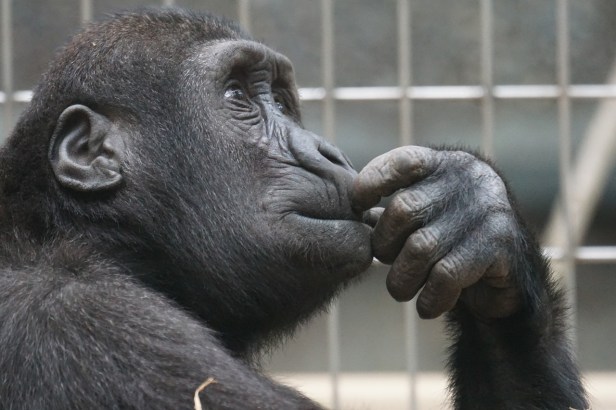
Because we hate both uncertainty and losses, we have evolved little cognitive tricks to help us sleep through the night, reassuring ourselves that all will be well, we’re right, and that the “other bad people” are both wrong and bad. We can go on living our blameless sinless lives in the certainty of our self-righteousness. We could call this suite of cognitive biases, The Sword and Shield of Self-Righteousness, as it defends us from any challenges to our self-delusions and obliterates any nay-sayers that might come along. It consists of confirmation bias, motivated reasoning, and cognitive dissonance.

Confirmation Bias
In case you hadn’t notices, we human beings are an argumentative bunch. Nothing feels better than proving yourself right, and no where do you prove the rightness of your thoughts, words, actions, and deeds more than in your own mind. It is the only place that matters.
The first step in this self-validation is confirmation bias, “the tendency to seek out and prefer information that supports our preexisting beliefs.” It’s easy! You just ignore that which doesn’t agree with you. If you don’t like wearing a mask during the worst worldwide pandemic in a century, then you simply cherry-pick the “evidence” that wearing a mask doesn’t help stop the spread of the airborne disease. It’s that easy! just ignore anything that doesn’t confirm that you are indeed right.
Motivated Reasoning
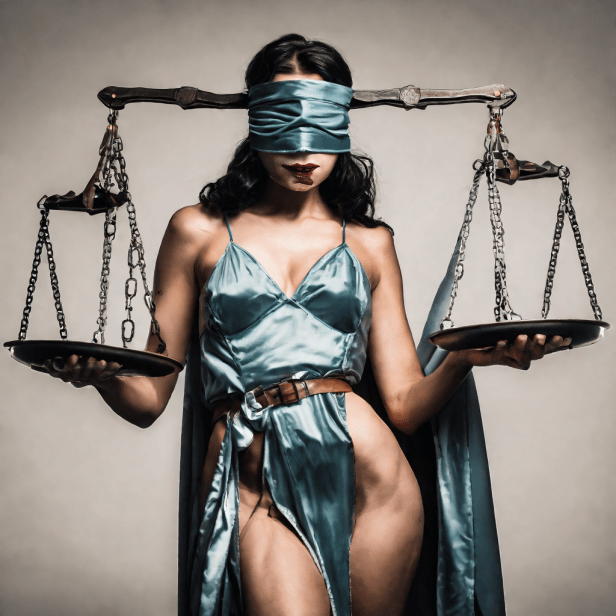
If your confirmation bias isn’t getting the job done, you can elevate your game to motivated reasoning. Motivated reasoning is a cognitive bias that leads people to favor information that supports their beliefs or goals. It’s a sort of ass-backwards reasoning because you start at your conclusion and use only the information that leads to your starting point.
You don’t ever have to even consider anything contradictory. You’re a good person, so everything you do is good, right? because good people can’t do bad things. Duh. With reasoning like that, you are always certain of yourself. You can’t go wrong, but just in case you do, we got one more item in the C-Suite.
In the context of polling, this means focusing on the numbers that support your candidate while ignoring those that suggest otherwise. If you believe your candidate is destined to win, you’ll latch onto any positive data, while dismissing unfavorable polls as “fake news.” You don’t even have to consider contradictory evidence. You’re a good person, so everything you do must be good, right? Because good people can’t be wrong!
With reasoning like that, you are always certain of yourself. You can’t go wrong, but just in case you do, we got one more item in the C-Suite.
Cognitive Dissonance

If motivated reasoning is the next level of confirmation bias, then cognitive dissonance is confirmation bias on steroids. Cognitive dissonance is the mental discomfort you feel when your actions or beliefs conflict with your values.
This discomfort drives you to ignore anything that makes you uneasy. For example, if your favored candidate is behind in the polls, you might convince yourself that the polling methodology is flawed or that the pollsters have an agenda. You tell yourself, “Those polls can’t be right; they’re just trying to discourage us!”
Lie to themselves and everyone who will listen. Masks were ineffective. If you need proof, start at your conclusion and work yourself back to the question using only information that supports your conclusion. Once you’re back at the question, ignore any contradicting evidence. You’ve got one flawed study on mask wearing that suggests it didn’t prevent the spread of #COVID19, so you beat that dead horse into hamburger meat.
In the current political landscape, this dissonance manifests in the refusal to acknowledge unfavorable polling results. If a poll shows your candidate trailing, the instinct is to dismiss it as biased or irrelevant. You take one flawed poll or a single outlier and use it to justify your belief, ignoring the broader consensus that contradicts your view.
Polling and Political Reality

We started with the desperate need to predict the election, trying to avoid the discomfort of uncertainty. Polling data provides a semblance of “informed” prediction, but probability doesn’t guarantee certainty. Thus, we wield the Sword and Shield of Self-Righteousness to maintain certainty about our favored candidate’s standing—whether they are ahead, tied, or behind.
Currently, polls indicate a race within the margin of error—it’s a toss-up. We’re constantly told the outcome is fifty-fifty. But how can that be? We’ve known Trump as a politician for nearly a decade, witnessing his chaotic response to the #COVID19 pandemic, the economic fallout from his tariffs, and the ballooning deficit due to tax cuts for the wealthy. Who in their right mind would want to experience that again?
Our need for certainty—knowing the outcome of a future event—works against us. All our cognitive instincts are hijacked by polling numbers. We torture ourselves with the belief that our worst-case scenario is imminent or comfort ourselves with the hope that our preferred outcome is on the horizon.
If you think this analysis of the way polling interacts with our cognitive tendencies, especially skewing our perceptions, then please consider doing one or all of these:
- SHARE this post with someone that you think will enjoy it.
- LIKE or RATE this post using the buttons before or after it.
- COMMENT on this post letting us know what affect you think polling is having on the race, the accuracy of the polling, or how polling has affected you.
- FOLLOW the blog or join our email list!
Image Attribution
This image was found on Valori using a DuckDuckGo Creative Commons License search

 The Psy of Life
The only thing that makes risk tolerable is the alternative if a certain loss
Thar appears to be the basis of your argument. Based on that starting point, you conclude that we seek certainty snd avoid uncertainty.
I might ague with your starting point. We enjoy risk, when the possibility of reward outweighs our fear of uncertainty.
If that is true, most of your statements about the use or influence of polls would be incorrect.
Personally, I do not see or use polls to shape of inform my opinions, and don’t believe other people do either. I keep up with them, in much the same way I follow baseball and football standing during the season, just to see who is ahead, but nothing more than that.
LikeLiked by 2 people
Howdy Ernest!
The finding that people abhor taking a risk unless it is to avoid a sure loss is one of the most robust findings in psychology. The finding has been repeatedly found in multiple settings, using multiple risks and losses, in different countries with a wide range of participants. It isn’t opinion. It is what is supported by the empirical findings of many psychologists. If that changes, I will change what I write. That’s the way science works.
One of the biases and heuristics that I had considered using in the post but ultimately didn’t was the anchoring effect. That is the finding that if exposed, even unknowingly, to a number, it will influence your decisions and choices when asked to make numerical estimates. When applied to polling it would work like this: You see a poll with candidate x at 47%. You see headlines and social media posts stating that candidate x has the support of half of the country. When asked whether candidate x will win the election, most of us answer yes. But, people don’t realize that 47% support is also 53% for some other candidates. The electorate isn’t the entire population. But, the numbers “anchor” your thoughts and predictions.
Even just checking the sports scores will affect your estimates and predictions of other outcomes because they are numbers. It is an odd, but, again, very robust finding.
Huzzah!
Jack
LikeLiked by 1 person
You have moved the goalposts. Abhor taking a risk not the same as saying it is not tolerable.
To abhor something is to say you rather not fo it.
To not tolerate something means you can’t and won’t do it.
Have not seen those studies. Would have to read them myself. Results as you stated them conflict with all the studies about risk taking that I have read. (That applies to both different results you have stated)
LikeLiked by 2 people
I’ll await the results of your reading to continue the conversation.
Jack
LikeLiked by 1 person
In order to predict the outcome of an election, a poll would need a 100% sample, in which all of the people who will actually vote are surveyed at the same time. But even that could be wrong because some might not vote and others might show up on election day, and things can happen that will changes some minds. So, it is an effort to predict the unpredictable from insufficient evidence. Given that, maybe there is a kind of wisdom in the horse race 50-50 narrative, the admission by the pollsters that they just don’t know. To make it worse, the poll is a snapshot, just as the election itself would be if everybody voted at the same time, but we don’t do that. We have early voting and absentee voting, and the process on the day is spread over a whole day and four time zones.
What’s the best advice? I think it is to resist the siren song of the polls as much as you can, let the other side bask in the belief that their team will surely win (and maybe stay home and watch it on TV), and go vote, because the outcome IS uncertain.
LikeLiked by 1 person
Howdy Bob!
I assume that the malleability of voting is consistently distributed, so that a vote cast on the first day of early voting is as malleable as that cast on Election Day. The only difference between the two is that the later the vote is cast, the more changes it could go through. Either way, it is a kin to Schroedinger’s Vote: We don’t know the outcome of the vote until it is counted. Until then, it could be for any candidate on the ballot.
The credence of polling lies in the consistency with which people will hold their views. Political views and candidate support vary widely and are subject to many different influences. I has only been since Reagan that we’ve really had this entrenchment and polarization. That was also when earmarks became a bad word and the parties couldn’t use local spending to court favor with voters. Wasn’t it?
Anywho, my point is that there used to be enough consistency between elections and correlation with other factors that made polling more reliable. Since Trump came along, all of that is out the window. Deception and trolling are in, honesty and cooperation are out. And it is that honest answer and willingness to cooperate that polling relied upon to be even remotely accurate.
Huzzah!
Jack
LikeLiked by 1 person
There was, I think, a real connection between earmarks and the greater level of comity and “across the isle” friendships in Congress. I suspect that getting rid of earmarks was done in part so that MOCs of different parties wouldn’t have to talk to each other.
We can probably include accurate polling in the category of things that Trump has been a wrecking ball on. Chaos has that effect.
LikeLiked by 2 people
Howdy Bob!
The death of earmarks was the death of conservative Democrats and liberal Republicans, that’s for sure. Any coalition building had to be based on ideology instead of funding and common interests after that. I never thought it was part of the greater Reagan Republican project of ending democracy, but I think maybe I was wrong. I had assumed it was misguided fiscal conservatism, but it really was probably part of one of those Lee Atwood types greater design for bringing in minority rule.
Huzzah!
Jack
LikeLiked by 2 people
It is hard to tell. So much was being made of things like “The Bridge To Nowhere”. I remember that there was an earmark bill passed to fund dredging of the lake near my parents’ house in Highlands, which needed it and still does, but it was cancelled when earmarks died. In a way, ending earmarks is in the category of austerity budgeting, that helps increase the trickle up of wealth and denying benefits to ordinary people. The general population then slowly gets the idea that government does not deliver for them.
LikeLiked by 2 people
Howdy Bob! With the election nearly over, I’ll find myself in a similar position as in 2020 — assuming it turns out as 2020’s did and not as 2016’s — and needing new topics to write about. A closer look at earmarks and how they affected and changed our politics might make a nice series of article.
The whole widening wealth gap, wealth pump, overproduced elites thesis has intrigued me since learning about it a year or so ago. It kind of does fit into that narrative and the one about replacing our beliefs in democracy with nonsense and lies, which Trump has nearly completed.
Huzzah!
Jack
LikeLiked by 2 people
That sounds like a rich vein to mine.
LikeLiked by 2 people
In that list of the other women the women are thinking about I forgot to add; their “sisters and their cousins and their aunts” [HMS Pinafore]
LikeLiked by 2 people
Right up there with, “I’ve got four women in my life: my sister, my mother, my girlfriend, and my wife” All of whom would vote for abortion rights.
Jack
LikeLiked by 2 people
If the “conservatives” think we need more babies, making pregnancy more dangerous does not seem to be the right strategy. But, of course, it isn’t about the babies, but about control and privilege. Wealthy women will always have a way to get whatever medical care they need.
LikeLiked by 2 people