

SUMMARY: Election 2024 presidential polling has Trump beating Biden nationwide and in swing states. Let’s take a closer look at that polling data and use social trust to decipher some of the more confounding results. Then, we’ll use protests and past voting behavior to predict who will turn out in 2024. The roll of cognitive dissonance and irrevocable actions will be used to analyze who is motivated to vote. All of this will, ultimately offering insights into potential election outcomes. The upshot is, encourage your friends, family, and acquaintances to engage in irrevocable actions that will commit them to voting in 2024.
KEY WORDS: Election 2024, Polls and polling, the #COVID-19 debacle, Social trust, Political alignment, NYT/Siena Polls, Protests, Voter turnout, Cognitive dissonance, Irrevocable Actions, Commitment
COMMENTS: What do you think the strongest predictors of who will actually vote in 2024 are? How likely is Trump’s MAGA base going to turn out and expand? How about Biden’s coalition? I’d love to discuss it in the comments!

Polling in the race for democracy has been an ass scratcher. Trump has consistently led in poll after poll in both national or state wide polls, especially in battle ground states. Anyone with a memory longer than the last few minutes of the last episode of whatever Netflix flick they just binge watched, and I admit that that is very few of us, remembers the Trump years as being filled with pee hookers pissing on the Constitution on the Resolute Desk in the Oval Office while Trump was wrapping his stubby chubby in his stubby chubby and the Cabinet cheered him on.
As someone quipped, Lincoln had a a cabinet of rivals; Trump a cabinet of felons. And those felons grabbed with both hands as #COVID19 reduced life expectancy in America by two years after a million excess deaths. Am I the only one who remembers this shit? Why is the media discussing Trump’s economy and not the debacle of his #COVID-19 response?

There isn’t a both sides here. A million real once alive Americans are dead that didn’t have to be and our life expectancy was reduced by two fucking years. It is an unforgivable unforgettable record of incompetence. It shouldn’t even be a discussion, but then again, we’re the country that elected an incompetent war criminal to a second term because of Swift Boating. Maybe, we get what we deserve, or at least what we elect.
However, I think that there are explanations that are supported by evidence. On 28 May, a couple of articles on the Interwebs caught our eye and when combined with findings from cognitive dissonance studies and voting motivation studies, can help blunt some of the dis-ease that we all may be feeling around Election 2024.
First up is Nate Cohn’s Ass-trick and then Asterisks

Much has been made of the vaunted New York Times/Siena polls that have shown Trump with leads both nationally and in swing states. You know the ones I’m talking about. In fact many of the numbers that the polls have produced have left the viewing public with their mouths and other orifices agape.
Nate’s Ass-Trick with the NYT/Siena Polling
In that poll, Trump led Biden over all by 48 to 44%. No one was surprised because other polls have found similar leads. But, the crosshairs of the poll suggested a few very surprising numbers:
- SAMPLE: 35% rural, which is much higher than the 19% that the US Census Bureau counts and much more than anyone proclaiming themselves to be as competent a statistician and pollster as Nate Cohn should be including in any sample.
- COLLEGE EDUCATED: An astounding 39% of the college-educated respondents said that Biden’s policies had hurt them (25%, helped) and 40%, Trump hurt (35%, helped). Who are these college-educated folk in the poll?
- WOMEN: A jaw-dropping 39% of women polled said Trump’s policies helped them (26%, hurt; 34%, neutral). While, about 19% said, Biden’s policies had helped them. What the actual fuck? No one in their right mind should go to press with these results.
Nate, you can get another job. You don’t have to toe the editorial line of the NYT if it means violating your professional standards. There is no way these numbers reflect the American public.

President Biden has actually led the last three New York Times/Siena national polls among those who voted in the 2020 election, even as he has trailed among registered voters overall. And looking back over the last few years, almost all of Trump’s gains came from these less engaged voters.
The One Chart You Need To Understand The Polls (The Horse Race) posted on Mock Paper Scissors on 28 May 2024 by tengrain
H/T Electoral-Vote
And, as it turns out, they don’t.
Nate’s Asterisks, Pulling Back from the Edge of Malpractice
Nate Cohn, himself, published a mia culpa trying to dodge the slings and arrows of his peers and salvage something of his reputation, I’m guessing. Because he said, His lead is built on gains among voters who aren’t paying close attention to politics, who don’t follow traditional news and who don’t regularly vote, in his NYT piece that I cannot access because firewall.
He went on to note, President Biden has actually led the last three New York Times/Siena national polls among those who voted in the 2020 election…. And looking back over the last few years, almost all of Trump’s gains came from these less engaged voters.
The question really is, who is more likely to vote, those who voted in 2020 or those who are low-information low-frequency voters? Even your favorite drunk uncle knows the answer to that one.
What’s really driving Biden’s struggles in the polls?
The Influence of Social Trust on Political Alignment
An interesting take on this question was offered over on Vox by Eric Levitz by taking into account social trust. Social trust is a belief in the honesty, integrity and reliability of others – a “faith in people.” It’s not hard to imagine that those with little faith in people also have little faith in social institutions and government. There’s a certain consistency and logic to that, isn’t there?

As the parties polarized on the question of whether America was “already great,” voters with high levels of social trust and confidence in the political system became more Democratic, while those with low social trust and little faith in the government became more Republican.
One explanation for the 2024 election’s biggest mystery: A theory for why Biden is struggling with young and nonwhite voters posted on Vox on 28 May 2024 by Eric Levitz
Crowds gathered at Union Square at an anti-vaccine and anti-mask protest in New York City on March 20, 2021.Tayfun Coskun/Anadolu Agency via Getty Images
Trump specialized in attracting those with low levels of social trust. He is the candidate of white grievance and racial angst after all. The past year of inflation and our rocky road out of Trump’s #COVID-19 hellscape, many voters who were already mistrustful of their fellow citizens and the government may have grown more so.
Applying Social Mistrust to the NYT/Siena Polling
What are the demographics that are most distrustful? Those who are the most easily hurt: People of Color, the poor, and the young. Anyone on the margins. It shouldn’t be surprising to see these people declining to support Biden in polls six months before the election under these circumstances.
Trump and Republicans have worked hard to erode our social norms. Given that they are constantly harping on the rigged nature of the system and pointing to how it really is the Democrats who are violating the norms by not continuing America’s long tradition of racism and misogyny, it isn’t surprising that they are gaining in the polls with these groups.
The crucial question is, who is going to vote in Election 2024?
The Protest Metric of Voting Likelihood
There is one metric that is useful in determining turn out in an election, and it ain’t polling. Any fool can tell a pollster they’re gonna vote, and many fools do. That metric is protests. Which side has had the most, the largest, and most passionate protests in the run up to the election?

On average, a wave of liberal protesting in a congressional district can increase a Democratic candidate’s vote share by 2% and reduce a GOP candidate’s share by 6%. A wave of conservative protests, like those by the Tea Party in 2010, will on average reduce the Democratic vote share by 2% and increase the Republican share by 6%.
How Protests Can Swing Elections posted on Insights by Stanford Business on 30 October 2018 by Edmund L. Andrews
Skeptical about the power of protests? A new study shows that they have a profound effect on voter behavior. | Reuters/James Lawler Duggan
Going back to Election 2018, it has been the Democratic-liberal side. And, by and large, the Republican anti-democratic pro-oligarchy onslaught has been blunted. We’ve held the line, but just barely in each of those elections.
The Impact of Irrevocable Actions on Motivation to Vote
To understand why protest is such a powerful predictor of voting, we need Leon Festinger’s Cognitive Dissonance. What will happen? Festinger asks, if someone believes something with his whole heart… has a commitment to this belief… has taken irrevocable actions because of it…and is presented with evidence, unequivocal and undeniable, that his [sic] belief is wrong…. Many will continue to believe even more strongly. What does having a strong belief in a falsehood being true have to do with protesters voting, you might ask, and you should.
The answer lies in the having taken irrevocable actions because of it [the belief]. Once you’ve acted on a belief, and isn’t that what protesters are doing, acting on their beliefs, you have publicly committed yourself to it. That commitment carries over to your actions and daily life.
By protesting by taking concrete action concerning an issue, you are reifying it in your mind. And, it makes you far more likely to act on it again.
How does the protest metric apply to Election 2024?

One of the most striking things about the campaign so far is how small Trump’s crowd sizes are. He’s called for protests outside of this many trials, predicted civil war and running gun battles in the streets, riots and mayhem, and we’ve seen more counter protesters than supporters. Not a shot fired, not even into poor old Paul Pelosi’s head, thank goodness and touch wood. Unfortunately, Garrett Foster was shot and killed, so I guess there’s that. I guess there’s two votes that Trump can count on… oh wait, felons can’t vote at least in Texas.
Past as Prologue: Who Voted in 2020 Predicts Voting in 2024

The New York Times/Siena polling results are telling here. When we only include folks that voted in 2020, it is Biden by two, which is a pretty goddamn slim majority and nothing to be happy about. But when low-information low-frequency voters are included, it is Trump by fourteen.
There is comfort there for those of us fretting about the elections. It also betrays the lie of mass media companies chasing profits through clickbait rather than straightforward honest reporting, right Nate Cohn? There isn’t any undue influence from editorial boards or ownership, is there, Nate? It’s all professional standards.
Using the Irrevocable Action to Our Advantage
When push comes to shove, and hopefully, that will only be figuratively, Democrats are more motivated to vote than Republicans in 2024. Trump is not energizing anyone with his felonious ways, bombastic rhetoric, and grift of all of the party’s money to pay is bloated and growing legal bills. Biden will continue to provide the services and economy that people need and do the things any good candidate needs to do to win an election.
Hold on to that sliver of truth and encourage your friends, family, and acquaintances to irrevocable actions based on their support of democracy between now and the election.
If you’ve found some small hope or comfort in this analysis of voter turnout in Election 2024, then consider doing one or more of the following:
- SHARE this post with someone who’s enthusiasm or faith in Biden’s re-election may be flagging.
- LIKE or RATE this post using the buttons before and after the article to keep me writing on my irregular erratic schedule.
- COMMENT on this post with your opinion or take on who is likely to vote and the effects of Trump’s conviction, trials, and indictments on the election.
- FOLLOW the blog or join our email list so you never miss one of our less than frequent posts!
Image Attribution
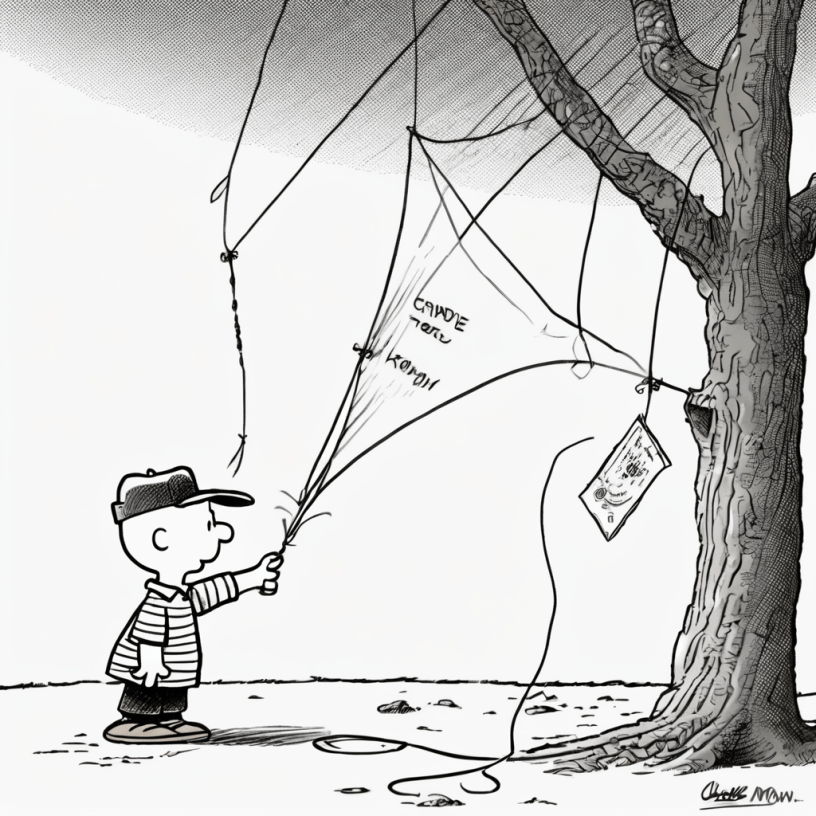
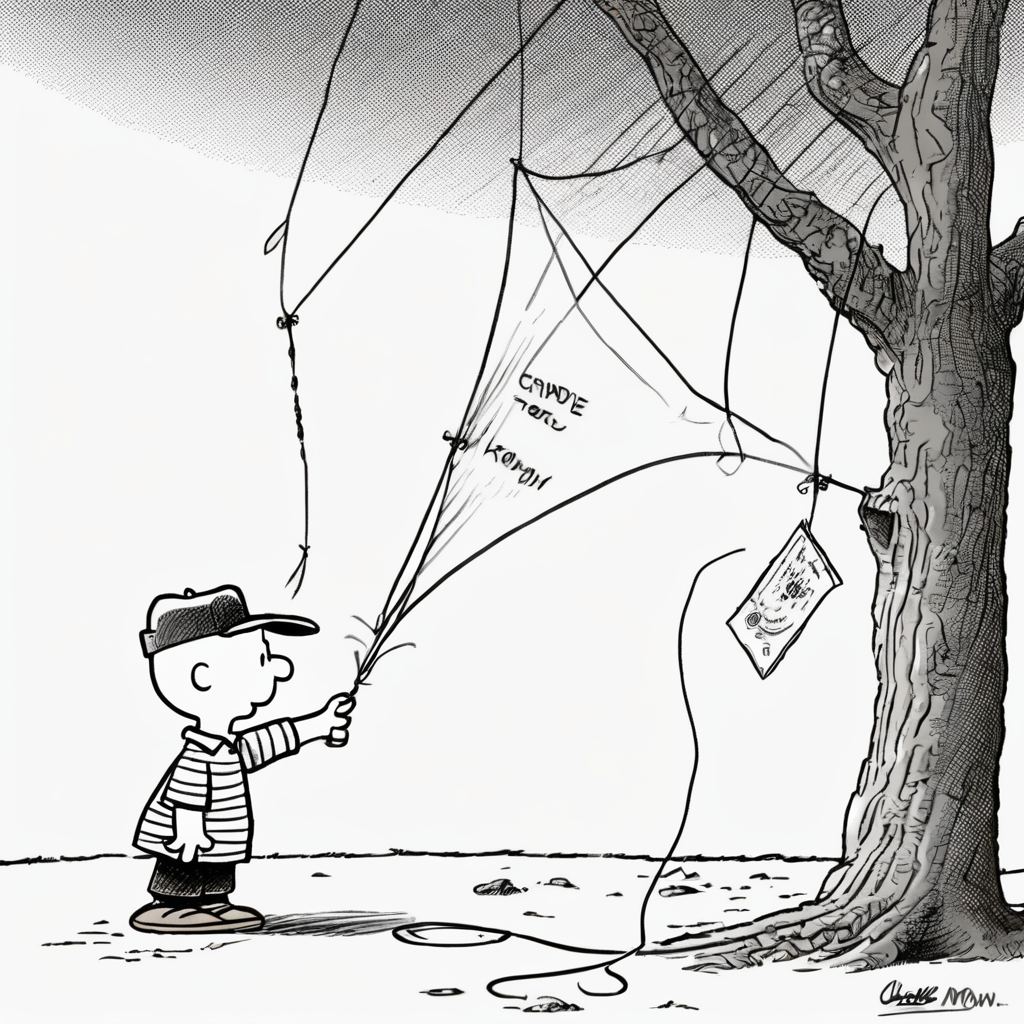
This image was generated using Poe’s StableDiffusionXL bot using the prompt, A political cartoon of charlie brown trying to untangle his kite string, and the string represents misleading polling numbers

 The Psy of Life
There’s a missing number in all the discussion of polling. How many people are like me, taking full advantage of the wonders of Caller ID and Voicemail to avoid pollsters, scammers, and phone spammers of all sorts? If I don’t recognize the number or caller (and, sometimes if I do) it goes to v-mail. Mostly, they don’t leave a message, so I don’t need to know or care who it was. And, my policy applies on both land line and cellphone. Not only do we not know how many, there may not be any accurate way to find out, or whether there is a partisan leaning among them.
Then there is the dark art of structuring the questions to get the desired result, another contaminant of the whole thing.
LikeLiked by 1 person
Howdy Bob!
We live in a complex world, so we have to rely on others to do their jobs well. That includes polling. Few of us have time to really investigate the techniques that the pollster used to produce their data, and fewer of us have the ability to really understand it. That’s what makes Cohn’s participation in what is obviously such a poorly done biased poll so disappointing. He’s a high profile leader in the field.
Even though most of us live our lives outside of the reach of pollsters, it doesn’t mean a representative sample is impossible to get. It just means it is harder to get. It also means that there may be a segment of the population out there that will never be represented in the poll. Who’s to say that those of us who are not pollable don’t have other characteristics in common that will mean we vote similarly?
The problems with polling makes it all the more important that we use other data points when trying to predict election outcomes.
Huzzah!
Jack
LikeLike
I spent way too much time in classes dealing with statistics and statistical analysis in college, but it was required because I was a science and technology geek and statistical analysis is an absolute requirement for, well, just about everything when it comes to collecting and analyzing data. I gained two useful things from all of those mind numbing classes. First, the ability to put an entire room full of people to sleep when I start talking about statistics, and second, a healthy skepticism of polling in general because I know how easily the information can be manipulated to skew things to achieve a desired result. The old saying about ‘lies, damned lies and statistics’ is, alas, all too true.
By carefully selecting the sampling, carefully wording the questions, etc. and you can generate any poll results you like, while still taking on the appearance of running a legitimate poll. And trying to select that sample is becoming increasingly hard. You can’t just start cold calling people like you used to. Most people these days are on phone systems that employ scam filtering systems, that only allow calls from white-listed numbers, etc. If a pollster called me they’d get immediately routed to my voice mail and even if they bothered to leave a message I’d never bother retuning the call even if that were an option.
Most people don’t want to be bothered with crap like that so they set up their phones, emails, etc. to reject anything that doesn’t look like a legitimate call from someone they know. If I get a call from a number that isn’t in my contact list it goes straight to voice mail, my phone doesn’t even ring. All I hear is a chime that indicates someone left a message. When I get around to it I check. I don’t even listen to the voice mails. I see a printed transcript of the first few sentences of the message. So right off the bat a large percentage of the population has eliminated themselves from one of the primary tools of polling, cold calling.
LikeLiked by 1 person
Howdy Grouchy!
I too have taken all of the statistics courses as an undergrad and grad student. Mine was in pursuit of psychology, though, which contrary to the popular image is a very statistically driven field. While it is easy to fool the public with statistics, it is much harder to fool someone with a good understanding of them.
The difficulties in sampling in polling have gotten much worse over the past decade. Technology makes it easy to avoid pollsters, as you say. And, it isn’t unheard of for respondents to try to skew the results with their answers. However, it is still possible to produce representative samples, which the NYT/Siena polls clearly did not do.
The other thing Cohn didn’t do is poll likely voters as determined by the pollster. While it is based on the responses to questions like, are you registered to vote, did you vote in the last election, do you plan on voting in the next election, it makes for a more accurate poll, meaning more predictive of the outcome of the election.
That’s what makes it so damning. We know Cohn knows better and has professional standards to uphold, and he didn’t. He caved to editorial board pressure, one presumes. He produced and published a crap poll just for the clicks, likes, and shares. It misleads the public making it seem like Trump is doing much better than he is.
FiveThirtyEight has long advocated for aggregating reliable polls, which means excluding pollsters with a history of bias and outliers. The average regresses to the mean, which improves its accuracy and predictability.
We should look at polling as one piece of data and mix it with others. The idea of the irrevocable action is one of those pieces of data. What do we see with regard to Trump? No one or very few people turning out to protests at his trial venues. If they aren’t showing up there, are they going to vote? Probably not. They’ll tell pollsters they’ll vote. They’ll talk to news reporters. They’ll post on social media. All of those things are easy. They come to you during your daily routine. They are not indicative of someone willing to go through the rigamarole of voting, especially the ever deepening rigamarole that the GOP is putting their voters through.
Huzzah!
Jack
LikeLiked by 1 person