

SUMMARY: As the 2024 election approaches, understanding voter decision-making becomes crucial. The “easier question heuristic” illustrates how individuals simplify complex choices by substituting difficult questions with simpler ones. In this context, voters might prioritize who is better for the economy or immigration. With Trump currently leading in these areas, Harris needs to effectively communicate her positions. Meanwhile, negative campaign ads focusing on democracy and fascism may overwhelm undecided voters. Instead, candidates should pivot to relatable questions like “Who can you trust more?” to engage even the most disengaged voters.
KEY WORDS: Easier Question Heuristic, Voter Decision-Making, Election 2024, Trust, Immigration, Economy, Negative Campaigning, Democracy, Undecided Voters, Cognitive Dissonance
COMMENT: As the finale of the election approaches, how are you feeling about its outcome? Who do you think is likely to win and why? What recommendations do you make to the candidates?

We’re within weeks of election day. Early voting is under way in many states. Voters across the country, but especially the uNdEcIdEd and lOw-PrOpEnSiTy VoTeRs, are grappling with the question of who to vote for.
Polling suggests that the race will be close, just like in 2016 and 2020, so understanding the decision making process that this small number of voters — whether undecided about who to vote for or undecided whether to vote at all — is crucial. The polls struggled to accurately forecast the results in 2020, showing Biden eight points ahead of Trump when he won by a mere 21,000 votes. They are likely to struggle even more to predict the outcome of the 2024 contest.
Relying on polling to understand the electorate—what motivates people to vote, their likelihood of voting, and who they will choose—requires a representative sample of actual voters. Pollsters typically analyze past election data to predict future turnout. However, the radical changes in the American political landscape since 2020 make it nearly impossible to create an accurate sample for 2024.
Voting registration has surged in many swing states, raising questions about whether polling samples reflect these newly registered voters. Additionally, external factors like the twin hurricanes, Helene and Milton, will likely impact turnout—are these changes captured in current polls? We also need to consider demographic shifts: are young male Trump supporters more likely to turn out than young female Harris supporters?
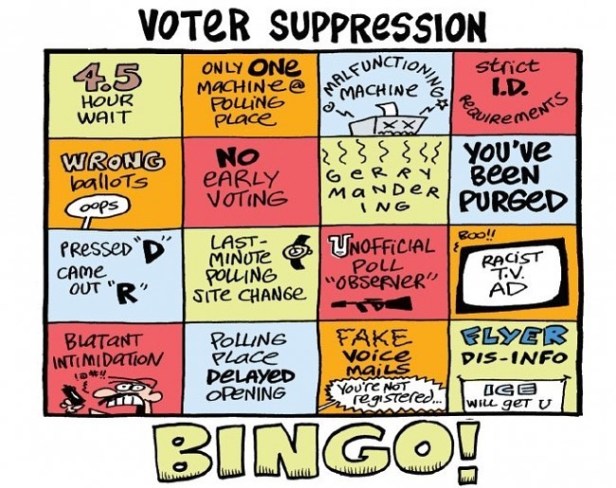
Furthermore, voter roll purges and intimidation tactics employed by the Republican Party complicate the scenario even more. Given these challenges, can we truly create a representative sample of 2024 voters? If not, how can we effectively understand this crucial segment of the electorate?
One way to analyze the likely choices voters are making is to consider the biases and heuristics that behavioral economics indicates that they are likely to use, like the easier question heuristic. We’ll discuss each in turn as they apply to Election 2024 and then discuss suggestions for the Harris campaign since she and her campaign staff closely follow Ye Olde Blogge.
The Easier Question in Election 2024
The “easier question heuristic” is a cognitive rule that allows individuals simplify complex decision-making processes by substituting a difficult choice with a related, but simpler, more manageable one. Deciding who would make a good president is a very difficult question to answer in the best of times. People often resort to easier choices like, which candidate did my preferred party nominate or who do I like better?
The Easier Question in 2020: Which Candidate Returns Us To Normalcy?
In Election 2020, Ye Olde Blogge found that voters were likely to make their choices based on simpler yet related questions:
- Who is more likely to get us through the #COVID19 pandemic?
- Who is more likely to lead us back to saner more stable times?
The answer to those questions seemed to be an emphatic Handsome Joe Biden, who won by about seven million votes. While both candidates received more votes than their parties did in 2016, Biden’s increase was substantial — 15 million more votes in 2020 than Clinton did in 2016; Trump, 11 million more. Simply put, people were longing for a return to normalcy after the shambolic chaos of the Trump years and utter disaster of his #COVID19 response.
What Are The Easier Questions of Election 2024?

What are the easier questions that are driving voter opinions and decisions in 2024? If polls are to be believed, then the likely questions would be:
- Who is better for the economy?
- Who would handle boarder security and immigration better?
Right now, the answer seems to be Trump, although Harris is closing the gap. She should keep hammering her positions to capitalize on this momentum.
Negative campaign ads targeting Trump often frame him as a threat to democracy and being a fascist. Focusing on these issues forces voters to ask themselves, “How much of a threat to democracy is Trump?” and “Is he really a fascist?”
Both are difficult questions to answer and require voters to confront some very uncomfortable emotions. Undecided or low-propensity voters will look for easier questions to answer about the threats to our democracy. They might ask themselves, “Are we still living in a democracy?” The answer, the them, is obviously because I could vote if I really wanted to. Or, “Are we likely to ever lose our democracy?” to which they answer, no because democracy today, democracy tomorrow, democracy forever! Or “how realistic is it that the US will become a fascist dictatorship?” Such an outcome seems highly unlikely to the average person, I’d imagine.
In other words, these attack lines are unlikely to move the average undecided low-propensity voter no matter how many times you show them horrific footage of the 6 January Insurrection.
The Better Easier Question for Harris

Instead of focusing on these heavy questions, Harris should pivot to a straightforward and relatable one: “Who can you trust more?”
Despite the Republican Party’s decades-long effort to tarnish all politicians with the self-serving dishonesty of Richard Nixon, the truth is clear: Trump is known for lying more often than he farts and that his lies stink more.
Harris should adapt a page from Hitler’s Propaganda Playbook. Instead of repeating a provocative big lie that people believe rather than think the lying liar would be willing to tell such an outrageous lie and that takes on the veneer of truthiness by the sheer dent of repetition, she should tell the truth about Trump: he cannot be trusted. She should drive the message home that the ship of state cannot be flown by lying.
If you’ve enjoyed this analysis of how Harris can use behavioral economics to help her attract undecided and low-propensity voters, then please consider doing one or all of the following:
- SHARE this post with someone who you think would enjoy it.
- LIKE or RATE this post using the buttons before or after it.
- COMMENT on this post letting us know what you think the state of the election is
- FOLLOW the blog or join our email list:
Image Attribution
This image is a meme that I made in 2017. I am uncertain of the licensure of the image itself, but the text was added by me. My only regret is that it didn’t go viral.

 The Psy of Life
It is going to be interesting what effect Trump’s lies about FEMA and hurricane aid and recovery activities generally, and the bipartisan (at least including local and state Republicans) full court press against those lies is going to have. It is one thing to have Democrats pointing out that Trump is a liar, but when Republicans are forced to say it by the damage done, it is a different beast.
Now, if some of those same Republicans would openly say he has lost their vote, that would amplify the message a lot.
If Trump has just one glaring, obvious point of vulnerability is is the trust issue and the transparent lies.
LikeLike
Howdy Bob!
They won’t call out Trump’s Big Lie for the same reason they support his current candidacy, they need the MAGA constituency to have even a chance of winning. How much the hurricanes hurt or help Trump in NC, Tenn, Ga, and Fl remains to be seen. It is a complex interaction. They believe his lies even when they see them contradicted right in front of them. Their cognitive dissonance means they have to find someone else to blame for the lack of veracity of his lies, more than likely the Republicans in their state that are calling him out on it and the Dems.
They know he lost 2020. They know he’s lying about it. They know he is a colossal failure. But, they support him anyway because of grievance and vengeance. They will gladly die from #COVID19, climate change, or pollution if it means avenging their grievances against the liberals who let the Blacks and Browns get in the American Dream line ahead of them.
Blog on Sibling!
Jack
LikeLiked by 1 person
There does seem little grounds for any expectation that the true cult members will wake up.
LikeLiked by 1 person